Another Big Reason To Be Bullish On Crypto
Inside Today's Issue
Editor’s note: Porter & Co. analyst Justin Brill delivers today’s Journal – sharing his latest insights on crypto and payment platforms being established there.
If you've spent any time online, you've almost certainly seen an error page that says “404 Not Found.” It's one of several three-digit codes websites send to your browser, in this case to say the page you asked for doesn't exist.
But there's another code almost no one has ever seen. When the engineers who wrote the web's technical rules published their formal standard in January 1997, they included code 402: “Payment Required.”
The idea was that websites would one day be able to charge a small fee – say, a few cents to read an article – and your browser would be able to pay it automatically. But at the time, there was no practical way to send money that cheaply online. So the standard simply said:
“This code is reserved for future use.”
It stayed that way for a long time. DigiCash, the best-known early attempt at internet cash, founded by cryptographer David Chaum, filed for bankruptcy in November 1998 after a three-year trial with a U.S. bank attracted only about 5,000 customers. Credit cards ultimately became the default way people paid online.
However, card networks charge a fixed fee on every transaction, so charging a few cents to read an article never made sense. Websites turned to ads and subscriptions instead, and shoppers typed their card numbers into each site's own checkout page. Browsers never needed code 402, so it went unused.
That finally changed in May 2025, when Coinbase Global (COIN), the largest U.S. crypto exchange, released a payment system built around the forgotten code. It's called x402, and it lets users send payments via stablecoins – digital tokens designed to hold a steady $1 value – with no account, no subscription, and no credit card required.
The automatic payments the web's architects imagined in 1997 now exist. Yet their biggest users are likely to be something those early engineers weren't planning for… and the implications for the crypto markets are enormous.
Back in May, I wrote about the massive disconnect between crypto's fundamentals and its prices. In short, over the past couple of years, policymakers in Washington had gone from suing crypto companies to signing the first federal stablecoin law. And some of the biggest names in finance – BlackRock (BLK), JPMorgan Chase (JPM), and Vanguard – had gone from criticizing crypto to actually offering it to their clients.
Yet most crypto assets were still trading 50% or more below their prior highs, and the Crypto Fear & Greed Index – a popular measure of investor sentiment – had spent more than 60 straight days in single digits.
Six months later, this disconnect has grown even wider. Bitcoin (BTC) and other major crypto assets have pulled back sharply after a strong summer rally, and sentiment remains in the gutter. Yet the fundamental outlook for crypto has continued to improve.
But perhaps the biggest reason to be long-term bullish on crypto is one that most investors are still overlooking: Systems like x402 will make AI programs one of the largest new users of blockchains over the next decade… and the networks that carry their payments stand to benefit.
When most people think of AI today, they still picture a chatbot like ChatGPT: you ask a question, and it answers. But the latest AI programs, known as "agents," can do much more. Give an agent an assignment, and it can use websites and software to complete it on its own, within the limits you set. Increasingly, that includes spending money on data, goods, and services.
The tools to make that possible are arriving fast, and they're coming from the biggest names in technology and payments:
- In September 2025, Alphabet (GOOGL) launched its Agent Payments Protocol, an open standard for AI agents to make purchases on a user's behalf, with more than 60 backers, including Mastercard (MA), American Express (AXP), and PayPal (PYPL). Coinbase's x402 was one of its first add-ons, handling stablecoin payments.
- In April, Coinbase handed x402 to an independent foundation run by the Linux Foundation, a nonprofit that oversees open-source software. By July, its 40 members included Visa (V), Mastercard, American Express, Stripe, Shopify (SHOP), and Amazon's (AMZN) cloud-computing arm, Amazon Web Services ("AWS").
- In early August, Elon Musk's xAI, now part of SpaceX (SPCX), launched Grok Bot, a team of always-on AI agents, each with its own cloud computer, that can work around the clock. Less than three weeks later, Grok Bot could make online purchases for users through Stripe.
- On August 18, AWS added payment tools to its AgentCore service, including stablecoin payments and controls that limit how much an agent can spend.
- In September, Meta Platforms (META) introduced Muse, a personal AI agent that can book travel, fill out online forms, and negotiate lower bills.
- In October, Stripe began letting U.S. users give Instinct, an AI assistant you can text or call, its own spending money. The budget is held in USDC, the dollar stablecoin issued by Circle Internet (CRCL), and the assistant can spend it without asking for approval on each purchase.
- And according to blockchain-analysis firm Chainalysis, x402 had handled more than 138 million payments on Base, Coinbase's own blockchain network, as of Q3 2026, up from just 1,500 in mid-2025.
- What's most telling is the size of these payments. Chainalysis found that more than 87% of x402 payments over the 16 months through September were worth between a hundredth of a cent and 10 cents. So agents mostly buy small things, like a few seconds of computing power, a page of data, or a single answer from another AI model.
Card fees make payments that small impractical. Stripe, one of the largest payment processors, charges 2.9% plus 30 cents for a standard online U.S. card payment. On a five-cent purchase, the fee would be about six times the price of the item. Big merchants pay less, but the fees set by the card networks themselves still include a fixed charge of roughly five to 21 cents per transaction – as much as or more than the purchase itself.
Compare that with USDC. According to one fee tracker, sending USDC on the Solana network cost about $0.0005 on October 19, less than 1/500th of the card fee. And the payment settles in seconds, at any hour, any day of the week, without a bank account on either end.
Of course, credit cards still work fine when an agent makes a larger purchase. Visa even published a specification in March that lets AI agents pay by card. But for the tiny payments that make up most of what software is likely to buy, stablecoins have a big advantage.
These payments are tiny on their own, but they're early proof that software can move money over public blockchains with no bank or card network in the middle. Once that's true, much bigger sums can follow.
But payments are only part of the story. The much larger opportunity is AI agents managing people's money.
Joseph Chalom spent years leading digital-asset strategy at BlackRock before becoming CEO of Sharplink (SBET), a company that holds Ether (ETH), the token of the Ethereum network, as its main treasury asset. In September, his team published a model estimating that more than $1 trillion of annual financial-services revenue will be up for grabs by 2030, rising to $4 trillion a year by 2035, as AI agents take over more of people's finances and force banks, brokers, and payment firms to compete on fees.
His simplest example is idle cash. Chalom estimates that U.S. households keep about $15 trillion in checking, savings, and short-term deposits that pay far less than money-market funds, costing them roughly $180 billion a year in lost interest.
Agents are already starting to do this. In September, Porter used an AI agent from the online brokerage Public.com to move $1 million out of his bank in less than five minutes. The agent put the money in the iShares 0–3 Month Treasury Bond ETF (SGOV), then yielding 3.67%, and it will recheck that choice every 30 days.
Now picture millions of agents doing the same thing every day, with no forms to fill out and no business hours to wait for.
This is where crypto comes in. Tokenized assets – ordinary investments like Treasury funds and stocks, issued as tokens on public blockchains – totaled about $40 billion in mid-November, according to tracking service RWA.xyz. If agents moved just 1% of those household deposits into tokenized money-market funds and stablecoins, that would be $150 billion – nearly four times the entire tokenized market today.
And cash is only the start. AI agents could eventually also manage people's investments – rebalancing portfolios, harvesting tax losses, or lending out shares for extra income – and that's far easier when those investments live on a blockchain.
Tokenized stocks have grown from less than $1 billion at the start of the year to nearly $5 billion today. And on September 17, the Securities and Exchange Commission issued an "Innovation Exemption" that lets qualifying platforms trade tokenized versions of U.S.-listed stocks on public blockchains.
The potential here is enormous. U.S. households owned nearly $68 trillion of stocks, directly and through funds, at the end of 2025, according to the Federal Reserve. If just 1% of that moved onchain, it would add about $680 billion – roughly 17x the entire tokenized market today.
Much of that money would sit on crypto networks like Ethereum and Solana, whose tokens are used as collateral for loans and "staked" – or locked up – to help secure the network in exchange for rewards.
Banks and asset managers are already moving onto blockchains for their own reasons – faster settlement and lower costs – whether or not AI agents ever catch on. But AI agents could ultimately be an even greater driver of crypto value – and prices – in the years ahead.
Nearly 30 years ago, the web's engineers reserved code 402 for a future the internet wasn't ready for. Now, that future is finally arriving… and it's being built on crypto.
Tell me what you think of today's Journal: porterstansberrydirect@gmail.com
Good investing,
Justin Brill
Stevenson, Maryland
P.S. Almost everyone has been piling into AI stocks this year. But as I explained above, AI may create a huge new source of demand for crypto assets that the crowd abandoned years ago. To learn more about why we believe crypto is finally entering its “Second Phase” – and more importantly, exactly how we recommend investing in it – click here now.

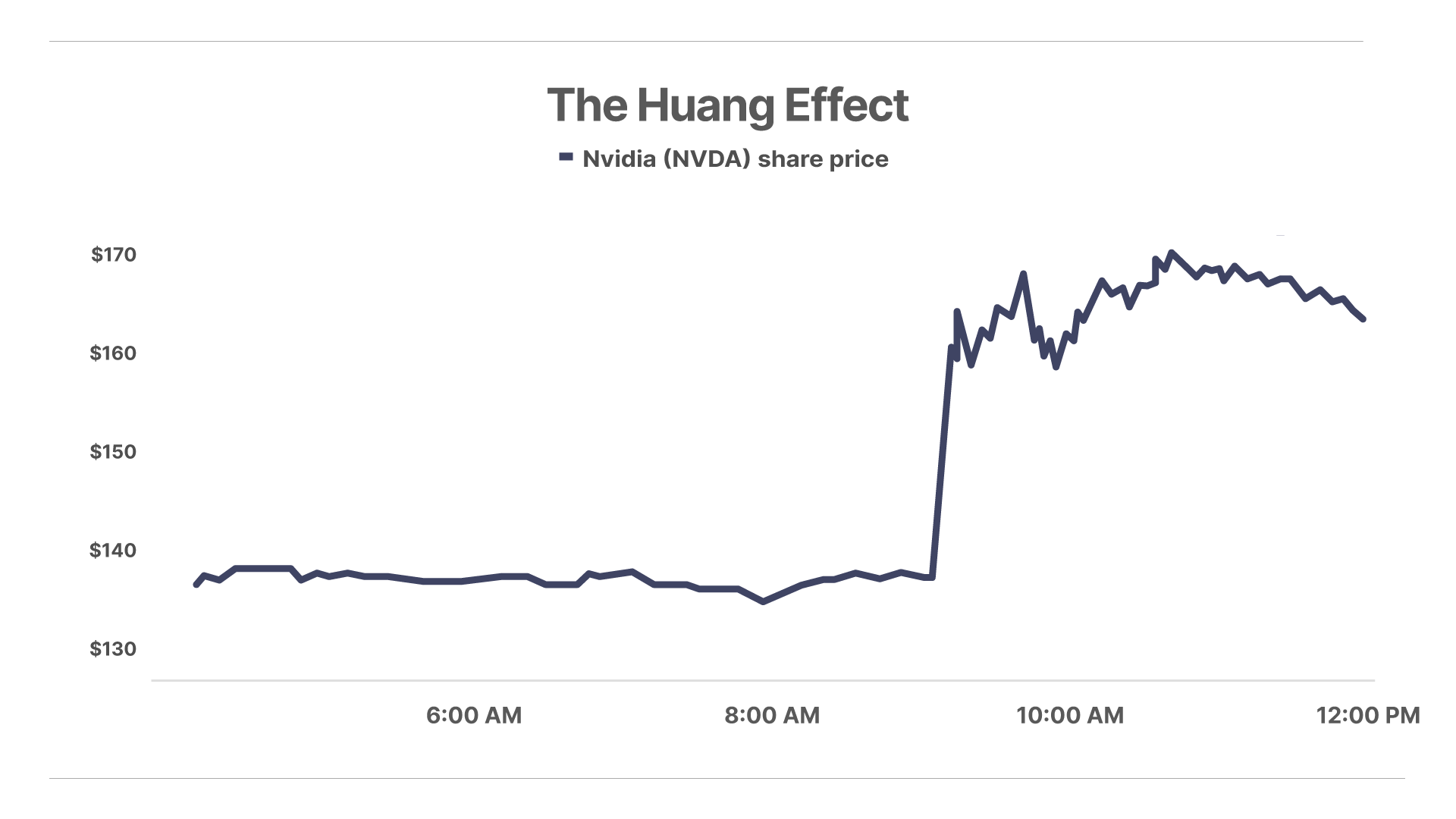
1. Gold is down a third from its high. The price of gold fell to $3,514 an ounce on Friday, 37% below its January record of nearly $6,000, then rebounded to $3,677 Monday morning. Sell-offs this deep have ended in different ways. Gold bottomed near $104 in August 1976 and reached $850 by January 1980. It rallied 70% in eight months from its June 1982 low near $297, then fell below that low in 1985. After bouncing 21% in the summer of 2013, gold fell to a new low in December 2015 as the Fed began raising rates. Fed funds futures now price in a quarter-point hike in December and about 70 basis points of hikes by September 2027. 2. Housing market remains frozen. Demand for new houses plunged in October, with the National Association of Realtors’ pending sales index falling 16.7% year-on-year – to the lowest level on record. Current readings of new contracts for home sales are now down 53% from the pandemic peak. With home prices near record highs in most parts of the country, and mortgage rates back on the rise, American home buyers have gone on strike. 3. ING's $500 million data-center loan auction failed to clear. The Dutch bank put loans tied to a dozen data centers up for sale on November 5. Bloomberg reports there was not enough interest, and now ING is negotiating with buyers one loan at a time. Bids on a $25 million piece of Project Jupiter, the Oracle and OpenAI Stargate site in New Mexico, came in too low for sellers. Banks are trying to reduce their AI construction exposure, and buyers will only take the loans at lower prices. Shares of Complete Investor recommendation Nvidia (NVDA) rallied more than 30% today on news of Jensen Huang’s return as CEO. A press release from Nvidia’s board of directors stated that it received input from senior levels of the U.S. government, and based on that information, the board is confident that Huang's reinstatement poses no national security risk. Timothy W. writes: Porter, Dave G. writes: Porter, you have a commanding and enviable knowledge of history. Unbelievable! Wonderful essay. Porter Comment: Thank you very much. I’ve been a bookworm since I was four years old. And, I had a collection of incredible mentors who were very kind and patient with me: P Kenneth L. writes: Personally, friends trying to be "helpful" when they know I oppose their well-intended but misguided efforts have caused me far more injury than enemies.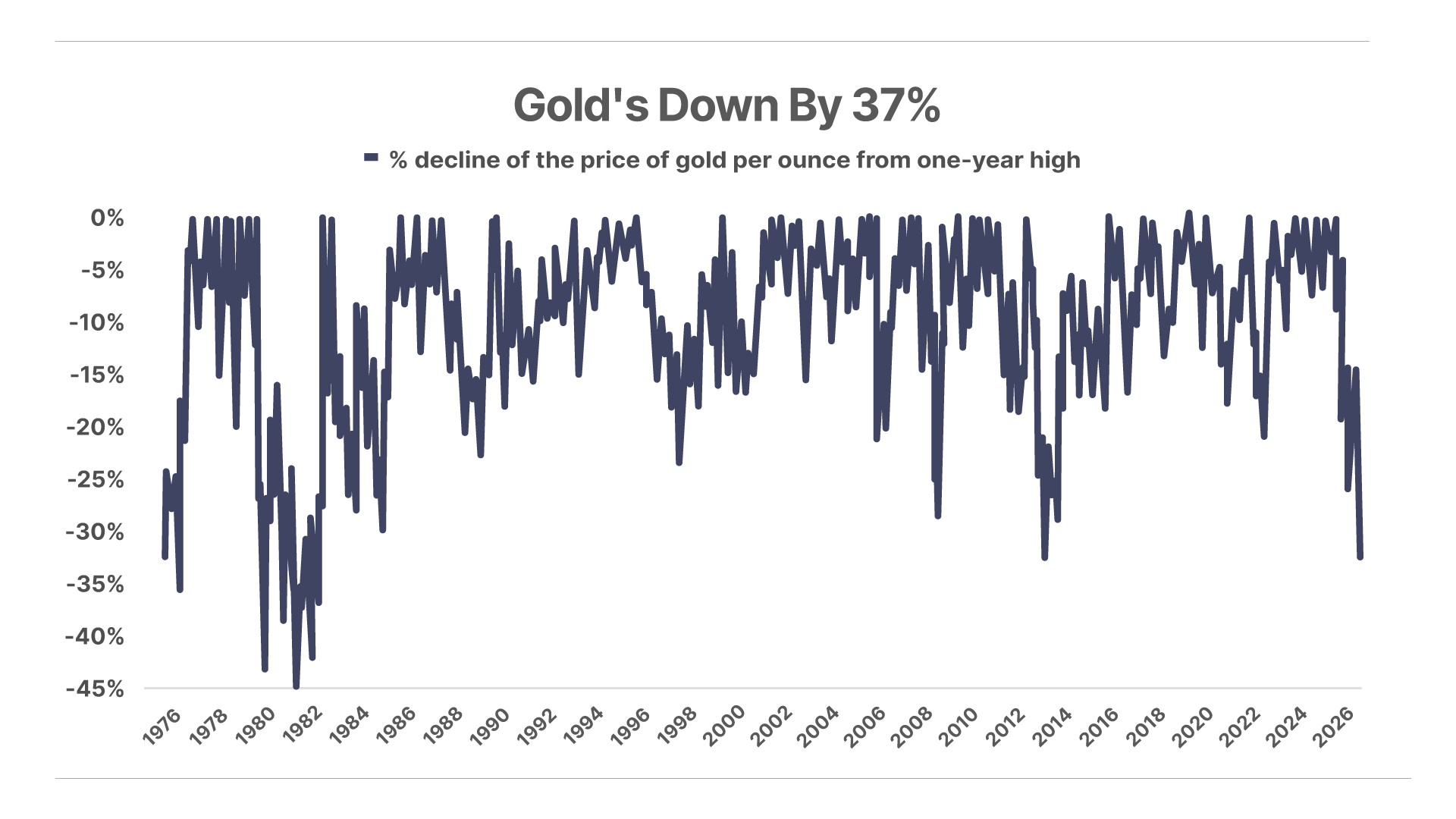
“Anthropic’s Mission And Leon Trotsky”
Thank you for an excellent analysis... and a terrifying warning. I hope you're wrong, but fear you are not.
“The Road To Hell Is Paved With Good Intentions"
I related to this. Thank you for sharing.
Porter & Co. Market Snapshot
Through Friday, November 20, 2026 close
Markets
Index or asset
Last
1-Day
YTD
1-Year
689.81
−3.64%
+1.9%
+6.9%
$3,515.40
−4.62%
−19.0%
−13.4%
$58,308.00
−6.03%
−33.4%
−32.5%
$83.98
+0.93%
+46.3%
+42.0%
$855,000.00
−0.47%
+13.3%
+13.3%
U.S. Treasury yields
Maturity
Yield
1-Day
YTD
1-Year
4.63%
−13 bps
+116 bps
+108 bps
4.92%
−12 bps
+74 bps
+82 bps
5.31%
−9 bps
+47 bps
+58 bps
Porter & Co. strategies
Strategy
1-Day
YTD
Since start
Per year
−0.10%
+3.1%
+30.0%
+13.0%
−1.05%
−0.3%
0.0%
0.0%
−0.08%
+1.3%
+23.5%
+8.1%
Porter & Co. Top Positions
Through Friday, November 20, 2026 close
#
Position
Total return
1
+238%
2
+237%
3
+234%
4
+161%
5
+152%
6
+131%
7
+129%
8
+118%
9
+101%
10
+94%