This is the free version of Porter Stansberry’s Complete Investor, which provides market analysis and investor insights. Paid subscribers get access to the full issue, including investment recommendations with buy-up-to prices, a real-time list of holdings, and more. Click here for details.
Law Enforcement Needs What This Firm Provides
It was pretty easy to nab Charles Katz.
The sports bookie – who specialized in brokering illegal, interstate betting – was a creature of habit.
Every afternoon, Katz ducked into the same bank of three phone booths on Sunset Boulevard in Los Angeles. There, he’d tie up the line for a couple of hours, uttering cryptic phrases like “Oregon plus three!” and “Give me Duquesne minus seven for a nickel.”
If he got caught, he was looking at two years in jail, or a $10,000 (in 1965 dollars!) fine. But Charles Katz was admittedly not the brightest light in the marquee.
By early February 1965, a tip put the FBI on the bookie’s tail. The Feds decided to work smarter, rather than harder: Using then-new technology, they’d bug the phone booths and record the evidence.
One morning – while Charles was still holed up in his apartment – FBI agents added an “Out of Order” sign to the middle booth and taped tiny microphones and a wire recorder to the tops of the other two booths.
Then, between February 11 and February 16, they listened in.
A week later, the Feds had proof on tape that Charles was running illegal numbers. They moved in to arrest him, which seemed to come as a surprise to Katz. As the agents led him away in cuffs, Charles offered his gambling expertise as a kind of home-grown plea bargain: “I can lead you to the big ones!” (The FBI did not take him up on his offer.)
An even bigger surprise for Charles was the fact that he’d eventually walk away scot-free.
His case – Katz v. the United States – made it all the way to the Supreme Court. Katz’s lawyers argued that, since the FBI tapped the line without a warrant, they’d violated Katz’s Fourth Amendment rights against unreasonable searches and seizures. And, eventually, the highest court in the land agreed with them.
The Court ruled that Katz had a reasonable expectation of privacy because he was standing in a closed-off telephone booth, and that without a warrant, the eavesdropping evidence was invalid.
In the end, Katz v. United States was a resounding victory for individual privacy.
And as far as President Lyndon B. Johnson was concerned, that would never do…
The War On Responsibility
Sworn in in 1963 after John F. Kennedy’s assasination, LBJ had gotten right to work putting into motion his Socialist utopian vision, the “Great Society.” As he explained in a sweeping 1964 speech at the University of Michigan, “The Great Society rests on abundance and liberty for all. It demands an end to poverty and racial injustice, to which we are totally committed in our time.”
The Great Society, naturally, was run by a great big government. LBJ’s $1 billion plan included vast overreach of schools... government assistance programs like food stamps, Head Start, Medicare, and Medicaid, which he termed the “War on Poverty”... and a big chunk of federal dollars going to fight a “War on Crime.”
It was really a thinly-veiled ploy to lock in millions of Democrat voters for life.
LBJ was a well-documented racist, known for pulling snakes out of his car trunk at gas stations with an African-American attendant (the stereotype was that blacks were extra-afraid of snakes). According to one biographer, LBJ’s rationale for handing out food stamps was: “I’ll have them n******* voting Democratic for the next two hundred years.” (And, to be fair, it’s worked so far – about 80% of black people consistently vote Democrat.)
Two years after LBJ took office, Assistant Secretary of Labor – and later U.S. Senator – Daniel Moynihan sounded the alarm in a detailed report, writing that government-assistance programs actually undercut the fabric of society by taking men – particularly black men – out of the home.
No one listened, least of all LBJ... possibly because that result was exactly what he’d hoped for...
By the mid-’60s LBJ’s War on Poverty was in full swing, with the amount of government money spent on welfare programs doubling between 1965 and 1968. During the course of the decade, the out-of-wedlock birth rate for black households rose from around 23% to 30% as the number of fathers at home dwindled.
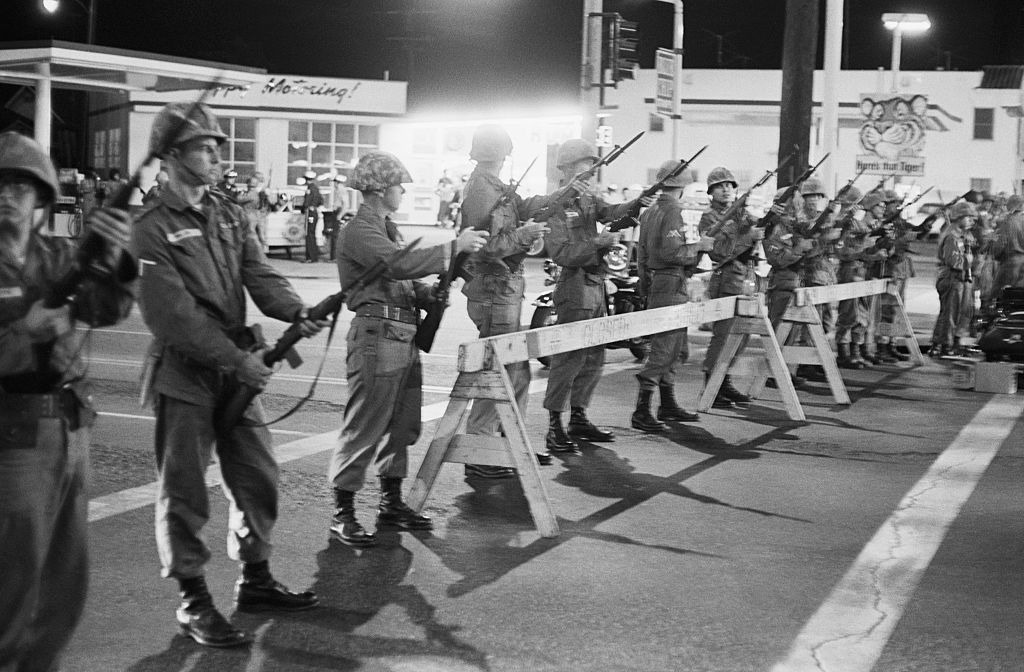
With urban families disintegrating, the summer of 1965 exploded into race riots in 138 cities across America. LBJ’s “Community Action” organizations – little government-run cells that funneled money to local “community organizers” – fomented the unrest, as the groups sometimes used those funds to pay for professional agitators.
The worst of the protests – the Watts riot – wreathed LA’s ghetto in flames for six days in mid-August 1965, leaving the city with over a thousand people dead or injured, and $40 million in damages. Altogether, some 10,000 people were injured, along with millions of dollars of property damaged during the long hot summers of the late 1960s.
The riots gave LBJ an excuse to launch his “War on Crime” – that is, to wrap local and state policing in the suffocating wings of Uncle Sam.
And to make sure nobody had an expectation of autonomy or privacy ever again...
The War On Freedom
A month after Watts, Johnson signed the Law Enforcement Assistance Act of 1965, which, for the first time, allowed the government to fund, train, and equip local police forces – essentially, making them mini-Federal police branches.
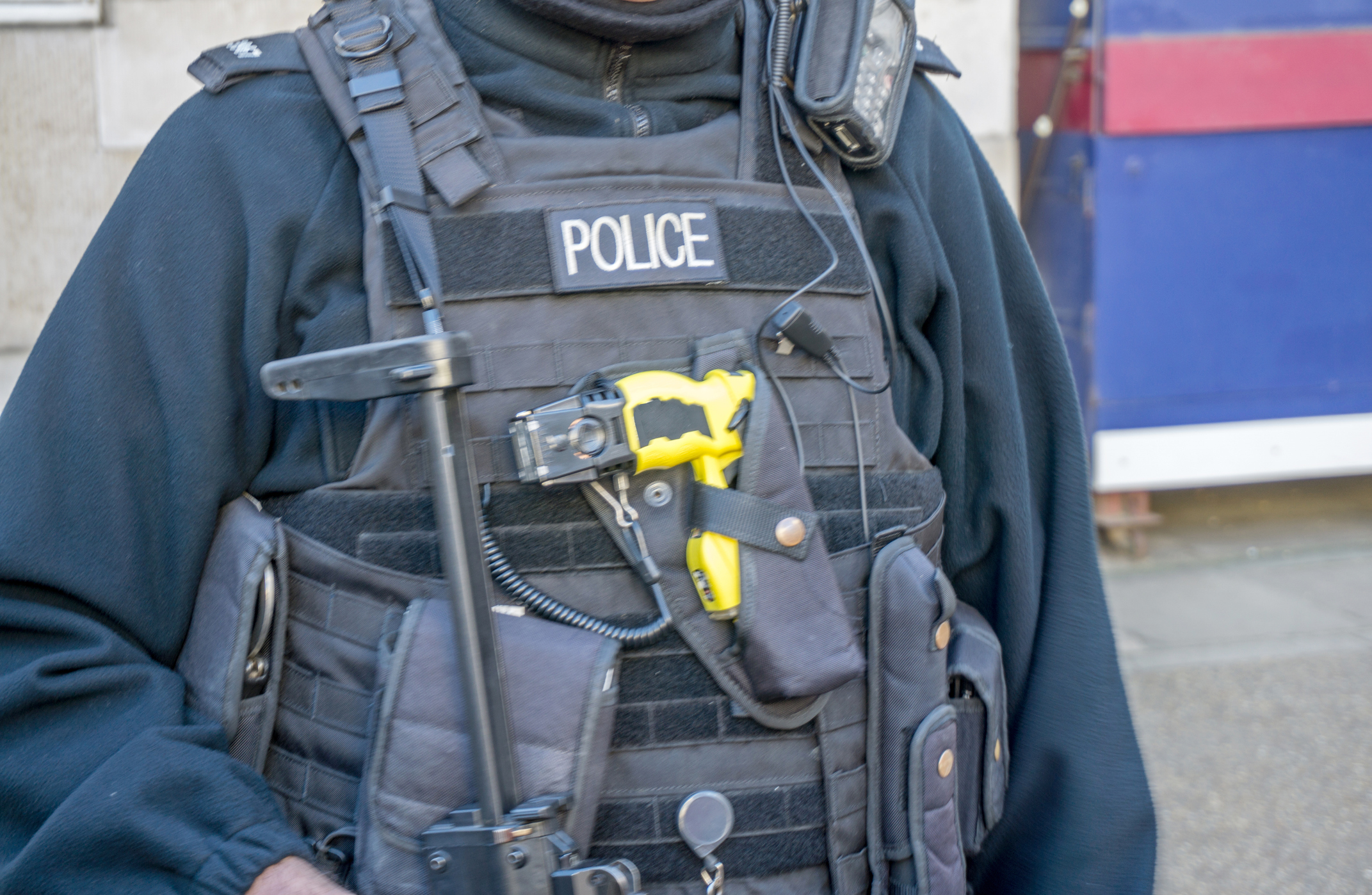
The Department of Justice received $223 million (in today’s dollars) to buy tanks, rifles, helicopters, and other weapons and riot-control gear for local law enforcement, whom LBJ dubbed “the frontline soldiers” in this new “war.”
Now the Feds could feed you and punish you. Truly, in loco parentis.
As a capstone, three years later, LBJ’s ominous-sounding “Omnibus Crime Control and Safe Streets Act” created an official Law Enforcement Assistance Administration (“LEAA”) within the Department Of Justice...
The LEAA’s Big Brother powers included expanded funding for the FBI to train police officers in riot control... harsh gun control measures... and, as a direct response to the Charles Katz case, a blanket exemption for the government to listen in on anyone’s telephone conversations if they were deemed a threat to national security. National security, of course, was up to the Feds to define.
So much for poor old Charles the bookie. (And, later, so much for thousands of Americans whose rights were violated by warrantless wiretapping during the Patriot Act in the early 2000s.)
LBJ – increasingly unpopular because of how he handled the war in Vietnam – did not seek reelection in 1968. But the Great Society, like the Energizer Bunny, kept going and going...
In 1966, Johnson’s “War on Poverty” czar, Sargent Shriver, was asked how long it would take to win the war. “About 10 years,” he replied – 23 years later, during his first inaugural address, President Ronald Reagan pointed out: “We fought a war on poverty, and poverty won.”
Sixty years after the launch of the Great Society, we are still poor. About 20% of the U.S.’s national budget every year now goes to welfare, through some 80+ government programs, while the poverty rate has hovered between 10% and 15% for the past half-century.
And we are still living in a police state.
Federal police spending has more than quadrupled since the 1980s, and doubled since the 1990s, with big chunks of cash for all the alphabet agencies: FBI, CIA, NSA, DEA, and ATF (the Bureau of Alcohol, Tobacco, Firearms, and Explosives).
That’s not even mentioning ICE – the annual budget for the Immigration and Customs Enforcement agency has leaped from $6 billion to $85 billion over the past decade, making it the highest-funded law enforcement agency in the U.S.
This is not a broken system. It’s a system that’s functioning precisely as intended: a “War on Poverty” that’s really a war on individual responsibility, and a “War on Crime” that’s essentially a war on freedom.
As Porter wrote recently, America as we know it is over.
But LBJ’s war on crime continues – having spread its tentacles into every police force and crime-fighting agency in the country... which has led to a cottage industry of wonderful, Lindy-style places to invest.
The core product of the company we recommend in this issue is a “War on Crime” staple that got its start during the riots of the 1960s and the company has grown into a bona-fide legal monopoly. It’s a business the American police state will never be able to live without.
 Subscribe to Porter Stansberry’s Complete Investor to unlock the rest of this issue and more.
Become a Complete Investor subscriber today to get instant access to the rest of this issue and other valuable subscriber-only content.
A Complete Investor subscription gets you:
-
Monthly Issues – a detailed analysis on a new recommendation plus ongoing updates on the existing list of recommendations
-
Special Reports – deep-dive analyses covering every major market-moving trend such as artificial intelligence and other breakthrough technologies. Plus, why property & casualty insurance stocks are a must-own, the best ways to invest in energy and commodities.
-
Buy / Sell Alerts – instant notifications when any stock in our recommended list makes a major move worthy of your attention.
-
Monthly Roundtable – listen in to this exclusive podcast as Porter and his editorial team discuss the markets, the open recommendations, and the strategies subscribers can use to maximize their returns
-
Custom Investment Indexes - such as the Better Than Berkshire Index, a systematic approach to building your own Berkshire Hathaway holdings using superior companies, and The Lindy Index, the top-40 companies that have been compounding returns for at least 50 years, to name just two
-
Porter’s Permanent Portfolio – a fully balanced portfolio with 25% allocated to bond-like investments, 25% in the world’s best businesses, 25% in hard assets, and 25% in cash-like investments. Despite having half the risk of the market, this portfolio has consistently outperformed the S&P since inception
-
And more…
Use the link below today and lock in our lowest available rate --> a savings of $575 off the usual annual rate.
This content is only available for paid members. If you are interested in joining Porter & Co. either click the button below now or call our Customer Care team at 888-610-8895.