Issue #104, Volume #3


The Reports Of Humanity’s Demise Are Greatly Exaggerated
Inside today’s Daily Journal…
|
Editor’s note: Today, Distressed Investing analyst Andy Lipman explores the common belief that the introduction of artificial intelligence into the workplace means the displacement of large numbers of American workers.
Here’s Andy…
Last month, Anthropic CEO Dario Amodei – creator of leading artificial-intelligence (“AI”) model Claude – predicted that AI could eliminate 50% of entry-level white-collar jobs within five years. He believes that, because of the introduction of AI into many businesses, the U.S. unemployment rate could rise to as high as 20%. Various models by large consulting firms like Boston Consulting Group estimate AI could replace 10% to 15% of U.S. jobs and will reshape job functions in 50% of roles.
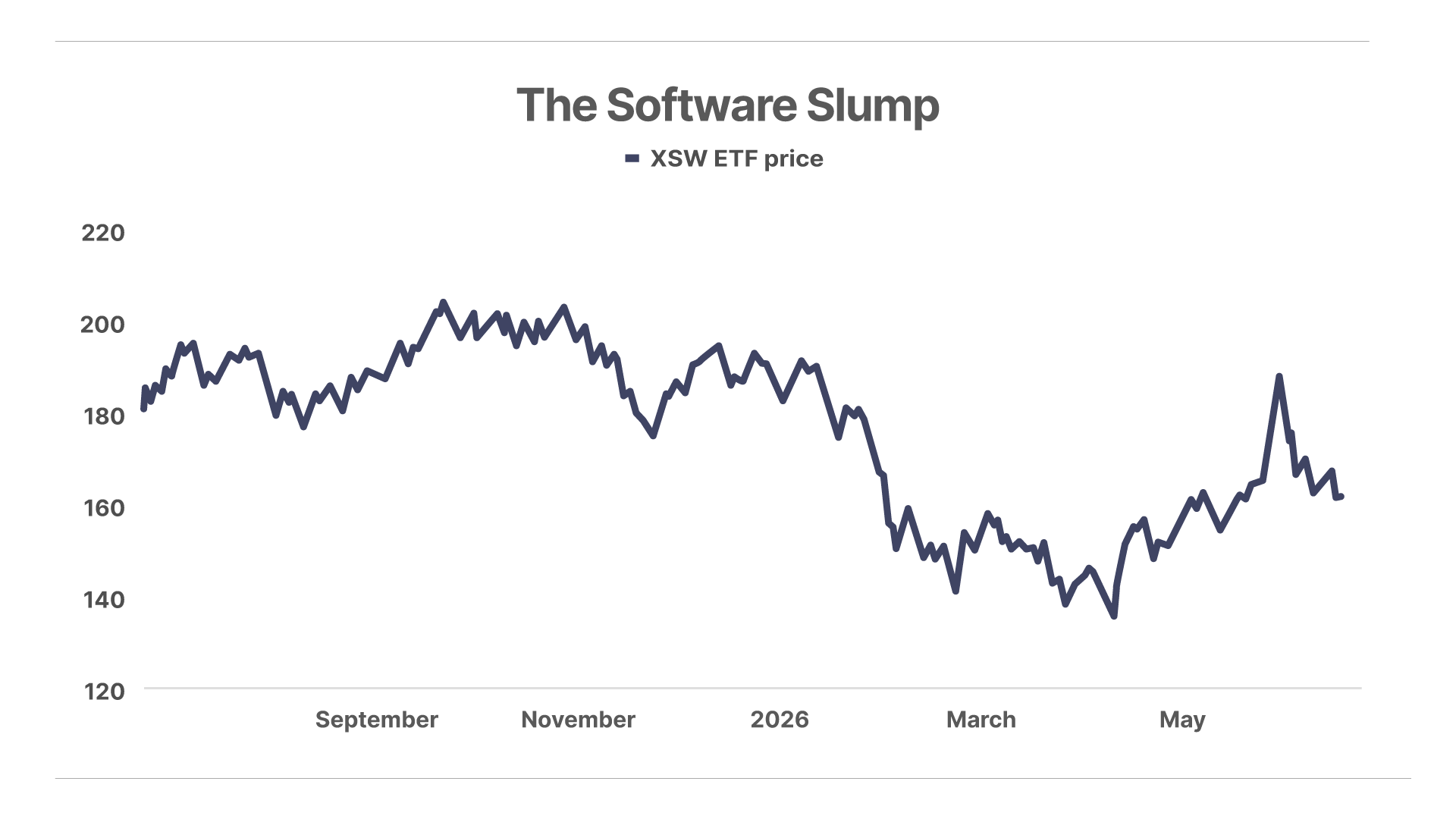
In the stock market, the fear that AI will be able to generate sophisticated software programs to do the work of traditional businesses led to huge price declines in the software stocks. Because of those fears, on April 10 of this year, the S&P Software & Services ETF (XSW) sat at 135, 34% below its high of 206 on September 22, 2025. Among the best-known software and services companies, Adobe (ADBE) and Salesforce (CRM) are currently trading at roughly 40% below their highs.
There are three main reasons why these fears about rising unemployment, risk to software companies, and AI more broadly are overheated.
-
Since the 1700s, the global economy has adapted to and profited from world changing advances in technology – this history will likely repeat itself
-
Resource constraints – supply-chain bottlenecks and energy shortages – are likely to slow the AI boom
-
Limitations in even the most advanced AI models still give humans (including those who use AI as a tool) an edge
Prior Advances That Cause Fear – And Then Growth
The industrial revolution, which started in Great Britain in the mid-1700s, gave rise to numerous technological advances. For example, mechanized looms posed a threat to weavers and knitters. In 1811 this gave rise to the Luddite Movement, which registered their protest against industrialization by taking sledgehammers to new technology.
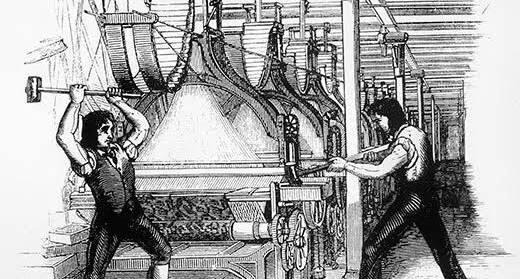
Luddites in 1812 destroying “new” technology
The British government put down the uprising, and over the short term, the rise of machinery displaced craftsmen. Eventually, the technology born during the industrial revolution led to greater employment and higher living standards.
In more recent times, the same short-term displacement and long-term growth played out with…
-
Automobiles, which all but eliminated horse-drawn carriages, drivers, coach builders, and blacksmiths
-
Computers – and the internet that followed – reduced the need for typists, office administrators, messengers, among others
-
Though video may have killed the radio star, it also led to almost infinite variety of home entertainment – and legions of pampered celebrities
The term artificial intelligence dates to 1955. But as a practical matter, AI came to widespread attention with the introduction of OpenAI’s ChatGPT in November 2022. Since then, as these AI tools have become more sophisticated and powerful, leading more people like Anthropic’s Dario Amodei to believe AI will replace humans.
Physical Limitations
Electricity
There are physical limitations that are likely to slow down or reduce the scale of the AI boom – and the greatest constraint is electricity. AI uses a lot of power. A text response from an AI model uses 10x the power as a text response from a traditional Google search. An image generated by AI uses 40x more power than finding one using a search engine. Creating a video requires a staggering 2,000x as much power as searching for one that already exists.
In 2024, data centers used 183 terawatt hours (“TWh”) to train and then to run AI models – about 4% of U.S. electricity use. Demand related to AI is projected to increase 230% to 606 TWh – equal to roughly 12% of electricity use – in 2030. 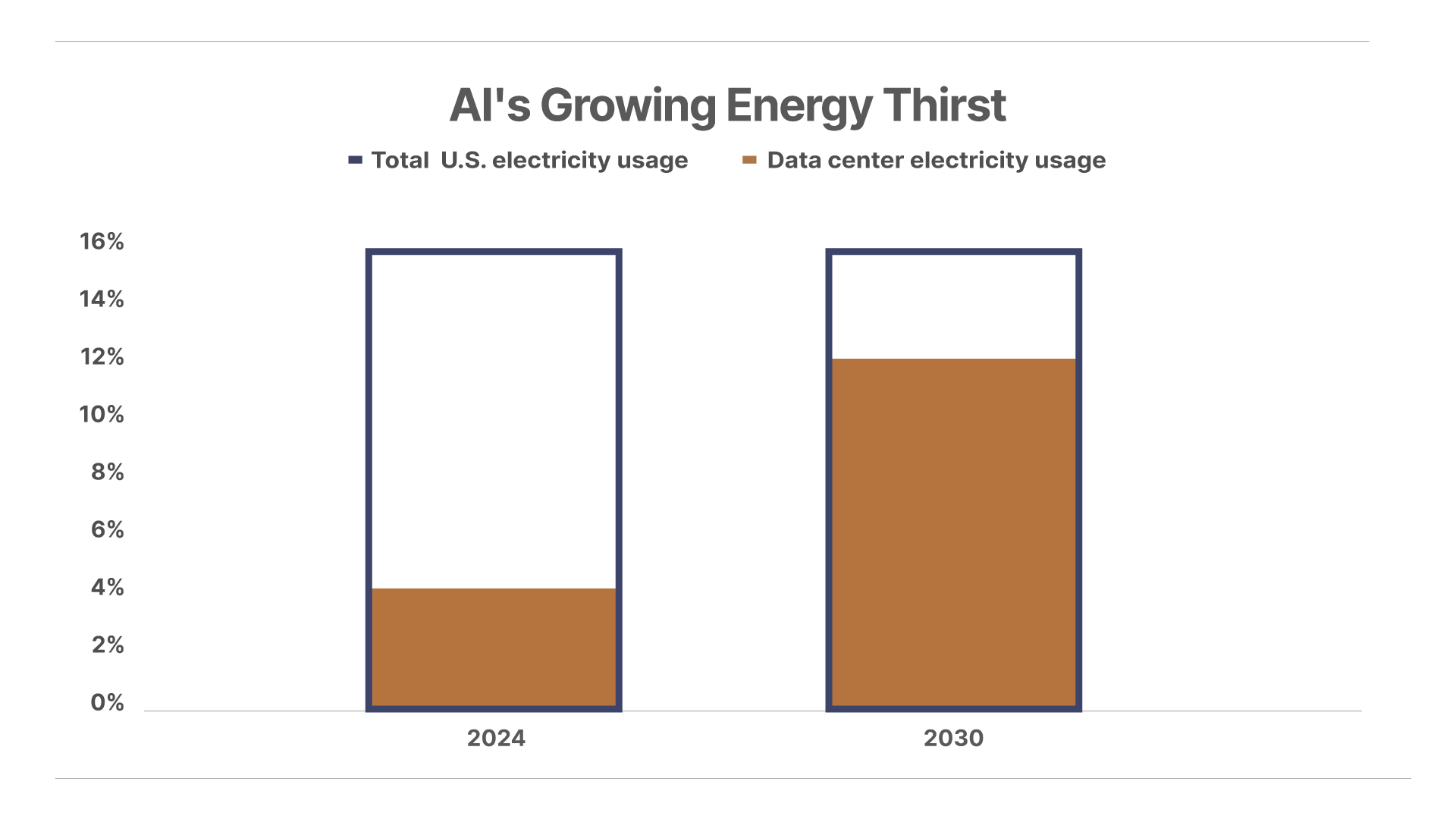
It is often estimated that the U.S. will require investments of at least $500 billion per year to satisfy AI’s demand for power. If electricity growth falls short for any reason – for instance, from a lack of components or because of regulatory issues – the pace of AI’s growth will be forced to slow.
Water
Data centers are massive collections of heat-producing computer equipment that require 300,000 gallons to 5 million gallons of water per day for cooling. This is in addition to the water used to cool the facilities that provide its electricity. This demand for water is creating a backlash in many localities where there have been episodic (or extended) drought conditions.
Computing Power (semiconductors)
The AI buildout may also slow down because of semiconductors shortages. Through 2030, investors will provide $2.7 trillion of capital for data centers and other AI infrastructure, reports the thinktank Center for Strategic and International Studies. For each dollar spent, 54 cents will go toward the semiconductors providing computing power, memory, and storage. Many of these chips are currently in short supply.
Says the online AI-focused publication AI Innovator:
Nearly half of all U.S. data centers planned for 2026 are expected to be delayed or canceled due to shortages of critical electrical equipment… (P)lans could be stymied due to limited supplies of transformers, switchgear, and batteries, which are needed not just for powering AI but also for building out the electrical grid.
Regulatory Issues
AI’s power use is raising electricity costs in certain jurisdictions. The elevated prices are leading certain states, towns, and municipalities to regulate – or just try to stop – the construction of new data centers.
Independent of regulation, it is likely that data centers will become more efficient over the longer term. No doubt AI itself will be enlisted to help in this effort. Even so, we believe that electricity, water, and computing power will constrain the construction of data centers over the next few years.
Functional Limitations
In addition to these physical constraints, AI has functional limitations as well.
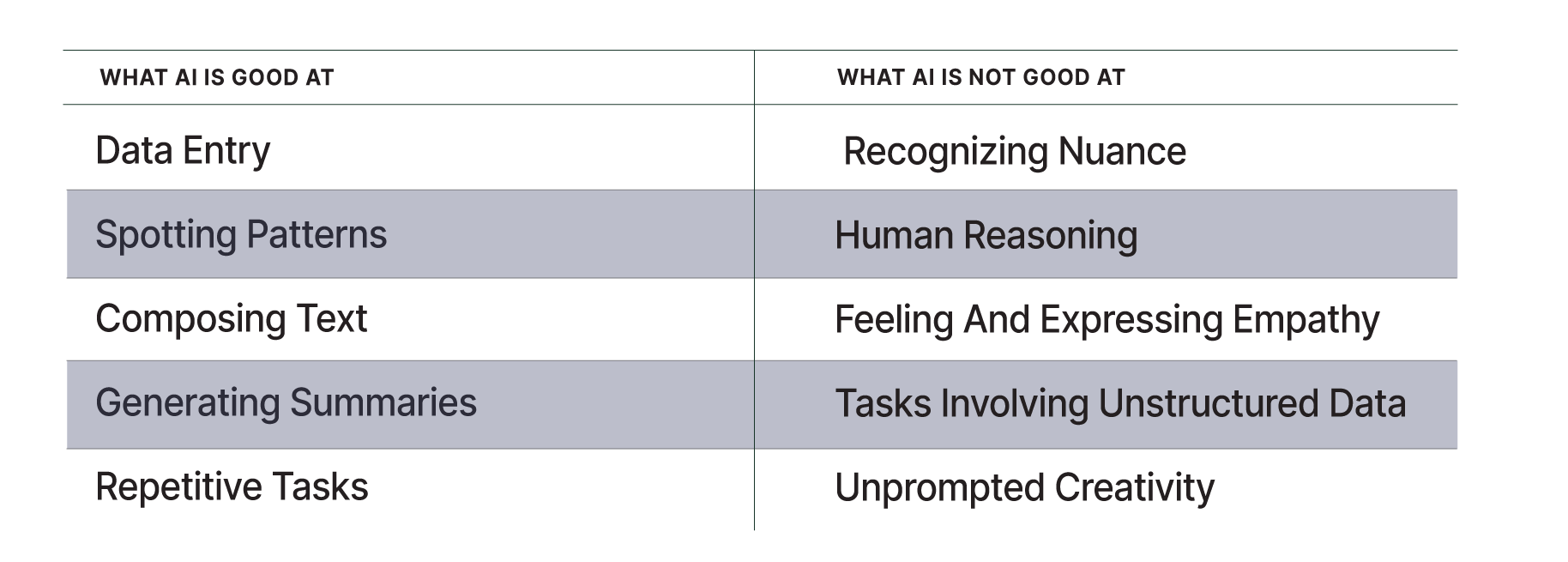
On the positive side, AI is good for repetitive tasks like data entry, spotting patterns in large databases, composing text, and generating summaries.
Among the negatives, AI models cannot grasp nuance, have power to reason, or express human empathy. (In fairness, some people can’t either.)
 Given the constraints related to power, water, semiconductors and government, constructing $2.7 trillion in data centers is likely to take longer than currently imagined – and/or total spending will fall short of this target. Either way, we look at a slowdown as positive.
-
It provides the U.S. economy with more time to adapt to AI and learn how to harness its benefits
-
It spreads economic growth associated with the construction and equipping of data centers over a longer period
-
It reduces the odds of economic overheating
-
It makes it more likely that data center construction plans will be delayed or shelved, which lowers (but does not eliminate) the chances of an AI “bubble”
History shows that humanity consistently adapts to, and ultimately thrives from, major technological shifts. While AI introduces significant changes to the labor market, it remains a tool rather than a replacement for human ingenuity. AI excels at repetitive tasks, data processing, and summarization, but it lacks the nuance, reasoning, and empathy that define human value. Just as the industrial revolution and the digital age eventually expanded economic opportunity and living standards, the AI era will likely follow a similar path. By leveraging AI as a powerful supplement to our existing capabilities, humans will continue to drive innovation, productivity, and essential growth.
Good investing,
Andy Lipman
Southampton, New York
Tell us what you think of today’s Journal: porterstansberrydirect@gmail.com
3 Things To Know Before We Go…
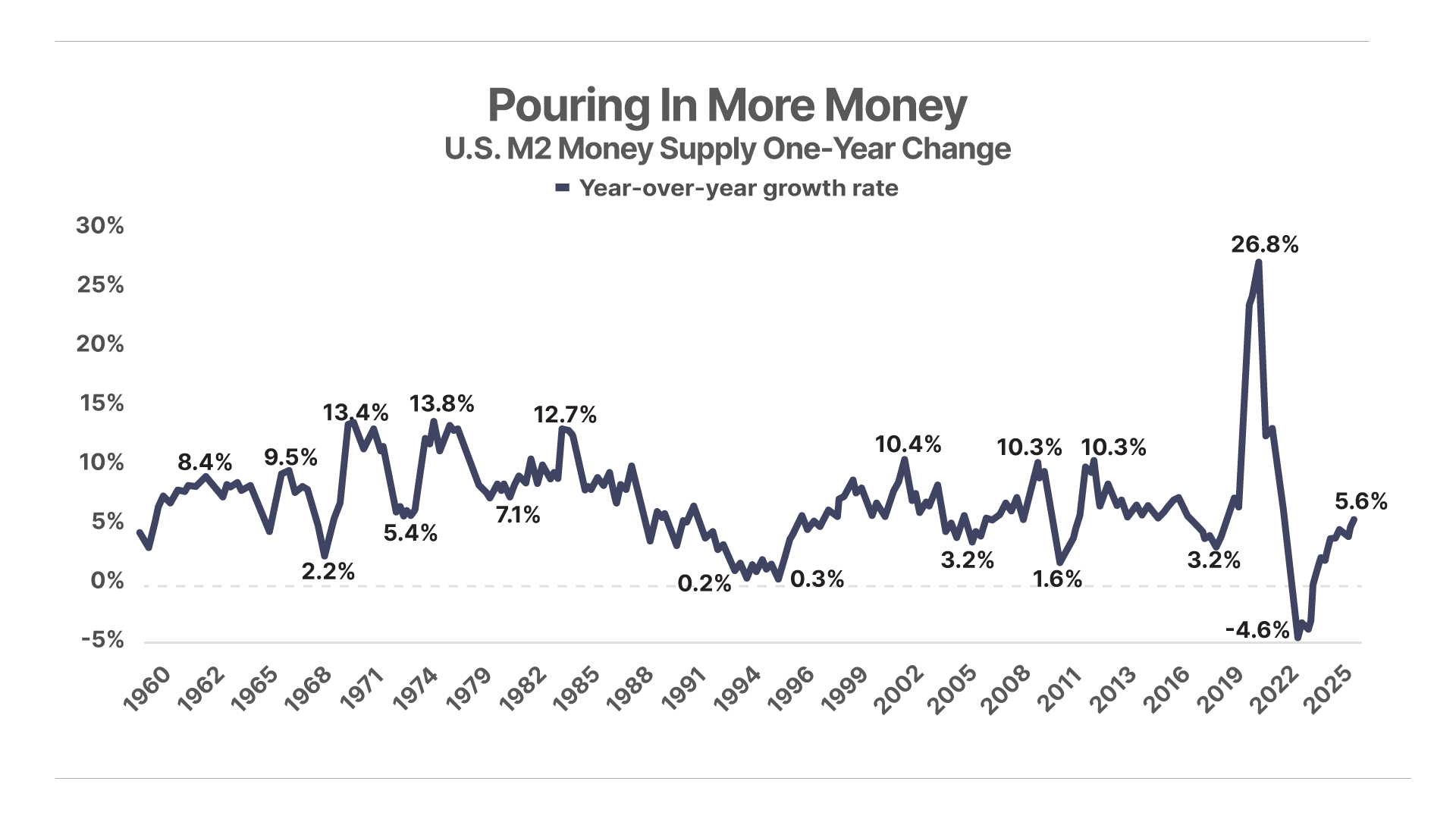
1. U.S. M2 money supply grew 5.6% over the past year – the fastest pace since June 2022. After a roughly 19-month contraction – the longest since the 1930s – money printing is now accelerating again, with the Fed having ended quantitative tightening and resumed Treasury-bill purchases.
2. The Lindy lesson. Arizona State finance professor Hank Bessembinder analyzed 29,000 U.S. stocks over 100 years and found that just 46 firms produced half of the market’s $91 trillion in cumulative wealth. Only 31 names survived the full century. The wealth didn’t come from extremely high rates of return – it came from durable businesses compounding decent rates over decades. The lesson: own what Porter calls Lindy businesses – companies that will still be compounding in 30 years, like Philip Morris International (PM), The Hershey Company (HSY), and Deere & Co (DE).
3. SK Hynix is seeking to raise a record $29 billion in its Nasdaq debut. The South Korean memory maker filed today to list American depositary receipts – on track to be the largest ADR sale ever, surpassing Alibaba’s (BABA) 2014 debut. It joins a market already swallowing a flood of AI-linked equity: SpaceX’s (SPCX) $86 billion initial public offering (“IPO”) this month set an all-time record, Alphabet (GOOG) just raised $85 billion in fresh capital, and private AI firms Anthropic and OpenAI could each seek tens of billions in IPOs before year-end. Investor appetite has absorbed it all so far, but every additional mega-deal tests how much AI equity the market can digest before it breaks.
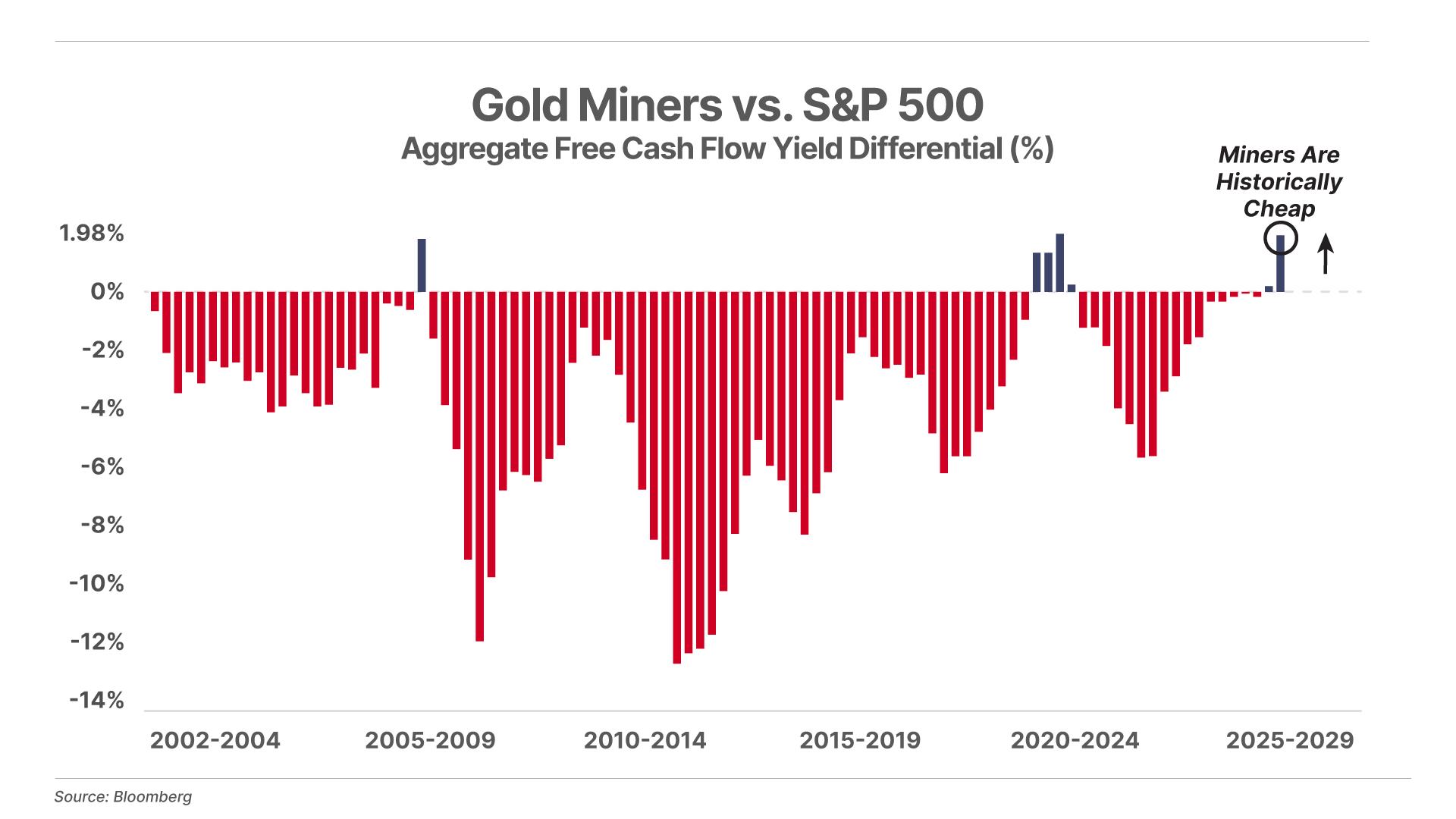
Chart Of The Day… Gold Miners Versus The S&P 500
Gold miners’ aggregate free cash flow yield is now running 1.98 points above the S&P 500’s – the widest positive spread in over two decades of mostly negative readings. Today, the group is historically cheap even as miners throw off record cash at a gold price that just slipped below $4,000.
Mailbag
In yesterday’s Daily Journal guest writer Garrett Goggin made the case that the passage of the Clarity Act by the U.S. Senate, which might happen in July, could ultimately lead to people taking their money out of banks and putting it into gold.
Peter G. writes:
It seems that Bitcoiners are saying the same thing about the Clarity Act and stablecoins as Garrett Goggin of Golden Portfolio is saying. That stablecoins will be a direct connection to Bitcoin and bye bye U.S. dollar. It could be that for both – but it almost never works out that way. Does it? Nice essay.
Porter & Co. Market Snapshot
| Price | Yesterday’s Return | Year-to-Date Return | |
|---|---|---|---|
| S&P 500 Index | $7,365.46 | -1.44% | 8.2% |
| Gold per ounce | $4,117.19 | -1.74% | -7.5% |
| Bitcoin | $62,395 | -3.07% | -28.9% |
| Oil (West Texas Intermediate) per barrel | $73.21 | -1.25% | 24.0% |
| Berkshire Hathaway (BRK) | $737,800.05 | 0.46% | -2.3% |
| Porter’s Permanent Portfolio | – | 0.14% | -2.0% |
| The Better Than Berkshire Index | – | -0.27% | 3.5% |
| Total Return | Annual Return | ||
| Porter & Co’s Top Ranked* | 32.7% | 13.0% | |
| Yield | Yesterday’s Change | Change Year-to-Date |
|
| U.S Treasury 30-Year Yield | 4.90% | 0 bps | 10 bps |
*A Complete Investor risk rating of 1 is defined as a “low risk, high allocation” security, while positions rated closer to a 5 are higher risk. Porter & Co.’s top-ranked positions include those rated either 1 or 2 in Complete Investor portfolio.
Porter & Co. Top Positions
| Publication | Ticker | Description | Total Return |
|---|---|---|---|
| Complete Investor | BWXT | BWX Technologies | 267% |
| Tech Frontiers | QURE | uniQure | 237% |
| Complete Investor | ARM | ARM Holdings | 165% |
| Tech Frontiers | TGTX | TG Therapeutics | 152% |
| Tech Frontiers | ROIV | Roivant Sciences | 143% |
| Tech Frontiers | NUVB | Nuvation Bio | 138% |
| Complete Investor | BTC/USD | Bitcoin | 132% |
| Tech Frontiers | QURE | uniQure | 131% |
| Tech Frontiers | SGMT | Sagimet Biosciences | 131% |
| Complete Investor | PM | Philip Morris | 122% |
Prices as of 4:00 pm ET June 23, 2026
Please note: The investments in our “Porter & Co. Top Positions” should not be considered current recommendations. These positions are the best performers across our publications – and the securities listed may (or may not) be above the current buy-up-to price. To learn more, visit the current recommendations page of the relevant service, here. To gain access or to learn more about our current recommendations, call our Customer Care team at 888-610-8895 or internationally at +1 443-815-4447.