A Business That’s More Efficient Than Japanese Efficiency
Editor’s note: This is Porter & Co.’s Best Buys, which we release to paid subscribers on the fourth Saturday of each month… If you’re not yet a subscriber to Best Buys, to access the full paid issue and our previous Best Buys, please click here.
Still, 81 years later, the last of the Pumpkin Bombs is still missing.
You wouldn’t think they’d be hard to find – 10,000 pounds of bright orangey-yellow metal packed with 5,500 pounds of explosive, each 10-foot-long, blimp-shaped Pumpkin was practically visible from space...
They were also a top-secret tactic hiding in plain sight.
Starting in 1944, Manhattan Project scientists built a pile of Pumpkins to exacting specs: they were the same size and weight as Fat Man, the nuclear bomb that would ultimately help end World War II when it fell on Hiroshima.
During the final weeks of the war, American bombers dropped 49 of the rotund Pumpkins throughout the Japanese countryside, as a dress rehearsal for the real thing. The pilots of Enola Gay and Bockscar – the planes that would release Fat Man and its twin, Little Boy – got practice handling the massive weapons, and the Japanese got used to dodging big, fat, oblong bombs. They’d be less likely to notice Fat Man until it was too late.
The Pumpkins weren’t nuclear, but they packed a powerful wallop. During July and August 1945, the pilots of the 509th Composite Group – a specially-trained Air Force unit who’d trained at a classified base in Utah – strafed Japan with Pumpkins, killing around 400 people and wounding a thousand more.
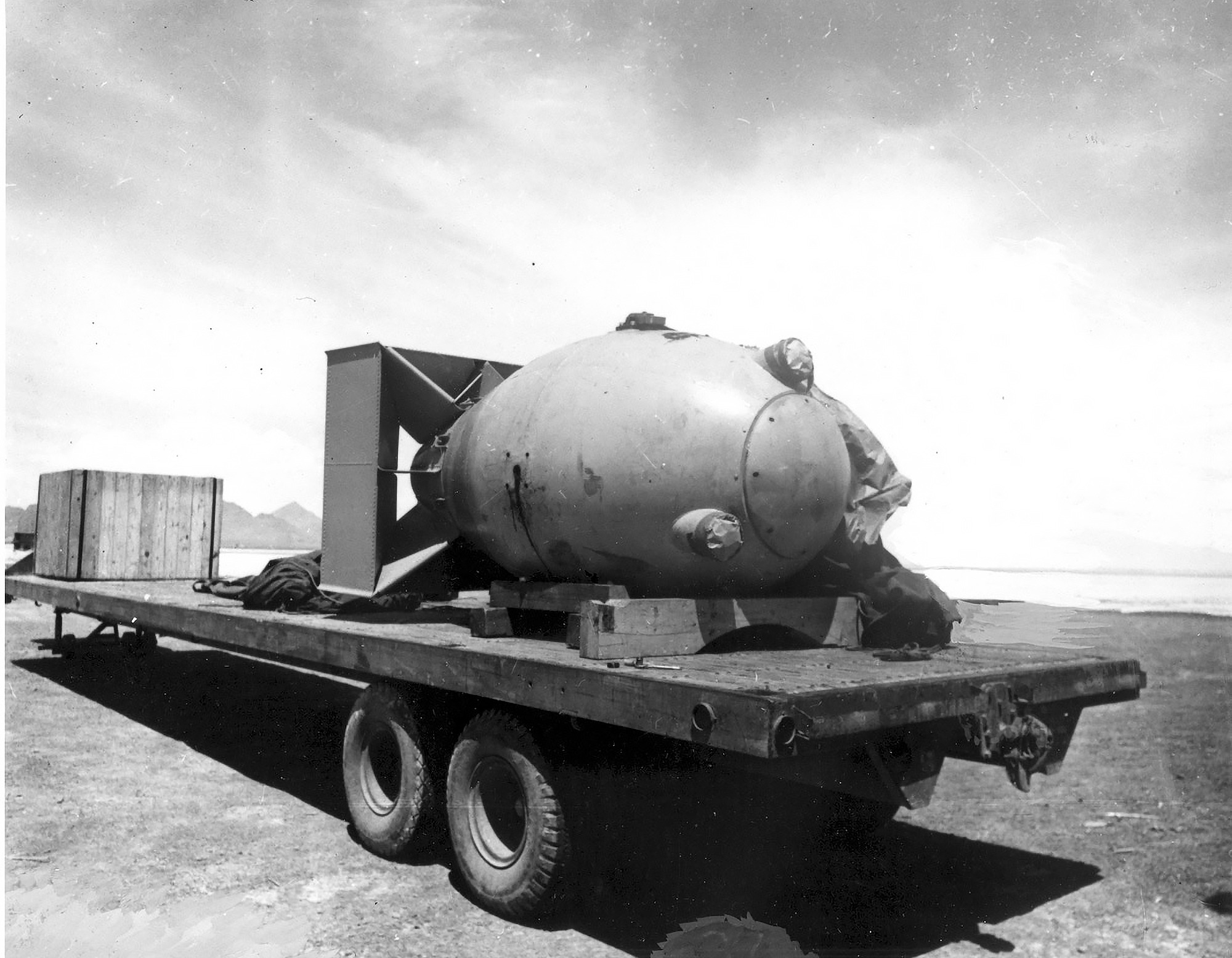
As the 509th honed their aim, they flattened schools, shopping districts, random mountainsides, and the moat of the Imperial Palace.
Not to mention a little car company called Toyota...
By 1945, Toyota – founded in 1926 as an automatic loom factory – was already off to a rocky start. After president Kiichiro Toyoda (who changed the company name slightly for good fortune) started building cars in 1937, the Japanese government had quickly commandeered the assembly lines to make war vehicles.
With Emperor Hirohito calling the shots, Toyoda shuttered production on his Model AA passenger car and focused on assembling military trucks. The government offered one-fifth of the payment upfront and the rest of the cash on delivery. It wasn’t the best business model, but it kept the lights on.
Until the Pumpkin fell, anyway.
By August 14, Fat Man and Little Boy had dropped, but Japan was still embroiled in tense surrender negotiations. Bockscar – the Boeing B-29 that had delivered Fat Man on August 9 – had time to kill and Pumpkins to spare.
So one day before the war officially ended, the plane swerved over the main Toyota plant in Koromo and released one of the last Pumpkins of World War II. A quarter of the facility went up in flames and the whole production line shut down, while two-thirds of the workers went AWOL and never came back.
The next day, Emperor Hirohito formally surrendered via radio broadcast.
The U.S. had 66 leftover Pumpkins, but not for long. Air Force crews quietly escorted the remaining orange bombs 10 miles into the Pacific and tipped the barges into uncharted water.
Of the 49 Pumpkins that were deployed, 48 are accounted for. Japanese researcher Koki Nishioka thinks the final missing Pumpkin is nose-down somewhere in the Kobe region, and he’s still walking the hills with his metal detector, searching.
As the smoke cleared, Toyoda – fearing he’d never build cars again – scraped together a few warehouses and repurposed equipment to assemble radios and grind flour. It took two years to rebuild the squashed Koromo factory. In 1947, American occupying forces finally gave Kiichiro Toyoda the green light to start stamping out automobiles once more.
This did not go so well.
Toyota’s production process was clunky at the best of times, and post-Pumpkin, it devolved into chaos. Foremen scrapped huge batches of parts whenever engineers goofed up – which meant it often took up to a year to make minor design updates. On the floor, workmen clashed over whether to use inches, meters, or the traditional Japanese measuring system, while an ongoing steel shortage and violent labor disputes gummed the works up further.
Toyota was routinely losing up to 300 yen on every 3,500-yen vehicle that rolled off the assembly line, which translated to 8% losses per year.
Staggering under the disapproval of his ancestors, Kiichiro Toyoda moaned,
It was hard for me to bear the fact that Toyota was complacently producing such low-quality vehicles. I felt guilty for many years and lived the difficult life of an outcast.
During the late 1940s – as Japan struggled through the continued humiliation of American occupation – Toyota’s ancestors continued to frown. By 1949, the company was unable to pay its wages, heavily in debt and facing possible bankruptcy. A visit overseas to Ford – which was then producing 80,000 units to Toyota’s 40 – did nothing to improve morale.
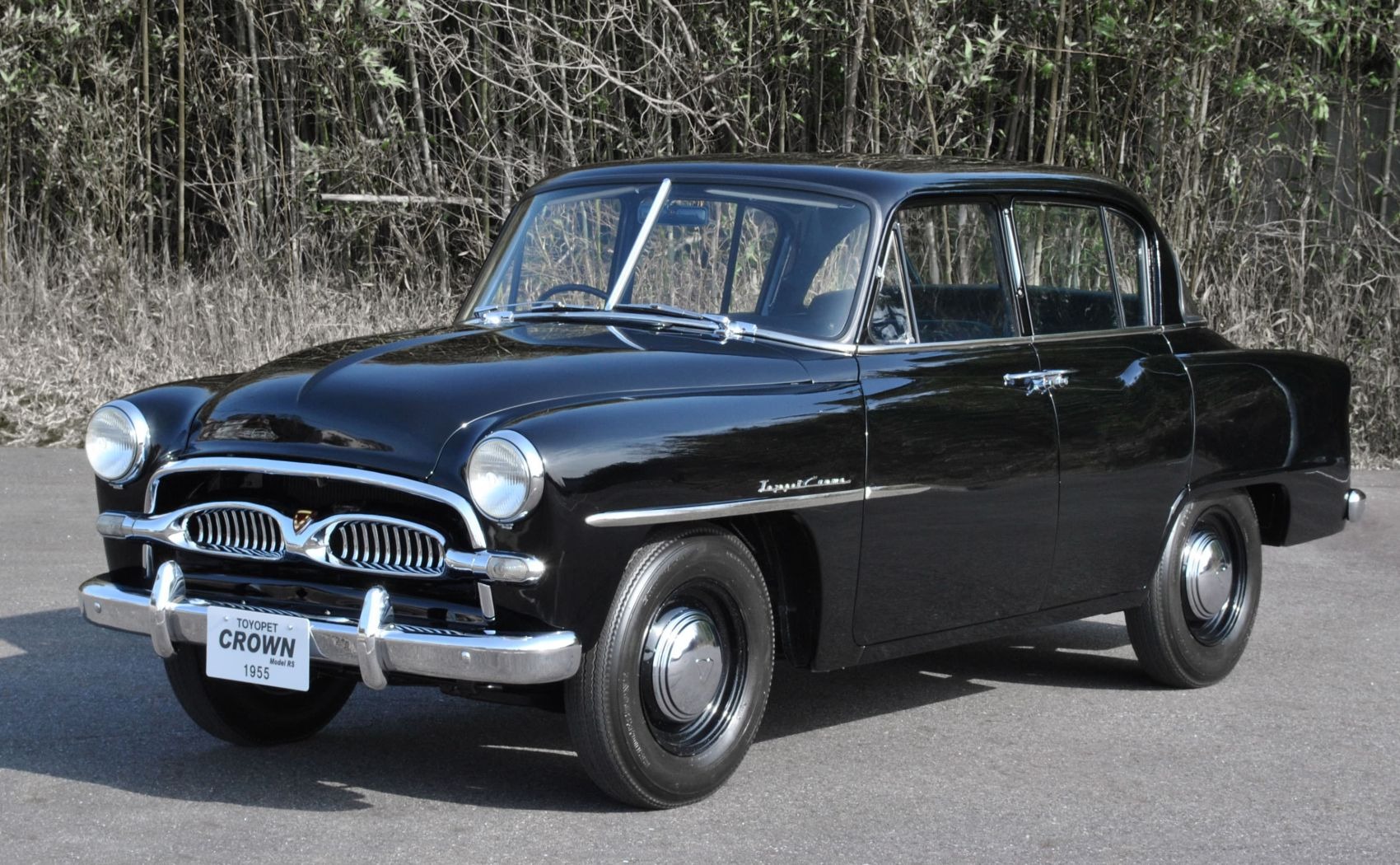 In 1950, Toyoda resigned as president, washing his hands of the mess he’d created. He took his unluckily-spelled last name with him, which was maybe a good thing...
That June, the flailing Toyota factory received an unexpected rush order from the Pentagon... for 4,679 Model BM trucks. The Korean War had just broken out, and the U.S. needed a close cross-border supplier for army vehicles.
At 3.66 billion yen, the contract was, in the words of the Bank of Japan, “divine aid.” It also posed some problems, such as, how the hell would they get all this done by October?
Enter W. Edwards Deming, the American efficiency expert that everyone would rather forget...
I Don’t Get No Respect
“Japanese efficiency” is a perennial buzzword in corporate culture, but frankly, Japanese industry started out as a hot mess. Japan’s famed efficiency culture comes straight from a Wyoming quality-control expert.
W. Edwards Deming traveled to Japan in 1947 to help conduct a census, and stayed to lecture on statistics. By 1950, he was drawing crowds of business leaders to seminars on his PDCA Cycle, a continuous, rolling checklist of Plan-Do-Check-Act.
The Check part of the cycle was where Toyota kept screwing up. Deming explained that it was counterproductive to inspect products for flaws after they rolled off the assembly line – it was much more efficient to troubleshoot while they were still being built.
Deming hadn’t had much luck suggesting these ideas to hard-headed American car manufacturers – but the Toyota team was eager for any help they could get. Toyota’s new president, Taizo Ishida, and chief production engineer Taiichi Ohno quickly implemented Deming’s ideas. They also added some Japanese flourishes: Kaizen (continuous improvement), Jidoka (automation with a human touch), and Kanban boards, a visual way to streamline production.
Conveniently erasing Deming from the picture (and from their promotional materials), they dubbed the new method the Toyota Way.
The turnaround was instant. Armed with Deming’s quality-control magic, Toyota successfully fulfilled its Korean War truck contract and went on to double its book value and crush production goals over the next five years. (By then, surprise, Kiichiro Toyoda wanted to come back on board as CEO, but he died of a cerebral hemorrhage before he could rejoin.)
As the decades rolled on, the Toyota Way (really, the Deming Way) transformed a pumpkin-flavored pancake into America’s number-one import car, a business that would outperform both Ford Motor and General Motors during the 1970s gas crisis. By the mid-1980s, Toyota was building its own factories on American soil and producing 4 million vehicles a year, a close second to Ford.
By then, Ford and other American companies were reaching out to W. Edwards Deming, begging him to re-design their own assembly lines. Too little, too late...
After a lifetime of snubs from American companies – and watching Japanese companies take credit for his ideas – Deming was too worn out to do much more consulting. He died in the early 1990s, efficient to the end: he left behind a refrigerator full of eggs with penciled expiration dates, arranged oldest to newest.
His quality-control system had a far longer shelf life.
Poached!
In 1986, after becoming the first foreign company to sell 1 million cars in America, Toyota realized it had another valuable commodity to export: good advice.
Hand-picking several of his top efficiency experts, CEO Taiichi Ohno sent them out with his blessing to form a consulting company called Shingijutsu, which would teach all sorts of companies how to implement the mystical Toyota Way.
They were quick to point out that if you really wanted to put the Way into practice, you had to come work at Toyota – but they were happy to teach you how to personalize a version for your own factory... for a hefty fee, of course.
Shingijutsu’s experts traveled to large industrial companies to tutor them in Japanese efficiency, also known as “lean” manufacturing, and by various cult-y sounding buzz phrases like Just In Time and “Six Sigma.” Underneath all the window dressing, it was the same old PDCA Cycle from poor, forgotten W. Edwards Deming.
And cult-y sounding or not, it worked like a charm. During the 1990s, a rash of high-profile companies adopted “lean” principles with spectacular results: Motorola saved $16 billion and eliminated 90% of its semiconductor defects, General Electric reduced production time on its engines by 30% and moved 50% more inventory off the floor, and on and on. Today versions of the Toyota Way are still maximizing efficiency at some of the largest Fortune 500 companies, including Boeing, Caterpillar, and Deere & Co.
The 40-year-old company we are recommending in this issue of Best Buys is one of them...
A $150 billion science and tech juggernaut, this company credits its success largely to a personalized version of the Toyota Way that its CEO learned from Shingijutsu’s traveling experts. Happily for us, its performance has been unfairly overlooked, making it a world-class business at an ideal entry point.
Subscribe to Porter & Co.’s Best Buys to unlock the rest of this issue and more.
Become a Best Buys subscriber today to get instant access to the rest of this issue.
On the fourth Saturday of every month, Porter Stansberry and his entire editorial team release their top-3 open recommendations across all our research. Pulling from all our research services, our team looks for the stocks or bonds that are absolute “no-brainers” based on their current prices and what’s happening right now in the markets.
Each monthly issue of our Best Buys includes a summary of our original investing thesis behind each recommendation along with our reasoning on why we think now is the perfect time to start a new position or add to your existing position.
Instead of subscribing to Complete Investor ($2,000 per year), Tech Frontiers ($5,000 per year), and Distressed Investing ($5,000 per year), you can get the best recommendations from each service for just $59 per month.
Even better, use the link below today and lock in our lowest price – a discount of more than 20% off the usual monthly rate.
To get all the details, click here.
This content is only available for paid members. If you are interested in joining Porter & Co. either click the button below now or call our Customer Care team at 888-610-8895.