The “Killer App” Of AI Will Be Banking
Inside Today's Issue
- Essay: Banks Won’t Exist In 10 Years
- More Market Losers Than Winners
- Inflation Did Not Really Fall
- More Crude, Less Diesel, Getting Through
- Chart Of The Day… 10-Year Treasury
- Today’s Mailbag
This morning, I moved $1 million out of my bank.
I opened an account at Public.com and deposited the funds. The process took less than five minutes, in part because I was using an AI-driven process from a financial intermediary (Plaid) that helps link accounts.
In August, Public began to offer AI agents that can manage your investing, your trading, and your cash management using a plain-English interface. You simply tell the AI what you’re trying to achieve, and it goes to work. I asked Public’s AI agent to find the best possible after-tax return on my cash, restricting the search to investment-grade choices.
It explained why, in the face of rising interest rates, the iShares 0–3 Month Treasury Bond ETF (SGOV) is my best option. SGOV is currently paying 3.67%. On $1 million, that works out to $36,700 a year.
That’s a lot of money that my bank is, more or less, stealing from me. Over five years the delta (the difference) between keeping my cash in a traditional bank and allowing Public to find the best possible after-tax yield for me should produce at least $200,000.
Here’s the best part. These same agents are going to run this analysis for me every 30 days and automatically move my cash to wherever it’s going to be treated best. I can set the parameters on what it’s allowed to buy – investment-grade credit with three years or less duration – so I’m not going to end up in penny stocks or anything like that.
Is this worth doing even if you’re not a millionaire? On $100,000, the same calculation produces $3,670 in the first year and about $19,747 over five years before taxes. That might not be worth it to you if you had to go to the bank and do all of this yourself. But Public isn’t charging me anything for this service. It’s free. And it happens automatically – and I don’t have to go anywhere.
The impact of these changes isn’t merely extra interest income for millions of people. This is the end of banking as it exists today. For decades, banks have enabled payments in exchange for taking a huge interest rate spread on our deposits. That business model is over: AI agents can optimize overnight yields and handle payments, for virtually zero cost.
Who is most at risk? Bank of America (BAC). Its Advantage Plus checking account pays no interest. Bank of America holds $544 billion of other people’s money... and pays exactly nothing.
Why do customers tolerate this? There are many reasons – habit and convenience are top among them. But the biggest single reason is switching costs. Who has time to go to the bank, fill out the paperwork, and mail it to the broker?
No More Switching Cost, No More Bank
But can’t Bank of America just increase its deposit rates and compete? Nope.
I’ve been warning our paid-up subscribers about this situation for three years, so you may already be familiar with all of this. But if not... grab your popcorn. Pour yourself a cold drink. And enjoy.
In 2020 and 2021, Bank of America made the worst trade in the history of the financial markets. It bought around $700 billion of long-dated, fixed-income securities that were yielding less than 2%.
Bank of America made its biggest investment ever, into long-duration fixed income at a 400-year low in interest rates. It “top ticked” the bond market.
By June 2026, those $700 billion in investments were valued on Bank of America’s balance sheet at $506 billion. But... those bonds were only actually worth about $400 billion. And their value continues to fall off a cliff as interest rates rise.
Held-to-maturity accounting permits the bank to keep these securities at amortized cost rather than mark them down when interest rates rise. But that accounting treatment only holds if the bank doesn’t sell those bonds. The bank reports a yield of just 1.94% on its held-to-maturity securities. Its broader debt-securities portfolio only yields 2.74%.
In other words, Bank of America is making so little on its investments that it really can’t compete in the emerging higher-rate environment. How is Bank of America going to replace free checking deposits with funding that costs 4%? How is it going to compete with AI agents that can place funds directly with the U.S. Treasury overnight and manage payments – for free?
It can’t. And the higher rates go, the more market pressure will come to bear on Bank of America.
What happens when its customers figure this out? Don’t be last in line.
Congressman Bill Foster of Illinois has warned regulators about an “agentic AI bank run,” potentially occurring “in seconds, not hours.” I don’t think it will take long for the banks to lobby Congress to make new rules preventing you from doing exactly what I did this morning on Public.com. New restrictions on moving cash out of the banks are coming.
Don’t be last in line.
Share your ideas about today’s Daily Journal: porterstansberrydirect@gmail.com
Good investing,
F. Porter Stansberry
Stevenson, Maryland

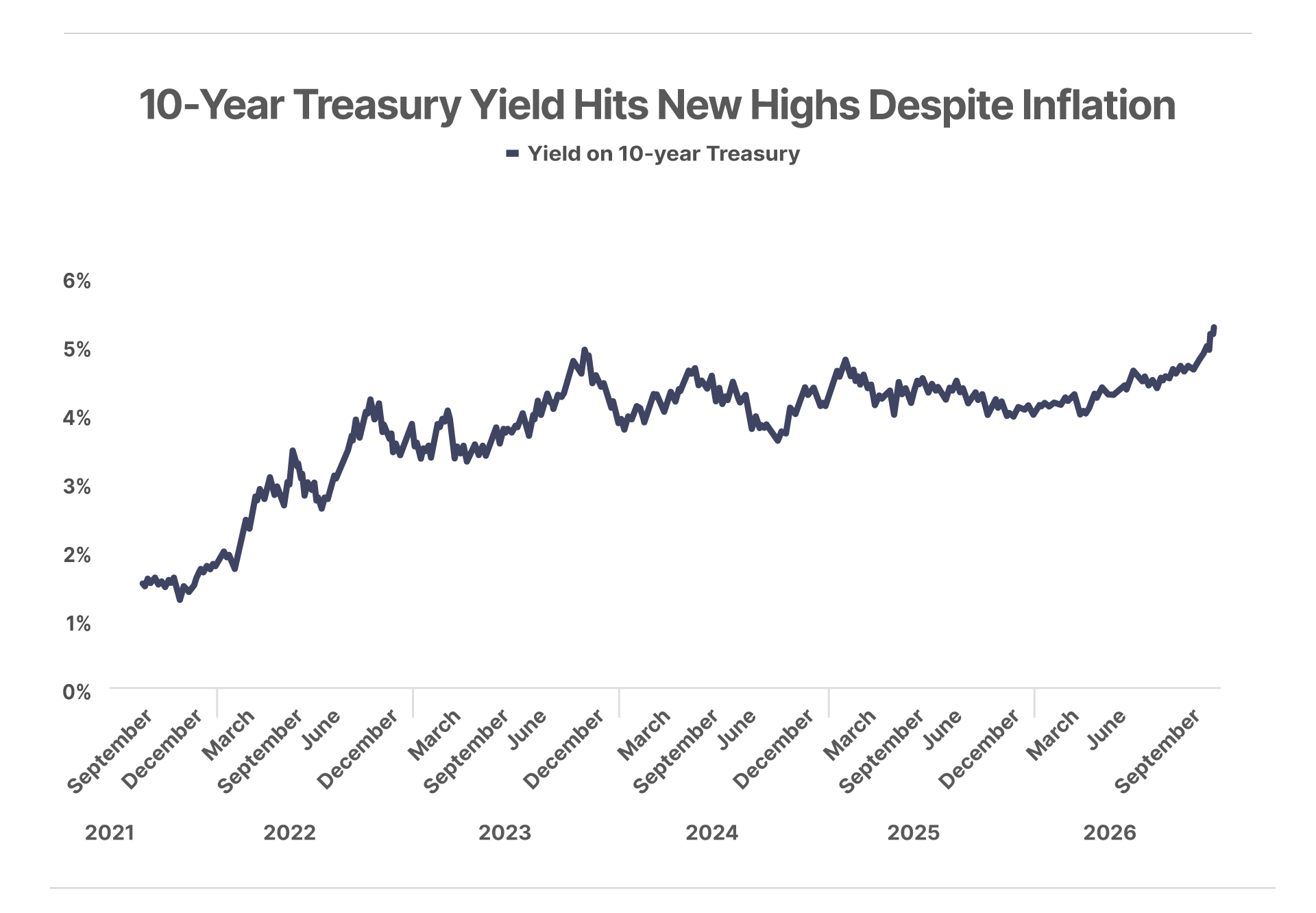
1. The market has a “bad breadth” problem. While the S&P 500 is trading just shy of an all-time high, 60% of index stocks are down at least 20% from their prior high. Meanwhile, the spread between the S&P 500 index and the median stock is now 16% – a level of dispersion only seen at the peak of the dot-com bubble in early 2000. 2. Inflation did not fall in August, despite today's lower numbers. The personal consumption expenditures ("PCE") price index – the Federal Reserve's preferred inflation gauge – rose 3.4% in August. Core PCE, which excludes volatile food and energy prices, rose 3.0%. Both beat forecasts by 0.3 points. However, starting today, the government changed how it measures prices for investment management fees, software, and legal services, likely lowering core PCE by up to 0.2 percentage points. Treasury yields initially fell after the release, then fully reversed within hours – and for good reason: on a like-for-like basis, annual inflation held flat in August, and the monthly pace picked up. 3. Crude oil is leaving the Persian Gulf at prewar rates again, but refined fuel is not. Goldman Sachs estimates the region exported 19 million barrels a day (“b/d”) of crude over the past week, 108% of its 2025 average. Exports of diesel, gasoline, and jet fuel, however, remain at half their 2025 level. Iran appears to be losing control of the strait, but open shipping lanes cannot repair damaged refineries. Enverus Intelligence Research, an energy research firm, estimates that war has damaged or constrained about 7 million b/d of refining capacity in the Middle East and Russia, and that some of it may not return until late 2027. This morning, the August PCE reading showed an increase of 3.4% year-over-year, significantly cooler than the expected 3.7% increase. But it wasn’t enough to satisfy the bond vigilantes, with 10-year U.S. Treasury nearing a 25-year high of 5.3%. Ken L. writes: Thanks for the tedious analysis.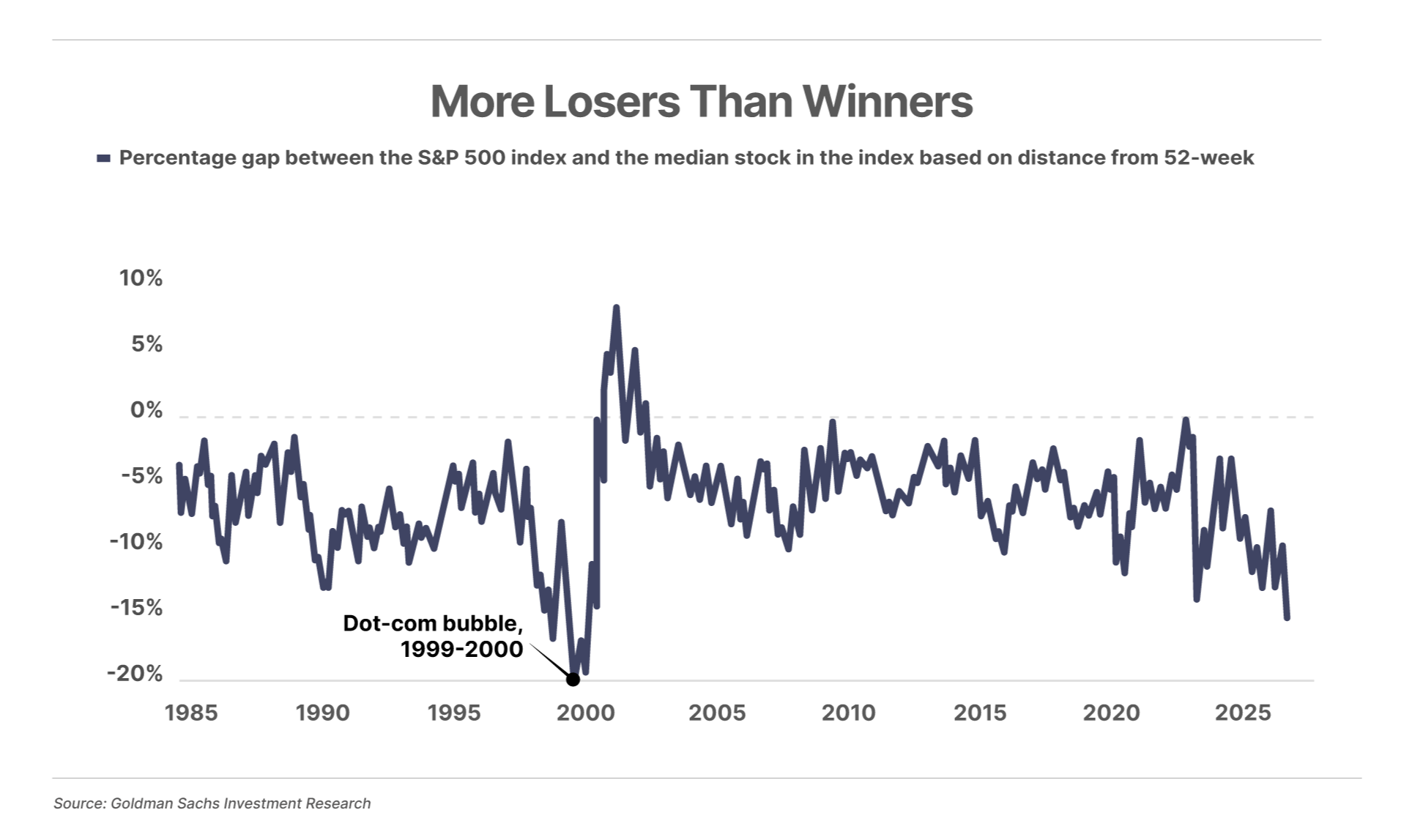
“Tedious Analysis”
I accepted the narrative about VG from long ago based on the modular construction of the LNG trains described here and elsewhere. It was annoying that the market didn’t believe that story but I have held onto my position despite the paper losses.
I respect your research on VG and now I am more confident about the stock moving forward, cuz y’know, bombs and destruction and disruption and all that.Porter & Co. Market Snapshot
Porter & Co. Top Positions