What The Fastest AI Chip In The World Runs On
Inside Today's Issue
- Essay: Big Power In Small Doses
- Cash Is King
- CalPERS Exits Mag7
- Why Qatar Needs Venture Global
- Chart Of The Day… Brazilian Stock Market
- Today’s Mailbag
Editor’s note: Before you vote in the midterms next week, there's something crucial you need to know. To get you up to speed, Porter is holding an emergency broadcast this Thursday – revealing the "Kill Switch" policy that the head of the IMF says could hit hard-working Americans "like a tsunami." If you want to know what it could mean for your savings and investments – save your seat here.
Meanwhile, today in the Journal, Porter & Co. analyst Jared Simons reports on a small firm that helps power AI computer chips in a very big way.
Cerebras Systems (CBRS) makes the biggest computer chip ever built.
A normal chip used to power artificial intelligence (“AI”) platforms is about the size of a postage stamp. The Cerebras chip is the size of a square dinner plate, carved from a single silicon wafer.
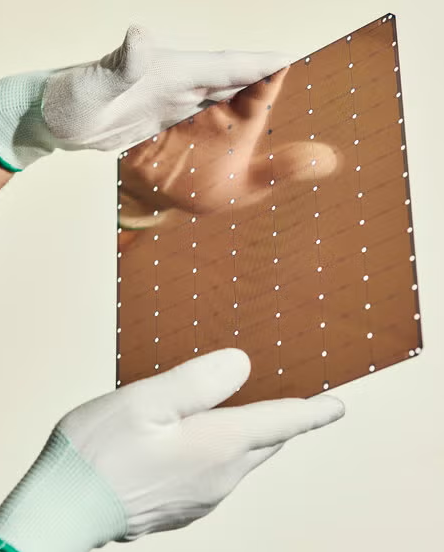
The size is critical. Most AI models are too large to run on a single conventional processor, so their work must be spread across many chips that constantly move information back and forth. Cerebras puts enormous computing power and memory together on one wafer, eliminating much of that power-consuming communication.
The payoff arrived in August. OpenAI introduced an Ultrafast version of its GPT-5.6 Sol model powered by Cerebras, generating up to 750 tokens per second – 14 times faster than the standard service. Tasks that once took minutes could now be completed in seconds.
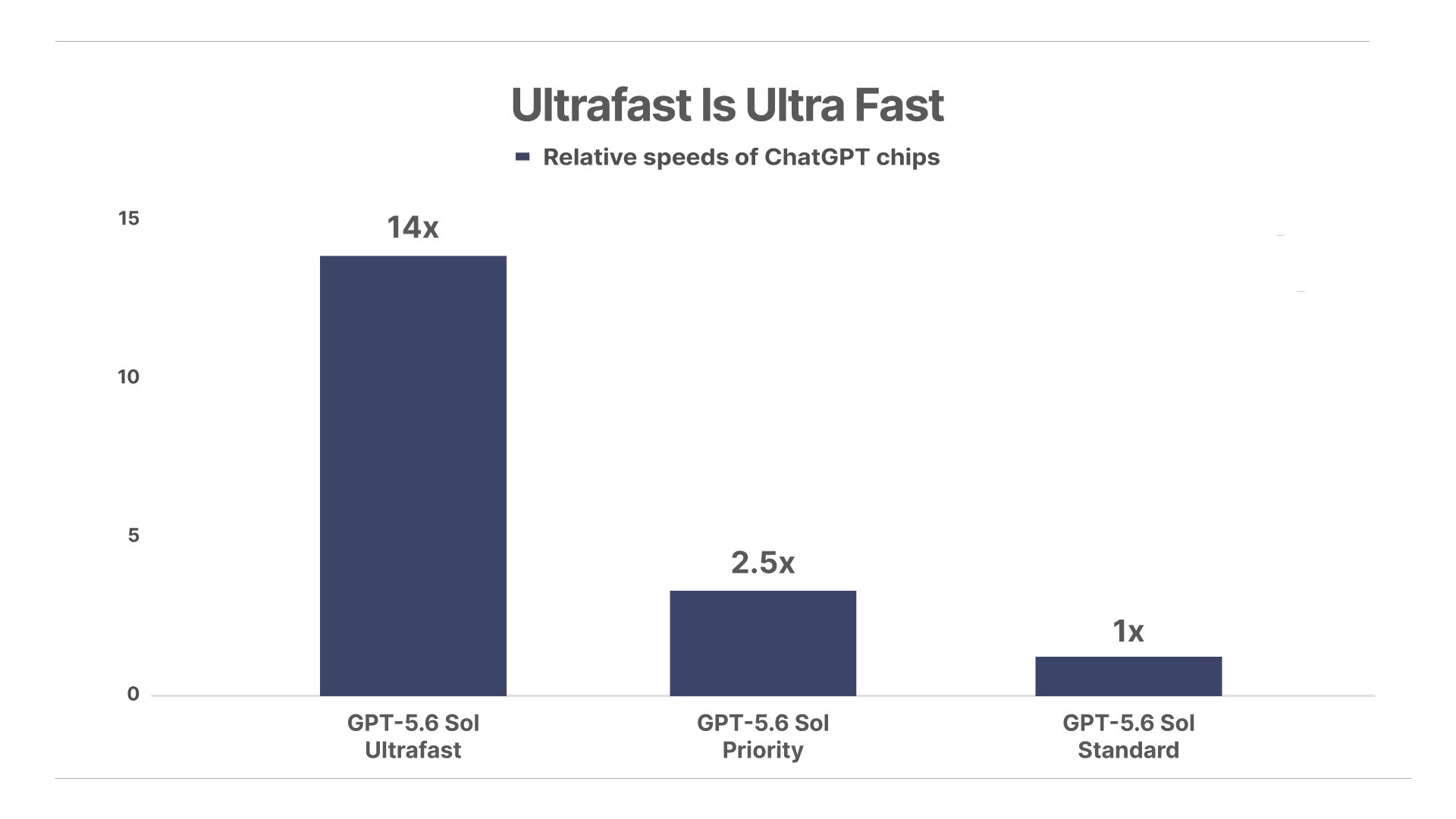
Releasing Ultrafast, Cerebras proved it could win on speed. Scale is a different problem. OpenAI had contracted for 750 megawatts of Cerebras capacity through 2028, in a deal reported at more than $10 billion, with Cerebras agreeing to build and lease the data centers itself. It wanted to bring ultra-fast computing to a much larger audience. But Cerebras couldn't build fast enough. CEO Andrew Feldman acknowledged the constraint in a recent interview:
We didn't have the capacity for them.
The industry has built chips capable of extraordinary things, but supplying enough electricity to run them – and enough infrastructure to deploy them – is becoming a problem.
One Cerebras wafer consumes enough electricity to power more than a dozen household space heaters. Efficiently delivering that much power across a 12-inch piece of silicon is the hardest problem Cerebras had to solve.
But Cerebras didn’t solve this problem itself.
The Water Problem
Think of electricity like water. Voltage is the pressure pushing it through a pipe. Current is the amount flowing.
Data centers distribute electricity at high voltage, just as cities move water through large pipes under high pressure. But processors need the opposite: extremely low voltage and enormous current. Today's most powerful chips require thousands of amps at less than a volt.
Imagine trying to deliver a fire hydrant's worth of water through a teacup-sized opening without wasting any of it.
Traditional power systems lower the voltage several inches from the processor, then push the resulting current through copper pathways across the circuit board. Those pathways create resistance, wasting electricity and limiting how quickly the chip can draw additional power.
The physics is unforgiving. Double the current through the same resistance, and the heat loss quadruples. As AI chips demand more power at lower voltages, the old approach becomes increasingly difficult to scale.
But one U.S.-based company developed a different solution.
Instead of converting the voltage several inches away, it places the power system directly beneath the processor. Electricity travels most of the way at higher voltage and lower current, then converts into the enormous current the chip needs in the final millimeter.
Less resistance. Less wasted electricity. More power delivered precisely where it is needed. And this company holds patents covering the proprietary architecture.
Twice The Power For The Same Wafer
Cerebras encountered this power-delivery problem before nearly anyone else because its processor was so much larger than a conventional chip.
In 2019, the power-delivery company worked directly with Cerebras to develop the architecture for its original wafer-scale processor. The design reduced resistance in the power-delivery network by more than 50%.
Now, seven years later, that relationship is more important than ever.
And the collaboration is paying off… In August, Cerebras introduced its fourth-generation system, the CS-4. The upgraded wafer retains the same fundamental transistor count and memory capacity as its predecessor, but its performance has improved dramatically.
One of the most important changes was how the chip gets its electricity.
The new design produces twice the speed per wafer on the same silicon.
You do not need a better chip to get more computing power. You need a better way to power it.
That’s what this modular power firm does best… the company is preparing to expand manufacturing capacity dramatically. It has purchased sites for two additional factories that could eventually increase total capacity to nearly five times that of its original facility.
But, they aren't building those factories for Cerebras alone.
Why Every AI Chip Is Heading In This Direction
Cerebras is the extreme example of a problem confronting the entire semiconductor industry.
Nvidia (NVDA), AMD (AMD), Alphabet (GOOG), Amazon (AMZN), and other designers of advanced AI processors are all pursuing the same objective: more computing power from increasingly dense chips.
That means more current delivered into smaller spaces. Nvidia's next-generation Rubin processor, for example, is specified to consume up to 2,300 watts – more than three times the power of its H100 processor from 2022.
And the harder these processors work, the more expensive wasted electricity becomes. Every watt lost as heat is a watt that must be generated, distributed, and ultimately removed by the data center's cooling system.
Power delivery is now a competitive advantage – one set by the laws of physics.
Even modest improvements in efficiency can translate into enormous savings across a data center consuming hundreds of megawatts. More importantly, better power delivery can let existing processors perform more work without adding more silicon.
The company has patents protecting much of this technology, and it has already shown that it can enforce them.
And the economics are extremely compelling. Customers can either purchase the company's modules or license its patented technology and source compatible systems elsewhere. Either arrangement can generate revenue for the patent holder.
The Bigger Opportunity
Cerebras may become one of the big winners of the AI revolution. Its technology works, and the demand for faster inference is real. But its future depends on building enough capacity, attracting customers, and competing against some of the largest technology companies in the world.
The company powering its processors offers a different proposition.
It reported quarterly bookings jumped more than 150%, and it finished the quarter with more than $500 million in cash. Its manufacturing business is expanding, while licensing provides another lucrative source of profits.
And despite those results, its shares have retreated sharply from their summer high. Whether the AI buildout continues at breakneck speed or companies become more disciplined with their spending, the need to get more computing power from every watt will only grow. And at the center of that shift is a power-management company valued at less than $10 billion… for now.
We recommended shares of this company to our Complete Investor subscribers in May – and just today Ross Hendricks shared a trade idea to members of The Trading Club. Two different ways of benefiting from our research into this one very promising company.
For those who are not yet Trading Club members, get access to this trade here.
Jared Simons
Miami Beach, Florida

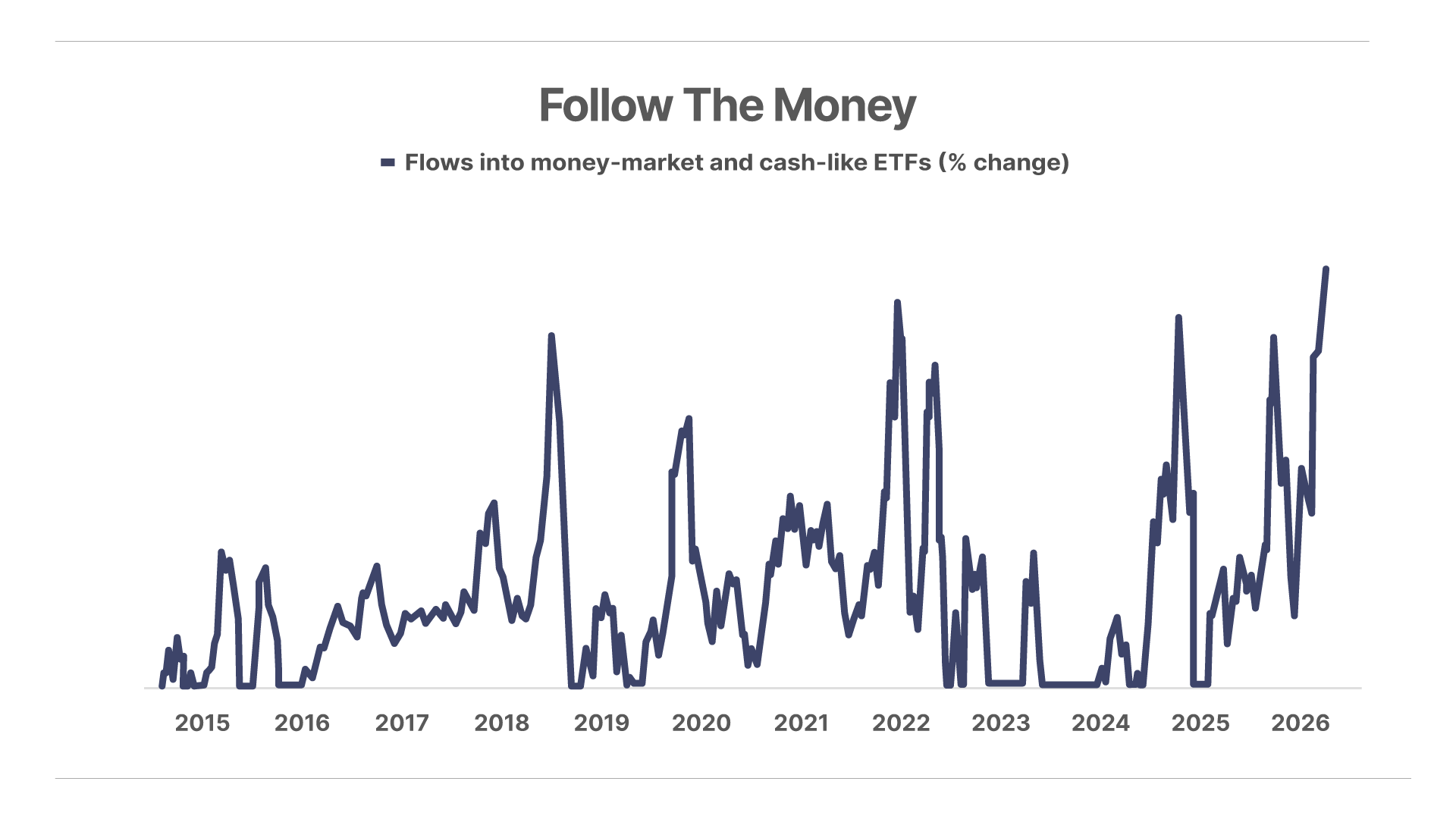
1. Investors are moving into cash at the fastest pace in more than a decade. Over the past three months, flows into money-market and cash-like exchange-traded funds (“ETFs”) have hit their highest level since 2015. Past spikes in 2018, 2020, 2022, and 2025 occurred alongside sharp declines in the S&P 500 and generally marked great times to buy stocks. However, this recent record flow into cash has occurred with the broad market just 2% below its all-time high – not your typical “buy” environment.
2. The largest U.S. public pension fund slashes its Mag 7 holdings by 26%. California’s $640 billion pension fund CalPERS had heavy exposure to the Magnificent 7 – Apple (AAPL), Microsoft (MSFT), Alphabet (GOOG), Amazon (AMZN), Nvidia (NVDA), Meta (META), and Tesla (TSLA) – during the first half of 2026. The Mag7 comprises about 35% of the S&P 500. CalPERS cited cheaper valuations in private markets and the risk of public markets concentrating in a handful of names.
3. Venture Global capitalizes on gas shortage. U.S. liquefied natural gas (“LNG”) exporter Venture Global (VG) is in advanced talks to supply at least 3 million tons of LNG per year to QatarEnergy – the world’s largest gas exporter. Qatar’s Ras Laffan export facility has run at reduced capacity since Iranian missiles and drones devastated it in March, causing the company to declare force majeure on LNG shipments into Asia and Europe. Qatar desperately needs LNG to fulfill its contractual commitments, and Venture Global could help meet this demand for years to come. Venture Global remains one of our top energy recommendations in Complete Investor.
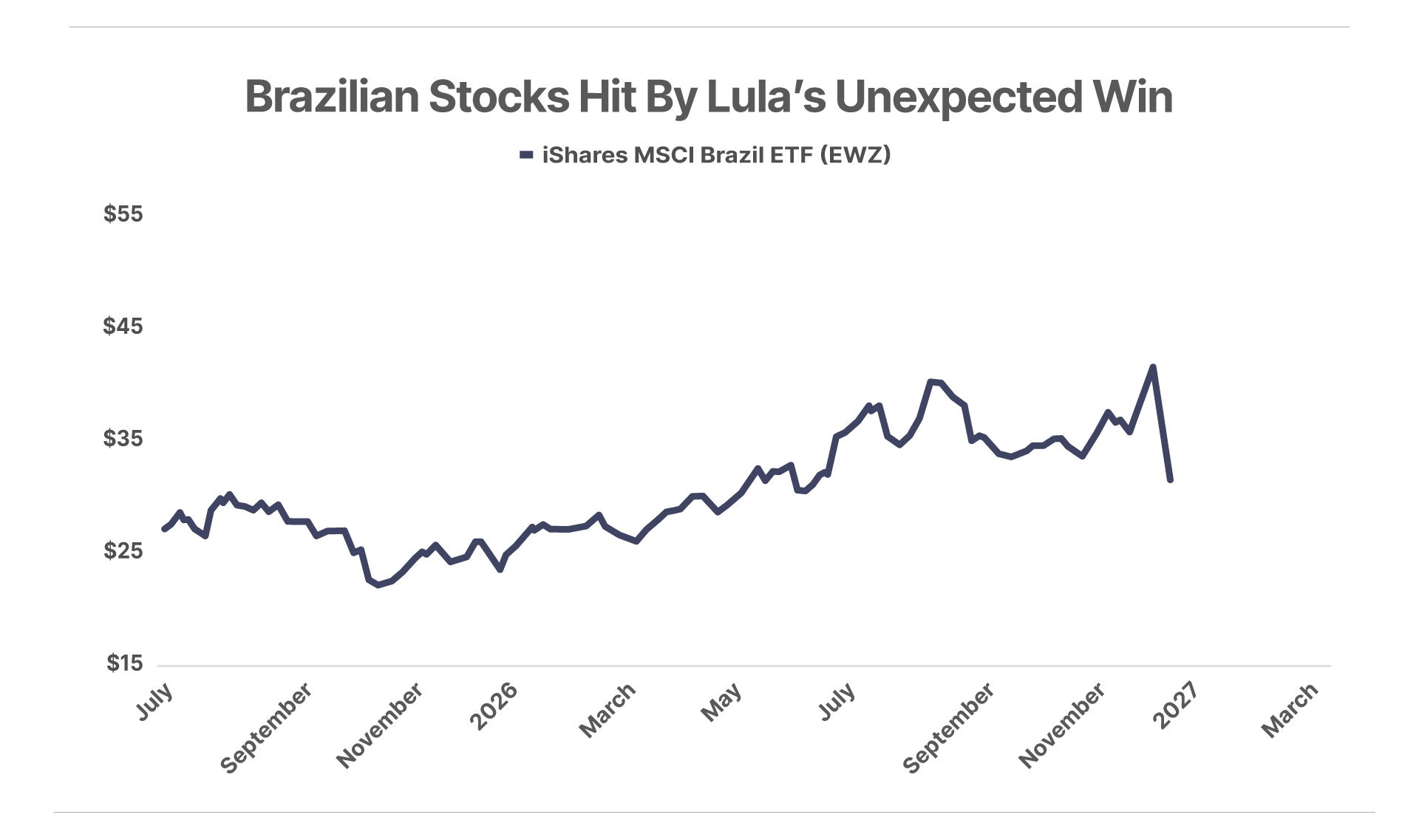
The iShares MSCI Brazil exchange traded fund (EWZ) dropped as much as 30% today after left-leaning President Luiz Inácio Lula da Silva unexpectedly defeated right-wing senator Flávio Bolsonaro in Sunday’s runoff Presidential election. Brazilian stocks had rallied ahead of the election based on expectations for the opposite outcome.
“SpaceX And Tesla”
Last week, Porter wrote in the Journal about the SpaceX (SPCX) earnings call… wondering if Tesla (TSLA) and SpaceX – both founded by Elon Musk – might merge. He also reported on the massive amounts of energy SpaceX is able to access.
David A. writes:
The analysis just solved a mystery for me. As a Tesla stockholder and Model Y owner, I could not figure out why the plan announced after Q3 earnings for the next few years for the company is so conservative in a market with huge growth potential. To me, the answer is that Musk is putting Tesla into “harvest mode,” meaning he is optimizing its strategy to generate as much free cash as possible which would flow into SpaceX after a merger. The calculus is that SpaceX can earn a larger profit on that cash than Tesla could.
Matt V. writes:
Great commentary on SpaceX, Porter. Looks like something to put into my children's investment portfolios and ride it out.
Interesting... SpaceX is using natural gas for power generation. Not nuclear. Not solar. I am old enough to remember when Elon was touting the merits of solar... whatever happened there? (That's a rhetorical question).
Porter & Co. Market Snapshot |
Through Friday, October 23, 2026 close |
| Markets |
| Index or asset | Last | 1-Day | YTD | 1-Year |
|---|---|---|---|---|
|
S&P 500
Total return
|
759.97 | −0.52% | +12.3% | +14.4% |
|
Gold
Front-month futures
|
$4,007.90 | −1.29% | −7.7% | −3.3% |
|
Bitcoin
4 pm ET print
|
$81,167.00 | −0.26% | −7.3% | −26.4% |
|
Crude oil
WTI, per barrel
|
$103.27 | +3.82% | +79.9% | +67.1% |
|
Berkshire Hathaway
NYSE: BRK-A
|
$813,595.00 | −0.84% | +7.8% | +10.6% |
| U.S. Treasury yields |
| Maturity | Yield | 1-Day | YTD | 1-Year |
|---|---|---|---|---|
|
2-Year
|
4.69% | +4 bps | +122 bps | +121 bps |
|
10-Year
|
5.00% | +4 bps | +82 bps | +99 bps |
|
30-Year
|
5.33% | +4 bps | +49 bps | +75 bps |
| Porter & Co. strategies |
| Strategy | 1-Day | YTD | Since start | Per year |
|---|---|---|---|---|
|
Porter's Permanent Portfolio
Since September 25, 2024
|
−1.18% | +5.9% | +33.6% | +15.0% |
|
Better Than Berkshire Index
Since May 16, 2025
|
−0.48% | +3.2% | +3.5% | +2.4% |
|
Porter & Co. Top Ranked*
Since July 14, 2022
|
−0.75% | +5.4% | +29.7% | +10.1% |
Porter & Co. Top Positions |
Through Friday, October 23, 2026 close |
| # | Position | Total return |
|---|---|---|
| 1 |
Roivant Sciences ROIV
The Complete Investor
|
+215% |
| 2 |
Roivant Sciences ROIV
Biotechnology
|
+209% |
| 3 |
Bitcoin BTC/USD
The Complete Investor
|
+196% |
| 4 |
TG Therapeutics TGTX
Biotechnology
|
+194% |
| 5 |
Philip Morris PM
The Complete Investor
|
+148% |
| 6 |
Skyward Specialty Insurance SKWD
The Complete Investor
|
+145% |
| 7 |
APA Corporation APA
Porter & Co. Asymmetry
|
+138% |
| 8 |
BWX Technologies BWXT
The Complete Investor
|
+126% |
| 9 |
W.R. Berkley WRB
The Complete Investor
|
+116% |
| 10 |
Chubb CB
The Complete Investor
|
+92% |