Issue#140, Volume#3


Meta Has The Worst Capital Allocation Track Record In Tech – It Will Lose The Most On AI Too
Inside Today's Issue
Editor’s note: Today, Porter shares the third story of a multi-part series on the AI buildout – and its long-term consequences.
On Tuesday and Wednesday of this week, we documented the creation of an enormous bubble in demand for data centers and compute. We’ve described the circular nature of Nvidia's (NVDA) investments and vendor financing, and we’ve shown you how its upcoming $500 billion debt deal will be used to complete the OpenAI and Anthropic buildout.
But Nvidia isn’t the company most at risk from extreme vendor financing deals… Who is most at risk?
Meta Platforms (META).
Meta has the worst capital-allocation record of any major American technology company over the past decade. Not one of the worst. The worst. And the reason is simple: Meta founder and CEO Mark Zuckerberg.
Meta isn’t really a public company. Yes, the public owns most of the economic interests, but it doesn’t have any actual control. Zuckerberg has retained complete control over the company through super voting stock. Nobody can stop him.
That might have been a good idea if Zuck was Steve Jobs. But he isn’t. Instead, he’s proven to be the very worst CEO in tech. Especially when it comes to capital allocation.
In October 2021, Zuckerberg changed the company's name from Facebook to Meta Platforms and staked its future on something no one had ever heard of… and no one has ever used: the “metaverse.” Since then, Meta’s Reality Labs segment has produced roughly $13 billion of cumulative revenue against roughly $88 billion of cumulative operating losses. That is $88 billion of shareholder money that vaporized on Oculus headsets, Horizon Worlds, and augmented reality (“AR”) glasses.
And what’s even worse is that the losses continue to accelerate.
Reality Labs lost:
- 2019: $4.5 billion
- 2020: $6.6 billion
- 2021: $10.2 billion
- 2022: $13.7 billion
- 2023: $16.1 billion
- 2024: $17.7 billion
- 2025: $19.2 billion
And these losses aren’t the only massive errors in judgment.
In 2021, with the stock at an average price of $323, Meta spent $44.5 billion buying back its own shares. The next year, the stock fell to $93 per share. Had Meta simply waited one year, the same $44.5 billion would have retired an additional 118 million shares.
At today's price, that is another $65 billion of value transferred from continuing shareholders to selling shareholders – because management insisted on buying at the top.
Add it up. Between the metaverse and the peak-price buyback, Meta destroyed roughly $150 billion of shareholder capital in a five-year window. And that is before you count the stock-based-compensation leak. The diluted share count only fell 11.6% despite $174 billion (!) of gross repurchases since 2017.
No goodwill impairments. No board accountability. Zuckerberg's super voting stock makes sure of it. Which brings us to artificial intelligence (“AI”).
Meta's 2025 capex was $69.7 billion – 34.7% of revenue. The most aggressive single-year capital investment in the company's history. But that’s not even half of the real spend. The real spending is being hidden in “off-balance-sheet” deals so big and so brazen they would make Enron blush.
Here’s one example.
Meta disclosed in its 2025 annual report a 20% interest in a Louisiana data-center venture formed in October 2025. Meta's maximum loss exposure: $45.95 billion. How could 20% of an entity formed less than a year ago be worth $250 billion?
And wait, who really owns this data center?
Meta's auditor, Ernst & Young, designated “accounting for a variable interest entity” – aka, this data center deal – a critical audit matter in the 2025 annual report. It said its determination of which entity was the primary beneficiary was “especially challenging due to the significant judgment required.” In other words… we think Meta is lying about this deal.
Moody's, in a February 23, 2026, opinion, wrote that Meta's accounting “is not in line with the expected economics of this transaction,” called its disclosure “opaque,” and warned it stood ready to make a “quantitative debt adjustment.”
You can't say that investors haven't been warned. You can't say Meta's management team hasn't shown you exactly how they waste tens of billions, every year. And you can't say the auditor and the rating agency haven't already flagged the off-balance-sheet structure.
But it is extraordinary that investors have not yet begun to punish the stock and demand Zuck’s resignation.
Just wait. They will.
On Monday, I’ll detail how Nvidia’s financing is setting up massive financial losses for a new kind of business called a “neocloud.”
Tell me what you think of today’s Daily Journal: porterstansberrydirect@gmail.com
Good investing,
F. Porter Stansberry
Stevenson, Maryland

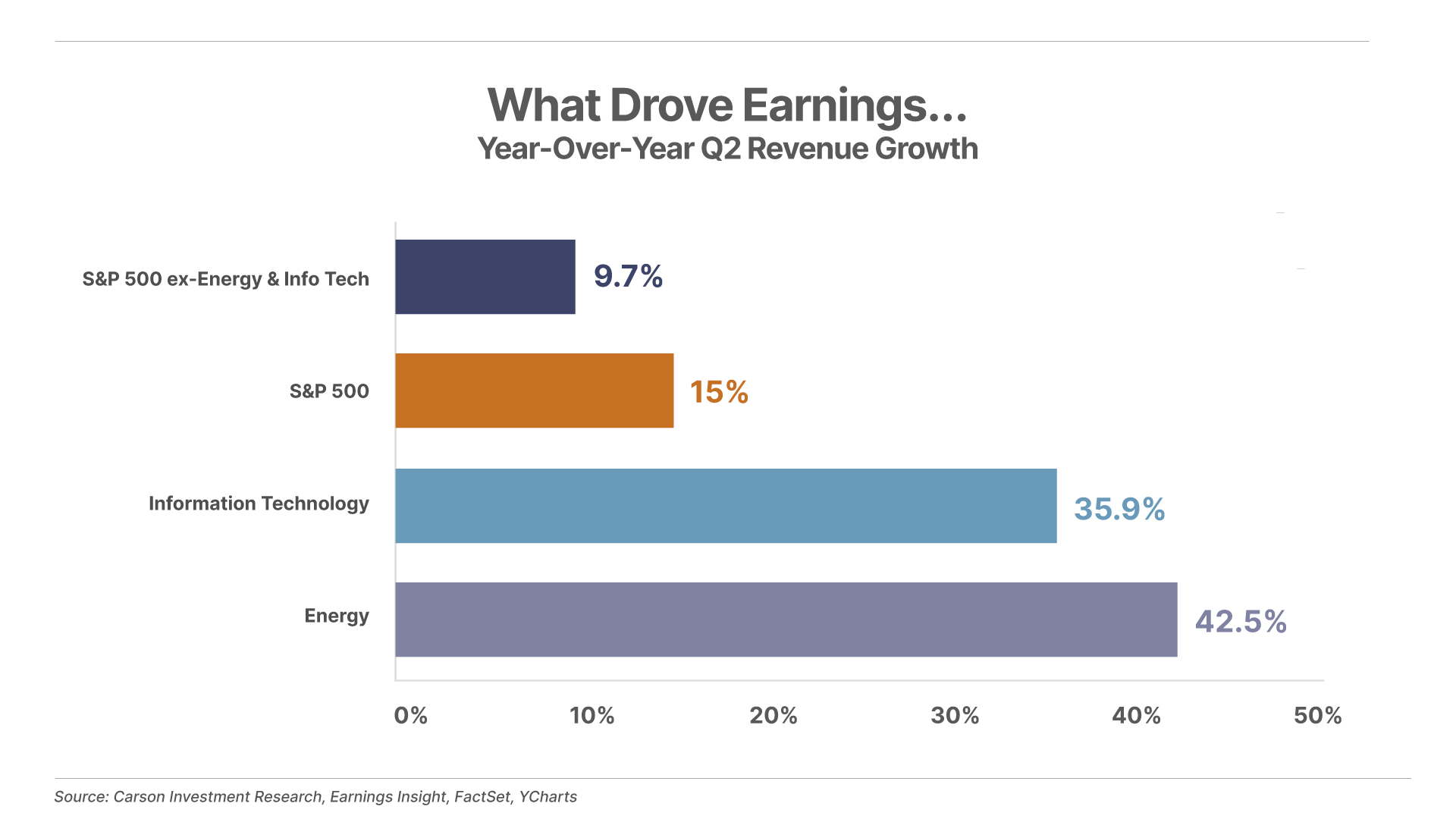
1. The fastest-growing sector in the S&P 500 last quarter wasn't technology – it was energy. Energy sector revenue rose 42.5% from a year earlier, ahead of Information Technology's 35.9% and nearly triple the 15.0% pace for the index as a whole. Strip both out, and there’s just 9.7% growth. The reason is oil. West Texas Intermediate crude averaged $92.70 a barrel during the quarter, versus $63.68 a year earlier – a 46% increase – and the United States is the largest oil producer in the world.
2. Consumers pulled back hard in July. Retail sales fell 0.6% to $763.6 billion, the steepest monthly drop since May 2025 – Wall Street economists expected a 0.1% gain. The drop matters for a Fed debating whether to raise rates, not cut them: three officials dissented in July in favor of a hike. Futures now put September hike odds near 30%, down from close to 50% a week ago.
3. Grocery prices have ballooned. The cost to eat at home is up 33% since 2019, according to a Bureau of Labor Statistics tracking index. And with nearly 67% of the U.S. living paycheck to paycheck, much of their pay now goes to basic necessities. The next jump in food inflation hits savings rates and revolving credit balances directly.
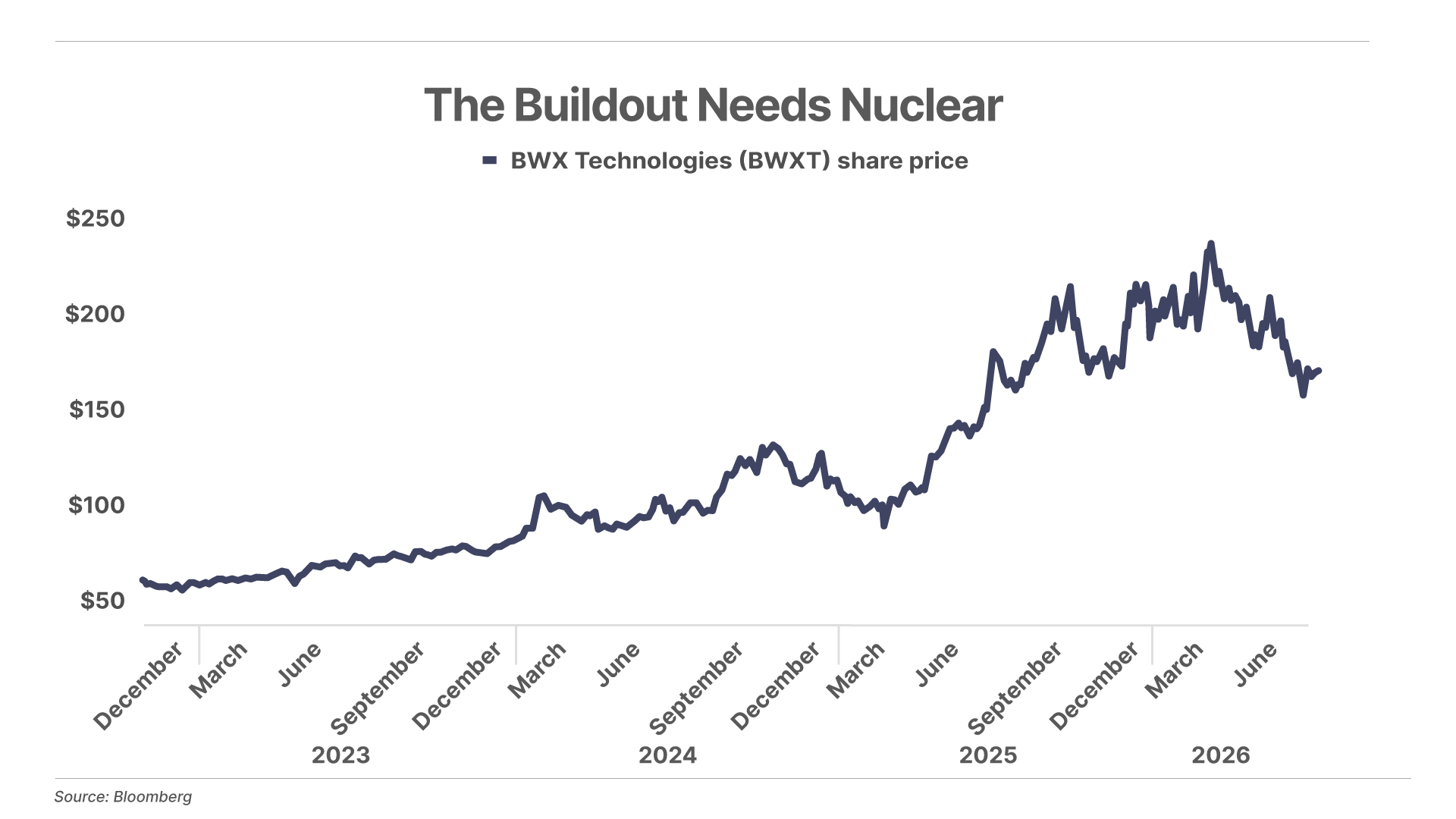
Even after pulling back nearly 30% from its spring high, BWX Technologies (BWXT) has tripled from our recommendation in Complete Investor – that is what happens when you own the AI bottleneck (power) instead of chasing the boom (semiconductors). Nvidia (NVDA) can produce a million GPUs a quarter, but a chip without a socket is a paperweight – the industry's $710 billion in capex now runs through the grid, and the grid runs through nuclear.
To see all 49 Complete Investor recommendations – plus the newest one to be released tomorrow – click here now.
In yesterday’s Daily Journal, guest writer Emmet Savage shared his investment methodology in advance of re-allocating his flagship Prophet portfolio today.
“Game Changer”
Joseph H. writes:
Thank you for sharing this information. I’m new to Porter & Co. and am learning lots. I’m a bit late to the game of investing – I’m in my 50s and just now getting acquainted. Admittedly it’s a bit of a fire hose of information and data to sift through, but I’m slowly gaining insight and knowledge I would not have otherwise.
With the latest exposure to Emmet Savage’s release of Prophet, it truly is intriguing and promising. From the information shared between Porter and Emmet, it does make sense that leveraging Prophet would possibly be a game changer for a person like me in making purchasing and selling decisions. My question is if the options that Prophet makes available would be a good opportunity for a person like myself with minimal liquidity.
Porter & Co. Market Snapshot
Porter & Co. Top Positions
Please note: The investments in our “Porter & Co. Top Positions” should not be considered current recommendations. These positions are the best performers across our publications – and the securities listed may (or may not) be above the current buy-up-to price. To learn more, visit the current recommendations page of the relevant service, here| New Window. To gain access or to learn more about our current recommendations, call our Customer Care team at 888-610-8895 or internationally at +1 443-815-4447.