Great Investors Take On Duration Risk
Inside Today's Issue
Would you ever turn down a deal to double your money in a few weeks?
Most people wouldn’t turn that down. But, ironically, that’s the difference between doing well with your investments and building generational wealth.
I learned early in my career, first from Steve Sjuggerud and Bill Bonner, and then the hard way that:
1. You have to let your winners run
2. You never, ever sell a great business
Ask me how I know: Amazon (AMZN) was the second stock I ever bought personally. I bought $25,000 worth of Amazon in 1997, just after it went public. I sold it when it went up a lot in 1999. Biggest financial mistake of my entire life.
That’s what today’s Journal is about – knowing when to add to a winning position and knowing when to hold for decades is the real secret to becoming wealthy as an investor.
There are two stories I want to share with you to help you understand the difference between an average investment and the kind of business you should never sell.
Let’s start with a story I’m sure you think you know: Warren Buffett’s investment in Apple (AAPL).
In Q1 2016, Berkshire Hathaway disclosed a 9.8 million-share position in Apple, worth $1.07 billion. The stock then traded at about $26 a share (adjusted for Apple’s 2020 stock split). As the price went higher, Buffett kept buying. In Q1 2018 alone, Berkshire bought 75 million more shares. By early July 2018, Berkshire owned 5.2% of Apple, at a cost of $36 billion. That works out to about $36 a share.
At this year’s annual meeting, Buffett told shareholders that $35 billion “counting dividends, realized appreciation, and unrealized appreciation – has turned into $185 billion pre-tax.” That’s probably the largest profit ever made in a passive investment. As Buffett said,
"Tim Cook has made Berkshire a lot more money than I’ve ever made Berkshire Hathaway."
Most investors know that buying Apple was the best decision Buffett ever made. What most investors don’t know is: selling Apple was the worst decision he ever made. (I know, because I wrote the book.)
Berkshire’s Apple position peaked at 915.6 million shares on September 30, 2023. Over the next nine quarters, Berkshire sold 687.7 million shares, 75% of the stake. Most of the selling came in 2024: about 606 million shares, at an average price we estimate at about $192, for roughly $116 billion.
Why did he sell? He said he didn’t want Apple to become too big relative to his other holdings. But, in the same interview, he also said:
Apple “is better than any business we own outright.”
Here’s what matters: there was nothing, at all, wrong with the business.
In fiscal 2023, the year before the big sales, Apple earned $97.0 billion, or $6.13 a share. Over the 12 months to June 2026, it earned $128.9 billion, or $8.72 a share. Earnings per share rose 42%. Services, the App Store, and subscription business that turn a one-time iPhone sale into recurring revenue brought in $30.7 billion last quarter, up 12% from a year earlier… at a 76% gross margin. Apple’s return on invested capital remains above 70%, which is the highest sustained rate of capital return in the entire technology sector. It is simply one of the greatest businesses in history and it continues to get better.
But... despite the clear evidence of Apple’s improving business, Berkshire sold 75% of its stake. What’s the current opportunity cost of that decision? The 687.7 million shares Berkshire sold brought in roughly $134 billion. At this morning’s price, those shares would be worth about $230 billion. The difference is about $96 billion.
That cost grows by about $690 million every time Apple’s stock rises $1.
Berkshire’s investment into Apple was the best investment in the history of the capital markets. But selling Apple was the biggest opportunity cost in the history of the capital markets.
Asked by CNBC’s Becky Quick about the sale in March, Buffett said:
“I sold it too soon.”
We’ve made the same mistake, plenty of times.
On January 10, 2024, in our inaugural issue of Porter & Co. Biotechnology, we recommended Kodiak Sciences (KOD) at $3.16 a share. Kodiak was developing a long-lasting drug for the leading causes of blindness. But post-COVID, biotech stocks were absolutely in the dumps. In fact, despite its promising technology, Kodiak traded for less than the net cash in the company’s bank account.
When we launched our biotech research at Porter & Co., Kodiak was part of a group of stocks that were all trading for less than cash. And in less than two months, shares of KOD doubled. On March 5, we told subscribers to sell half of the position. There was no news. We sold because the stock had gone up. We were taking our capital off the table. Seems smart, right?
Wrong.
Then, we compounded the error. Two weeks later, we sold the rest. Our biotech editor at the time, Erez Kalir, believed – correctly (!) – that inflation was about to rebound. That would force the Federal Reserve to keep interest rates high and push biotech stocks back toward their lows.
We booked a gain of 87.82% on the second half of the position. Nobody complains about doubling his money in two months. But yesterday, Kodiak traded for almost $100 per share. If you put $100,000 into Kodiak and followed our advice, you made a lot of money. The position grew to $192,000. But that same investment, if you’d simply held on, would be worth more than $3 million today.
It’s very important to realize that Erez was exactly right about interest rates. On March 19, 2024, the day we sold, the 10-year Treasury yielded 4.30%. This morning it yields 5.20%. He got the macro call right... and the stock still rose more than 15-fold from where we sold it.
If you want to make life-changing investments, you must accept duration risk: you must hold for at least five to seven years. At a minimum. It sounds obvious, but investors forget: You can’t make 30x your money in a company whose payoff is years away unless you’re willing to wait those years.
And... what if you can develop that discipline? You can make a fortune in biotech.
Baker Brothers Advisors is a biotech-focused New York investment firm that’s led by two brothers and that currently manages around $20 billion. They are, by my estimation, the very best biotech investors in the world. They make big, focused bets (currently their 10 largest positions make up 73% of the portfolio). They hold forever. And they buy more – a lot more – when the science they believe will work becomes proven in the clinic.
The Baker brothers first bought Seattle Genetics, later renamed Seagen, in 2003, when it had no approved drug. They invested around $100 million over the next eight years. They joined the board of directors and helped the company develop its lead product. In August 2011, the Food And Drug Administration (“FDA”) approved Adcetris, a lymphoma drug that carries chemotherapy straight to the cancer cell. After the drug was approved, Baker Brothers piled into the shares, buying more than $1 billion worth of stock at prices between $18 and $59 a share.
When Pfizer (PFE) bought Seagen for $229 a share in cash in December 2023, the Bakers collected about $10 billion. They held it for 20 years in total, but invested most of their cash after the company had an approved product.
Incyte (INCY) followed the same path. The Bakers built their stake to about 11 million shares in 2007 and 2008, when the stock traded in the high single digits and its lead drug was still in trials. The FDA approved that drug, Jakafi, for the bone marrow cancer myelofibrosis in November 2011. That’s when the Bakers piled in. They now own 30.9 million shares, 15.4% of the company, worth about $3.6 billion. One brother (Julian) chairs Incyte’s board.
The Bakers bet small when the evidence is thin and bet enormous sums when it’s proven. So... how did the Baker Brothers handle the opportunity we saw at Kodiak?
Felix Baker has served on Kodiak’s board since September 2015, three years before the company went public at $10 a share.
In February 2022, Kodiak’s drug failed its first pivotal trial in wet macular degeneration, and the stock fell about 80% in a day. In July 2023, it failed two more pivotal trials, in diabetic swelling of the retina. In October 2023, the stock touched $1.37. From peak to bottom, it lost more than 99% of its value.
Why didn’t they sell?
Kodiak’s drug, now named Zenkuda, is an antibody that blocks VEGF, the signal that grows the leaky blood vessels that destroy vision. It’s attached to a large polymer that keeps it in the eye longer than other, competing drugs. In the failed 2023 trials, half the patients were going six months between injections, rather than getting injections monthly. That’s an enormous market advantage: two shots a year, versus having to go every month.
And... when the company parsed the data, they discovered something important. Kodiak discovered that a higher rate of cataracts (19% of patients against 9% on the standard drug) was the main reason those patients’ vision lagged. In other words, for most people the drug worked. Nobody saw that in the headlines, though.
On September 28, Kodiak reported DAYBREAK, its final Phase III trial in wet macular degeneration. At one year, patients’ vision on Zenkuda was just as good as the patients taking Eylea, the leading drug from Regeneron (REGN). Zenkuda met its clinical end goal with a p-value of 0.0007 – a highly statistically significant result. And, once again, most (54%) of Zenkuda patients reached a six-month interval between injections. Best of all? No Zenkuda patient developed eye inflammation.
Kodiak plans to file for approval in all three diseases this quarter, and its third drug, KSI-101, reports Phase III results in December. Since the results were announced, the Bakers have been buying aggressively, putting $157 million more into the company at prices between $61 and $90. Until last Friday, their investment in Kodiak was worth what it cost eight years ago. Eight years of holding had earned them nothing. Then, in one trading day, their stake gained more than $1 billion.
They followed the science. They took the duration risk. And they won.
That’s how we run Porter & Co. Biotechnology today. We follow the science. We read the trial results ourselves. We track what the Bakers and the other specialist funds are buying. And we size up when the science is proven, not when the stock goes up.
This month our lead recommendation is buying a biotech company that’s 15% owned by Baker Brothers Advisors. It, like Kodiak was when we first recommended it, is trading for a huge discount to its net cash.
This time we’re going to take the duration risk.
I hope you’ll join us.
Share your ideas about today’s Daily Journal: porterstansberrydirect@gmail.com
Good investing,
F. Porter Stansberry
Stevenson, Maryland
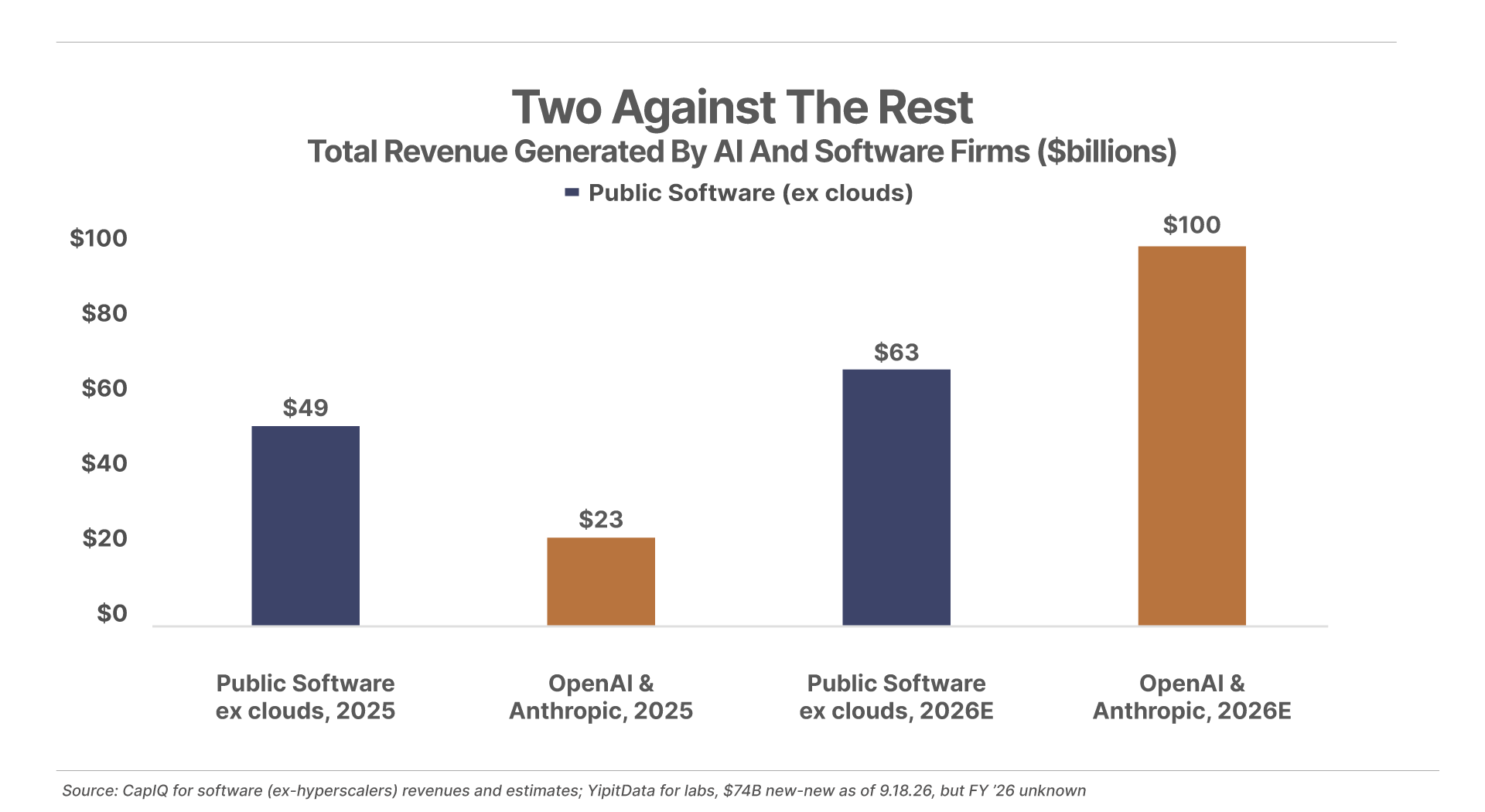
1. America's gold backs about 3% of the government's debt. U.S. gold reserves as a share of federal debt peaked at 48% in 1940 and hit 20.4% in 1980. Today the ratio sits near 3%, roughly where it was in the late 1960s before the Bretton Woods system broke. The U.S. officially holds the same 8,133 tonnes it held 50 years ago. Public debt has grown faster than any gold rally could keep pace with – the denominator keeps getting larger. For gold to cover 20% of today's debt as it did in 1980, the price would need to reach $31,315 an ounce. The 1940 ratio implies $74,302. Gold trades for $4,200 an ounce. 2. Weak hiring has made an October rate hike unlikely. U.S. employers added just 29,000 jobs in September, about a third of what economists expected. It was the third-weakest month of 2026, behind only February and July. The Labor Department also lowered its earlier estimates for July and August by a combined 60,000 jobs. The unemployment rate rose to 4.2% from 4.1%. On Tuesday, Fed Funds futures – contracts traders use to bet on the Fed's benchmark rate – priced a roughly 75% chance of a quarter-point hike at the October 27–28 meeting. Softer inflation data cut that to about 49% by Wednesday. Today's report took it to just 17%. 3. The G7 agreed to tap emergency stockpiles to help bring down record-high diesel prices. This morning, French President Emmanuel Macron, who chaired a meeting of the Group of Seven ("G7"), said the group and partner countries will release up to 100 million barrels of diesel and crude oil from government emergency reserves over the next four months. The International Energy Agency ("IEA") will manage the release, with a large amount of diesel going out in the first 20 days. The deal followed pressure from the Trump administration, which had threatened to ban U.S. diesel exports if Europe didn't release its stockpiles. Leading AI platforms OpenAI and Anthropic are on track to generate $77 billion in revenue in 2026, more than all public software combined… Vihang E. writes: I am delighted that you are going to create an emerging-markets portfolio. In your watch portfolio, there are no Asian (other than Chinese stocks), African, or Eastern European stocks! Mark H. writes: Porter, After attending the conference I feel like a well hydrated horse!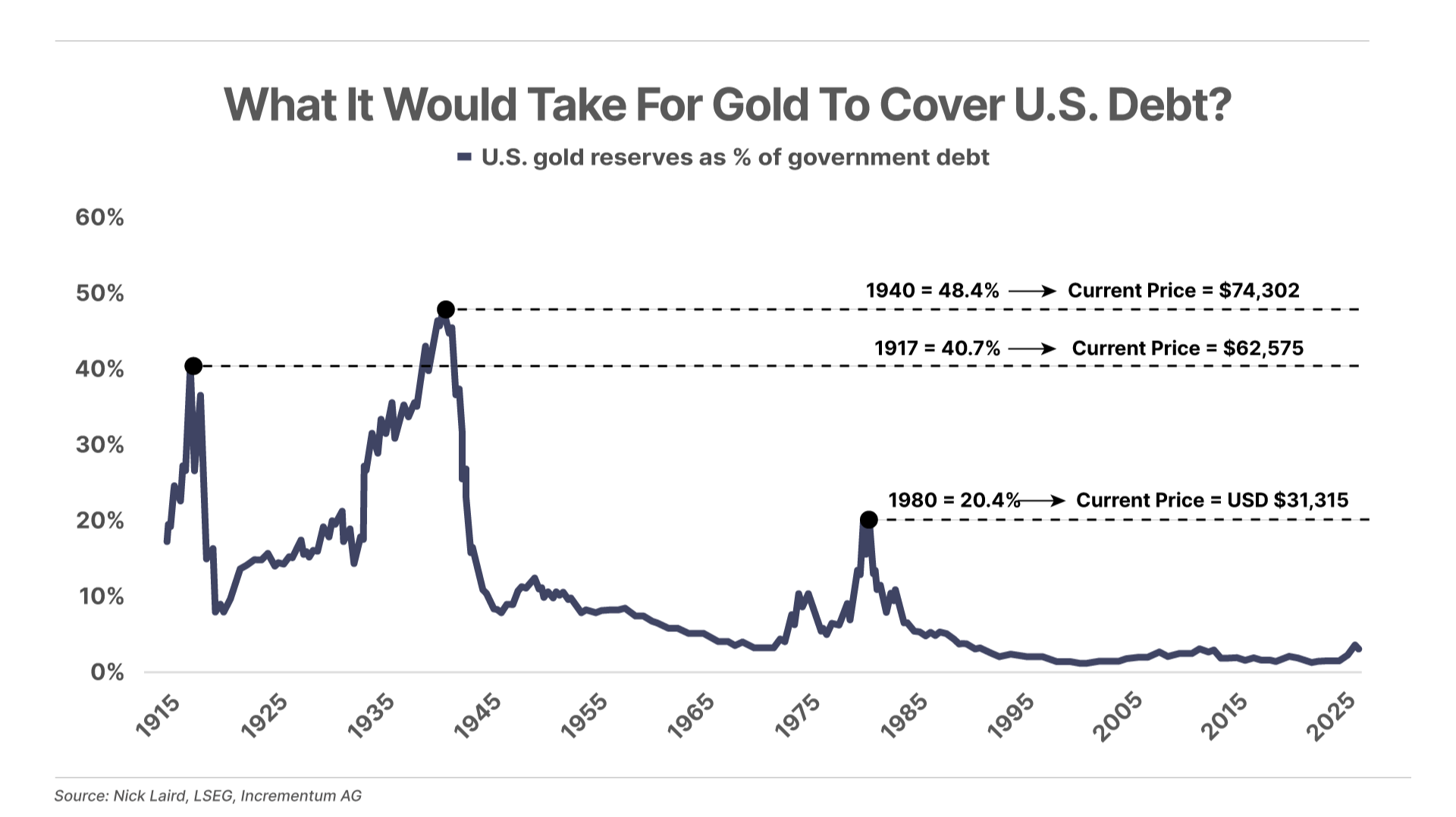
“Emerging Markets”
Porter & Co. Market Snapshot
Porter & Co. Top Positions