Staying One Step Ahead Of The Predators – And Thriving
Editor’s note: This is Porter & Co.’s Best Buys, which we release to paid subscribers on the fourth Saturday of each month…
If you’re not yet a subscriber to Best Buys, to access the full paid issue and our previous Best Buys, please click here.
Carmela Teoli wished she still had a scalp.
But after the 14-year-old’s hair got caught in the cotton-twisting machine at the American Woolen Company in Lawrence, Massachusetts – where she’d been working full-time since she was 13 – she was left with a six-inch bald spot, seven months in the hospital, and no back pay or workers’ comp.
It was 1912, and the textile workers of Lawrence were fed up. Massachusetts wove and spun about one-fifth of America’s cloth – and mill workers (mostly women and children, who made today’s equivalent of $13,000 a year while living in meager company housing) felt like slaves.
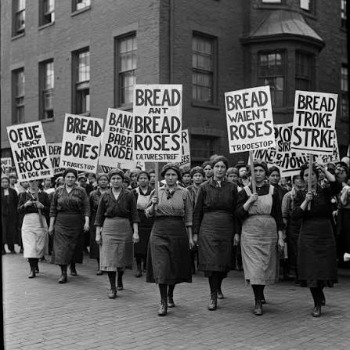
A January 1 round of docked paychecks was the last straw. Egged on by the socialist Industrial Workers of the World (“IWW”), known as the Wobblies, employees took to the streets demanding “bread and roses,” meaning they wanted something above a subsistence wage.
Firebombs were lobbed. A couple of people died. Midway through the strike, the Wobblies’ ringleaders were tossed in jail.
All of which led to a mass exodus of child workers on February 24. As an IWW-organized political-theater stunt, the mothers of Lawrence loaded up 165 child workers on a train to ship them away from the mills. City authorities dragged the mothers and children off the station platform by their hair (thankfully, no one was scalped this time).
The brawl at the train station caught President William Howard Taft’s attention. He ordered a Congressional investigation, which turned up plenty of dirt: respiratory infections from lint and dust that shortened the average mill worker’s life to 40 years, and gruesome on-site injuries. After a parade of child workers – with young, bald Carmela in the starring spot – took the stand to describe their miserable lives, the mill owners gave in.
On March 14, nine weeks after the protest began, the Lawrence bosses agreed to a 15% raise and overtime pay bumps. To make sure the deal stayed intact, workers organized a group of robust union members to breathe down factory owners’ necks.
Score one for the Wobblies.
It was America’s first official minimum-wage raise – and it ended up destroying Massachusetts’ entire textiles industry.
Emboldened by the Lawrence workers’ victory, millhands across the state quickly organized protests of their own – and employers across the state rolled over. Two weeks after the end of the Bread and Roses march, 275,000 textiles workers across New England had secured a 15% raise.
Paradise for workers is hell for employers. Over the next several decades, the big textile mills either went bankrupt, or packed up and left Massachusetts for greener pastures – namely, the rolling cotton fields of Georgia and Alabama, where no one would make them do a damn thing they didn’t want to do.
It was a textbook case of capital flowing where it’s treated best. And a very personal cautionary tale for the thousands of former strikers left sitting in unheated mill houses, clutching now-worthless company scrip.
Without the textiles industry, Massachusetts was a wasteland. By the 1940s, unemployment statewide had soared to over 20%. A third of the shoe industry was gone. Textile imports from foreign countries went up by 115%, since America had to get its clothes from somewhere.
With the captains of industry off smoking cigars on Southern verandas, it was up to the eggheads at MIT (Massachusetts Institute of Technology) to fix the problem. Namely, Georges Doriot and Karl Compton. Doriot was a soldier and inventor who came up with Doron plate armor, a forerunner to the Kevlar vest – and Compton, an electron physicist, believed that “a reasonably high birth rate of new undertakings” in technology would solve Massachusetts’ employment woes.
The tech industry just needed, so to speak, a midwife.
In a bid to bring work, any kind of work, back to the Massachusetts job desert, the two of them proposed a new idea: a private equity company that would invest in promising technology startups.
Actually, the new idea was private equity, period...
The Power Law Pops Back Up
Doriot – today known as the “father of venture capital” – came up with a mechanism to secure multiple investments at once. Up till then, capital infusions generally came from one or two wealthy families with deep pockets. But Compton and Doriot figured they’d tap into a circle of institutions instead, and make the shakedown less painful by proposing staggered rounds of funding called “tranches.”
The New Products Committee, launched in 1939, would go on to garner backing from MIT, three other universities, the Massachusetts Investment Trust, and a life insurance company, although one potential investor, unconvinced, called it “more of a social experiment than a profit-seeking entity.”
After a brief commercial break for World War II (during which Doriot invented the proto-Kevlar vest), Doriot and Compton were back at it, and soon solidified the New Products Committee into an official corporation: ARD (American Research And Development Corporation). Over the next quarter century, ARD would go on to generate an average return of 14.7% and spawn an entire universe of other private equity vehicles.
In the process, it would also bring plenty of new tech jobs to Massachusetts...
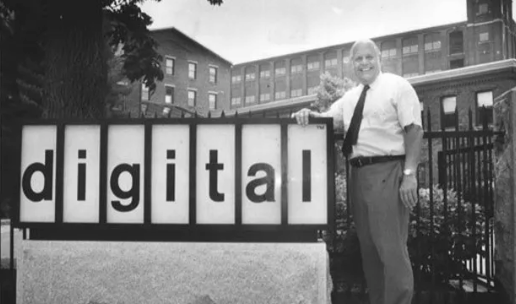
Tech nerds know ARD today for a single, spectacular investment it made in the mid-1950s: Digital Equipment Corporation (“DEC”). DEC was an IBM competitor that built smaller, cheaper mainframe computers – ironically, in a former textile mill. ARD put up a modest $70,000 stake and – in just 14 years, after DEC went public with the world’s first mass-produced minicomputer – had turned a 407% profit.
DEC (wool mill and all!) would go on to become Massachusetts’ biggest employer, and a cash cow for ARD: Over the private equity firm’s 25-year life – including some 117 investments – over half of its profits came from DEC.
If that skew sounds familiar, it should. It’s a Power Law number. As we’ve written before (and as Italian scholar Vilfredo Pareto first observed in the 1800s), around 80% of the results tend to come from around 20% of the effort. That’s right, 20% of businesses generate 80% of the wealth. It’s a seemingly immutable law of the universe, although no one seems to know why.
But this story isn’t about that. This story is about the dark side of the Power Law. The other side.
Dark Side Of The Moon
The question no one ever asks is: what happens to the Power Law losers? The 80% of peasants who don’t get any land. The 80% of venture-capital investments that crash and burn.
Technically, that number is 75%. A full 75% of companies bought by private-equity firms lose money for investors, with about 40% of those companies actually going bankrupt.
The 25% of remaining private-equity (“PE”) purchases – these days, mostly AI and tech companies – are where the $11 trillion AUM (assets under management) PE racket makes all its money. That hasn’t changed much from the Massachusetts birth of venture capital up till present day.
It's also not a great track record of success, if you think about it.
If anything, a private-equity leveraged buyout (“LBO”) is often the kiss of death for a smaller company. Just look at what happened to Toys “R” Us. And Claire’s. And Sears. And RadioShack.
On paper, of course, all is sweetness and light. BlackRock purchases the struggling wing joint to turn it around, or so the story goes. And you’ll get the select success story – Jersey Mike’s, for instance, or McAlister’s Deli.
But most of the time, PE buys these floundering companies – 75% of all purchases – just to gut them. They whip out the sale-leaseback – where they sell the company’s real estate and then make it pay rent – or the LBO, where they borrow cash to buy the company, and then stick the company with the debt. When the franchise is sucked dry, all the funds can be plowed back into the next big tech purchase, the next Power Law win.
You can see this happening in real-time in the stock market, which is quietly shrinking year by year as private equity pulls companies out and de-lists them. Since the 1990s, over 50% of companies have quietly vanished from the NYSE. And rarely, if ever, are they re-listed.
Venture capital takes these businesses private and then eats them alive.
Nowhere is this more apparent than in the restaurant industry.
Over the past decade, PE has been on a restaurant shopping spree, bulk-buying mid-level restaurant chains that have been squeezed by inflation and changing consumer habits. Between 2014 and 2024, they’ve invested $94 billion in bars and restaurants.
These restaurants are not part of the elite 25%. Private equity buys weak-sauce burger joints to plunder, like they did with TGI Fridays and Red Lobster. Right now, dozens of eateries are on the PE cutting board. At this point, if you see private-equity interest in a restaurant, you know the clock is ticking for that establishment.
And if you see a standout chain restaurant that has not been chewed up by private equity, you know it must have a robust business. That is the case with the new Best Buy we are adding today...
This company’s closest “twin” competitor has just been purchased by a predatory private-equity firm and is likely not long for this world, but our recommendation – a popular pizza maker – has avoided the private-equity trap, and for good reason.
Subscribe to Porter & Co.’s Best Buys to unlock the rest of this issue and more.
Become a Best Buys subscriber today to get instant access to the rest of this issue.
On the fourth Saturday of every month, Porter Stansberry and his entire editorial team release their top-3 open recommendations across all our research. Pulling from all our research services, our team looks for the stocks or bonds that are absolute “no-brainers” based on their current prices and what’s happening right now in the markets.
Each monthly issue of our Best Buys includes a summary of our original investing thesis behind each recommendation along with our reasoning on why we think now is the perfect time to start a new position or add to your existing position.
Instead of subscribing to Complete Investor ($2,000 per year), Tech Frontiers ($5,000 per year), and Distressed Investing ($5,000 per year), you can get the best recommendations from each service for just $49 per month.
Even better, use the link below today and lock in our lowest price – a discount of more than 40% off the usual monthly rate.
To get all the details, click here.
This content is only available for paid members. If you are interested in joining Porter & Co. either click the button below now or call our Customer Care team at 888-610-8895.