There’s A Potential Sea Change Happening In Biotech
Inside Today's Issue
The rate of innovation in biotech right now is stunning.
And there’s something on the horizon that could change the very concept of what it means to take a drug.
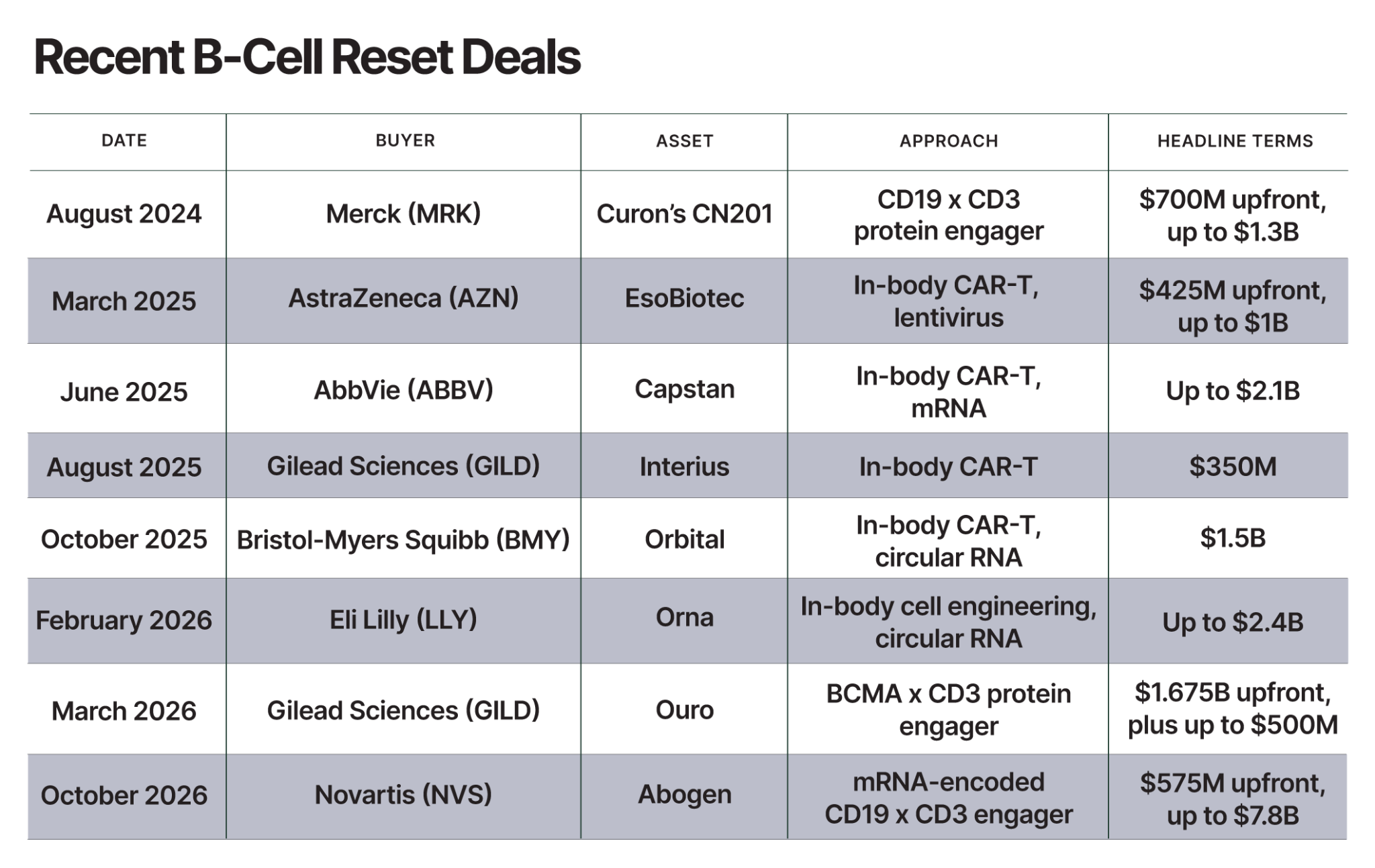
On October 2, Novartis (NVS) agreed to pay Abogen Biosciences, a private company in Suzhou, China, $575 million up front for an exclusive worldwide license to ABO2203. It also took options on Abogen’s other programs. If Novartis exercises every option and every milestone is hit, Abogen can collect up to about $7.2 billion more, plus royalties.
This could turn into a major investment for Novartis. So what did Novartis buy?
ABO2203 is a strand of messenger RNA (“mRNA”) – which is the same kind of molecule in the COVID vaccines. Except, in this application, it is wrapped in a tiny bubble of fat. Once injected, it winds up in the patient’s liver. And when it gets there, something incredible happens: it teaches the liver cells how to build a sophisticated medicine, a T-cell engager.
Let me explain this in plain English.
As you probably know, your immune system has two main parts. The first are “killer” T cells. They patrol the body, and when they find a cell flying the wrong flag, they kill it. B cells are the arms factories. They make antibodies, the guided missiles that tag invaders for destruction.
In autoimmune disease, some B cells make antibodies that tag healthy tissue. In lupus those missiles tag the kidneys, skin, and joints. In immune thrombocytopenia (“ITP”) they hit platelets, the cells that stop bleeding. In multiple sclerosis, B cells drive the attack on healthy nerves.
Medicine currently has two ways to deal with rogue B cells. The first is to suppress them, every month, for life. That is what the anti-CD20 antibodies do: Roche Holding AG’s (ROG) Ocrevus, Novartis’s own Kesimpta, and TG Therapeutics’ (TGTX) Briumvi. CD20 is a protein on the surface of most B cells, and these antibodies tag those cells for removal. But... those B cells grow back, so the patient must continue to take these drugs. In 2025, those three drugs alone sold about $13.6 billion.
The second way is to reset all the B cells. To do that, doctors must kill every B cell in the body, including the ones hiding in lymph nodes and bone marrow, and let fresh, healthy B cells grow back. The new B cells have not yet learned to attack the patient. In the best cases the disease does not return, and the patient takes no further drugs at all. This isn’t a treatment – it’s a cure.
In 2022, medical researchers Georg Schett and Andreas Mackensen, at University Hospital Erlangen in Germany, gave five patients with severe lupus a single infusion of CD19 CAR-T cells (T cells engineered outside the body to hunt B cells). All five went into drug-free remission, reports Nature Medicine. By February 2024, the Erlangen series reached 15 patients with lupus, myositis, or systemic sclerosis, all in remission or major improvement at a median 15 months, according to the New England Journal of Medicine.
The mechanism to reset all a patient’s B cells is a therapeutic protein called a T-cell engager.
It is a single protein with two grips. One grip (anti-CD3) holds the T cell’s trigger. The other (anti-CD19) holds a protein found on nearly every B cell. Bolted together, the T cell kills the B cell it is tethered to, then moves on to the next one.
While that might sound like science fiction, these technologies have been around for decades.
In 1985, Uwe Staerz and Michael Bevan reported in the science journal Nature that a hybrid antibody could aim T cells at a chosen target. In 1994, Peter Kufer’s group in Munich invented the bispecific T-cell engager format, called BiTE. In 2012, Amgen (AMGN) bought Micromet, the company behind it, for $1.16 billion. The Food And Drug Administration (“FDA”) approved the first BiTE, Blincyto, a CD19 x CD3 engager for leukemia, on December 3, 2014.
In the last three years, seven large drug companies made eight deals to buy or license B-cell reset technologies:
But T-cell engagers have two problems. First, they clear from the blood in hours, so patients have needed continuous intravenous drips. And the even bigger problem is that a large dose can flood the body with inflammatory signals, causing a dangerous reaction called cytokine release syndrome.
ABO2203 attacks both problems by changing who does the manufacturing.
Instead of infusing a finished protein made in a steel tank, the doctor injects a few micrograms of mRNA under the skin. The patient’s cells read the instructions and produce T-cell engagers gradually over several days. Abogen reports its mRNA engager persists in the body for seven to 11 days.
The evidence, so far, is only 12 patients. Abogen Biosciences co-authored a peer-reviewed paper in the journal Cell on September 18 describing three patients with immune thrombocytopenia, and it presented nine lymphoma patients at the AACR cancer meeting in April.
So this is a very new application of mRNA, but it demonstrates an entirely new modality of medicine – teaching the body to create the therapeutic proteins it needs to stop immune system disorders.
I suspect that we will see a wave of innovations as researchers begin to apply this new technology in a wide range of indications. Porter & Co. Biotechnology’s two largest positions, Eli Lilly (LLY) and Novartis (NVS), now have leading platforms in this new modality.
We’ll be watching to see the outcomes of the upcoming Phase II clinical trials with mRNA therapeutic proteins.
Tell me what you think of today’s Daily Journal: porterstansberrydirect@gmail.com
Good investing,
F. Porter Stansberry
Stevenson, Maryland

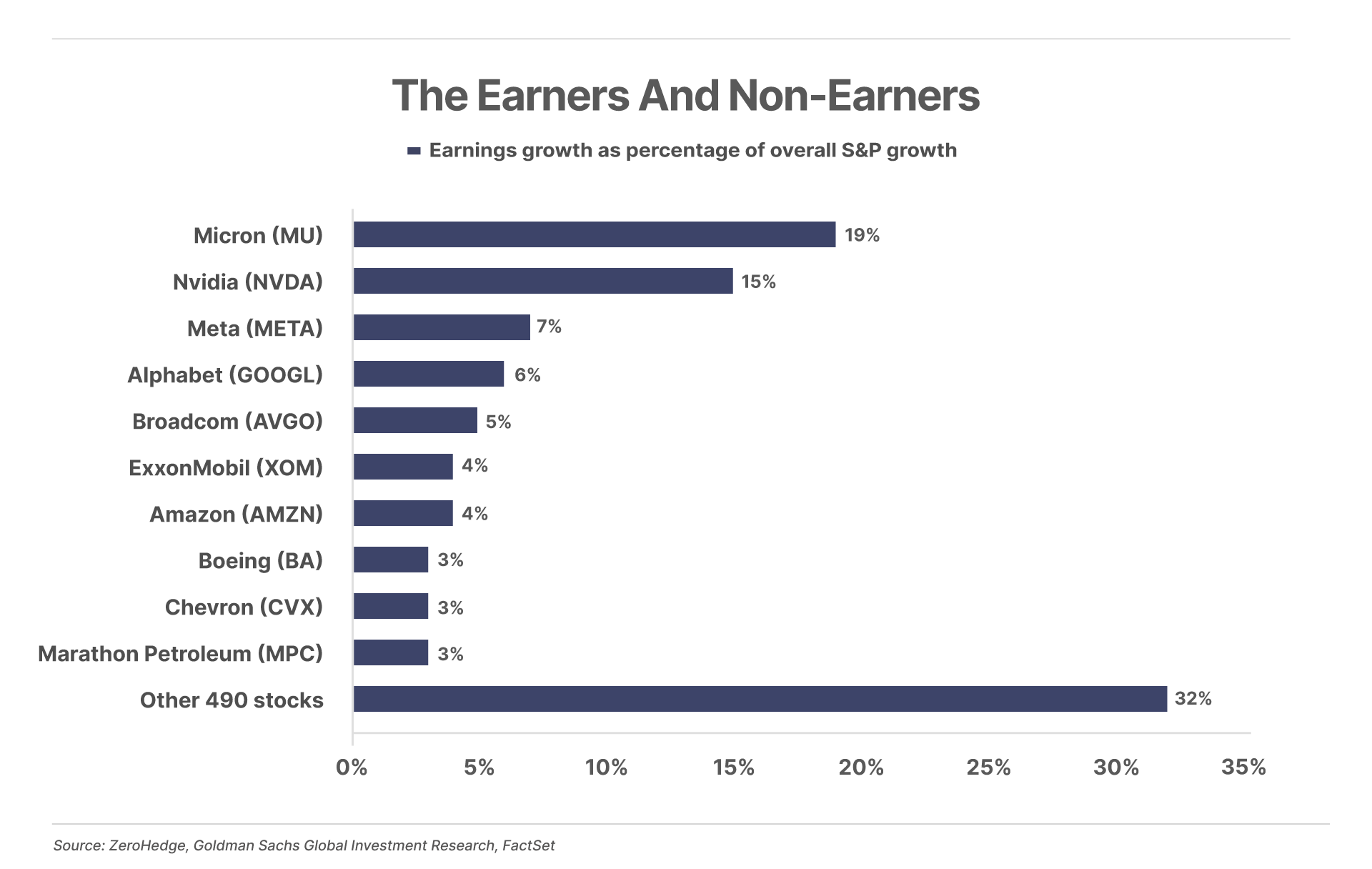
1. Software stocks have nearly doubled the market's return since the spring. Earlier this year, investors dumped the group, fearing AI would replace the subscription software that businesses pay for today. The iShares Expanded Tech-Software Sector ETF (IGV), which holds more than 100 software companies, fell more than 37% from September 2025 to an April 10 close of $74.67. Since the broad market bottomed on March 30, IGV has gained 43.1% – just below its all-time high – versus 24% for the S&P 500. 2. Berkshire keeps leaning into real estate. Berkshire Hathaway (BRK.B) CEO Greg Abel has nearly doubled its stake in U.S. homebuilder Lennar (LEN), to roughly 11% of total shares, worth about $2.1 billion. This follows Berkshire's $6.8 billion acquisition of homebuilder Taylor Morrison in July. In Complete Investor, we're also investing in a housing recovery, through a homebuilder with a capital-efficient model that you can read about here. 3. The struggle of single-product companies. Health-focused smart-ring company Oura had to scrap its IPO in September for lack of demand at its desired price. Jay Ritter, a University of Florida professor who studies IPOs, tracked other 13 single-product consumer companies that went public between 2005 and 2024. Five years after listing, their shares on average had lost 32% from the IPO price, while the overall market rose 49%. More than 1,200 other IPOs in his sample gained 68% on average over their first five years. S&P 500 earnings are expected to increase 27% year-on-year in Q3, the fastest pace since 2021. But two-thirds of the expected growth comes from just 10 companies in the index, including one-third from Nvidia (NVDA) and Micron Technology (MU) alone. The other 490 stocks will contribute just one-third of forecasted earnings growth. Steve E. writes: “Terrific – spot on!” Tom K. writes: Great send today… I’ve struggled for 60 years with an unwillingness to see the light… Today, you found the switch. A lot of work to do.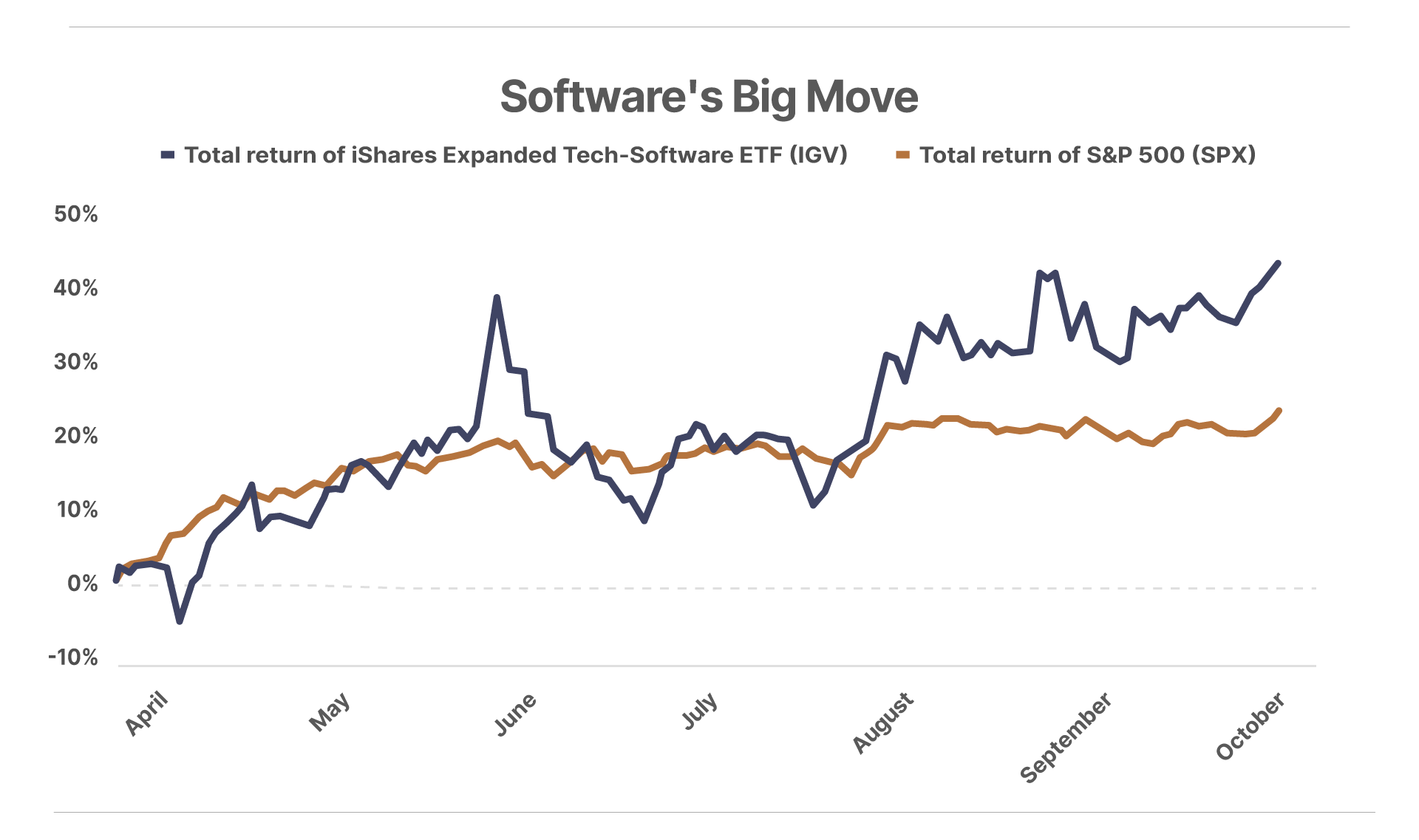
“Burnham’s Laws”
Thank you.
Porter & Co. Market Snapshot
Porter & Co. Top Positions