Crime Doesn’t Necessarily Pay, But Vice Stocks Do
Editor’s note: This is Porter & Co.’s Best Buys, which we release to paid subscribers on the fourth Saturday of each month… If you’re not yet a subscriber to Best Buys, to access the full paid issue and our previous Best Buys, please click here.
Tony Bananas died in a car trunk, with $300 in small bills stuffed into several of his orifices.
It was the only payment he’d get for killing Angelo Bruno, the revered boss of the Philadelphia crime family.
Believing he had orders from top brass at the Mafia Commission, Tony “Bananas” Caponigro had crept up behind Bruno’s parked Chevrolet, where the Don sat enjoying an after-dinner cigarette outside his Philadelphia rowhouse. A shotgun to the ear did the trick: quick and efficient.
The trouble was… the Commission hadn’t ordered the hit. As Tony shortly found out when he cashed out with $300 to his name.
But by then, the damage was done – “Docile Don” Bruno was out of the game in both Philadelphia and Atlantic City, and Atlantic City’s seedy casino business was up for the taking.
Seemed like a great time to introduce a million dollars’ worth of cocaine and a nail bomb into the mix.
It was the late 1970s, the height of “stagflation.” As inflation soared from 6% to 14% – while the unemployment rate tripled, and an oil embargo left gas station lines stretching around the block – Americans turned to vice to distract themselves. By 1975, the size of the illegal gambling market was around $50 billion – 10x the size of the legal one. (When Vegas is your only casino destination, what are you gonna do?)
Grudgingly, states started opening legal lotteries and Congress slashed federal taxes on sports betting. In 1977, with the Misery Index reading “severely distressed” at 13.5%, gambling demand had grown so great that New Jersey decided to get into the game and license casinos on the boardwalk in Atlantic City.
As soon as Resorts International Casino cut the ribbon in 1978, the Mafia waltzed in.
Atlantic City was traditionally the territory of the Philly mob. During Prohibition – when the boardwalk town had done a booming liquor business, headed up by racketeer Nucky Johnson – the Philadelphia crime family had made millions on supplying and operating speakeasies. Now that there was a new game in town – blackjack – Philly boss Angelo Bruno was here to play.
The problem with Bruno was that he played nicely.
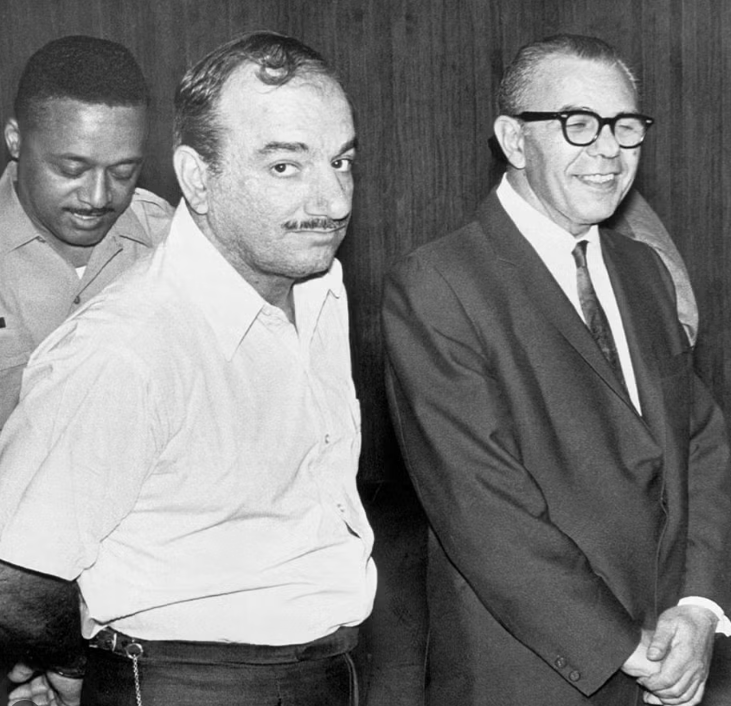
Bruno was the last surviving member of the original Mafia Commission, formed in 1960. He’d stayed in the game by keeping quiet. In the early 1970s he’d gone to prison for three years for not talking. And the “Docile Don’s” approach to the gambling boom in Atlantic City was characteristically calm: No violence allowed. No drugs (except for his personal backroom deals). And an open-door policy that would allow members of the “Big Five” New York Mafia families to get a piece of the action, as long as they stuck to Bruno’s rules.
Like many wise investors, Bruno liked to go for the picks-and-shovels plays. Rather than buying up casinos outright, like the New York and Cleveland families had done in Vegas, he preferred to control the businesses that served Atlantic City’s gamblers: hotels, bars, cigarette companies, and laundromats. He got a foot in by posing as a “salesman” for front companies with aggressively innocent names like “John’s Vending Company” and “John’s Wholesale Distributors.”
Bruno’s associates weren’t thrilled by this reasonable approach to organized crime. By 1979, “Chicken Man” Testa, one of Bruno’s top lieutenants, wanted to branch out into carjacking and drug trafficking. Bruno set Testa’s unoccupied car on fire to give him a taste of his own medicine.
And the New York Gambino family – longtime Bruno allies who’d bought up bars and discos in Atlantic City with Bruno’s blessing – brought a million dollars of heroin with them and were dead-set on distributing it.
Before that, a few body parts would get distributed around greater New Jersey.
Vice, Vice, Baby
Sensing blood in the water, New York boss Frank Tieri put a bug in Tony Bananas’ ear. Falsely believing that the Mafia Commission had ordered a hit on Bruno, Tony toted his shotgun up to Philly and found out – too late – that he’d been tricked.
The police didn’t investigate Bruno’s death too closely… Or Tony’s.
With Angelo Bruno underground, the sharks moved in quickly. An intra-family war claimed the lives of about 30 Bruno family members as successors elbowed for the “Docile Don’s” spot. (Chicken Man, the wannabe carjacker, ran the ring for just one year, until a nail bomb took him out, too.) At the same time, the New York families moved in to jump-start the drug trades Bruno hadn’t wanted.
By the time the dust settled in the early 1980s, the new leader of the Bruno family, Nicky Scarfo, had taken over the local casino unions, seized the literal foundations of the casino business via his concrete-pouring company, cornered a $130 million-a-year methamphetamine trade, and had the Atlantic City mayor on his payroll. He’d also reached a “free trade” agreement with the New York families that kept murders down to a minimum.
Atlantic City’s mealy-mouthed Gaming Commission was on the payroll, too – as the FBI ABSCAM sting revealed in 1980, when an Arabian “Sheik” offered $400,000 to New Jersey regulators in exchange for a casino license. They took him up on it, to their regret.
Not until the 1990s, when a federal RICO suit (Racketeer Influenced and Corrupt Organizations) sent Scarfo and other kingpins away for life and the Justice Department broke up the casino workers’ union, did the corruption die down in Atlantic City. Coincidentally, Atlantic City’s gambling revenue started to drop off after the mob exited. As one New Jersey State Police superintendent sagely observed, “Organized crime didn't get into gambling – organized crime was gambling.”
What’s clear in all this is that humans haven’t changed since the 1970s, and neither has inflation.
As we’ve written many times recently, we are seeing an almost eerie repeat of 1970s stagflation in the markets today. We have expanding government spending, political demands for cheaper money, a widening Middle East conflict, shortages, and substantial industrial price inflation. We also have an enormous investment program that increasingly depends on outside financing. (One difference is that our deficits are 3x bigger than they were back then: close to 6% of GDP this year.)
We just keep on printing and printing and hoping we don’t run out of ink.
With debasement of currency (both in the 1970s and today) comes debauchment of society. The technical name for it is anomie; the not-so-technical name is “People stopped giving a shit.” When you can’t afford a house or a car and you’re financing your burritos, what’s left but OnlyFans and DraftKings?
Inflation leads to antisocial behaviors, which leads to a predictable boom in vice stocks. We are seeing online prostitution and gambling platforms rake in $7 billion a year, and vape revenue triple over the past decade. In fact, over just the past two years, the Vice Fund (VICEX), which tracks a basket of “sin stocks,” is up about 30%. The less our money is worth, the more of it we’re going to throw away on booze and bookies. As Porter is fond of saying, humans will keep finding ways to destroy themselves.
There will always be a Tony Bananas in a car trunk somewhere.
Our job isn’t to judge, though – it’s just to recommend what works.
Our lead Best Buys this month is a vice stock: a classic that would play well in Atlantic City in the 1970s, and equally well in 2026. The fact that it is a capital efficient powerhouse doesn’t hurt either.
Subscribe to Porter & Co.’s Best Buys to unlock the rest of this issue and more.
Become a Best Buys subscriber today to get instant access to the rest of this issue.
On the fourth Saturday of every month, Porter Stansberry and his entire editorial team release their top-3 open recommendations across all our research. Pulling from all our research services, our team looks for the stocks or bonds that are absolute “no-brainers” based on their current prices and what’s happening right now in the markets.
Each monthly issue of our Best Buys includes a summary of our original investing thesis behind each recommendation along with our reasoning on why we think now is the perfect time to start a new position or add to your existing position.
Instead of subscribing to Complete Investor ($2,000 per year), Biotechnology ($5,000 per year), and Distressed Investing ($5,000 per year), you can get the best recommendations from each service for just $59 per month.
Even better, use the link below today and lock in our lowest price – a discount of more than 20% off the usual monthly rate.
To get all the details, click here.
This content is only available for paid members. If you are interested in joining Porter & Co. either click the button below now or call our Customer Care team at 888-610-8895.