Issue#164, Volume#3


Ryan Cohen Isn’t Crazy: Buy eBay
Inside Today's Issue
Ryan Cohen proposed buying eBay (EBAY) for $125 per share.
The GameStop (GME) CEO went on CNBC to explain the deal… and the anchors laughed at him. It became an internet meme. He was completely mocked.
Then eBay rejected the approximately $55.5 billion proposal as “neither credible nor attractive.” But of course they’d say that. If Cohen buys eBay, they are all out of a job…
Meanwhile, Cohen has bought an incredible amount of GameStop shares. His two latest purchases cost approximately $46.8 million, including $26.4 million on September 21, yesterday. These are among the largest open-market purchases I’ve ever seen any insider make. The people mocking Cohen on CNBC have never seen that kind of money in their lives. Cohen is betting massively that he can get this deal done. Should you?
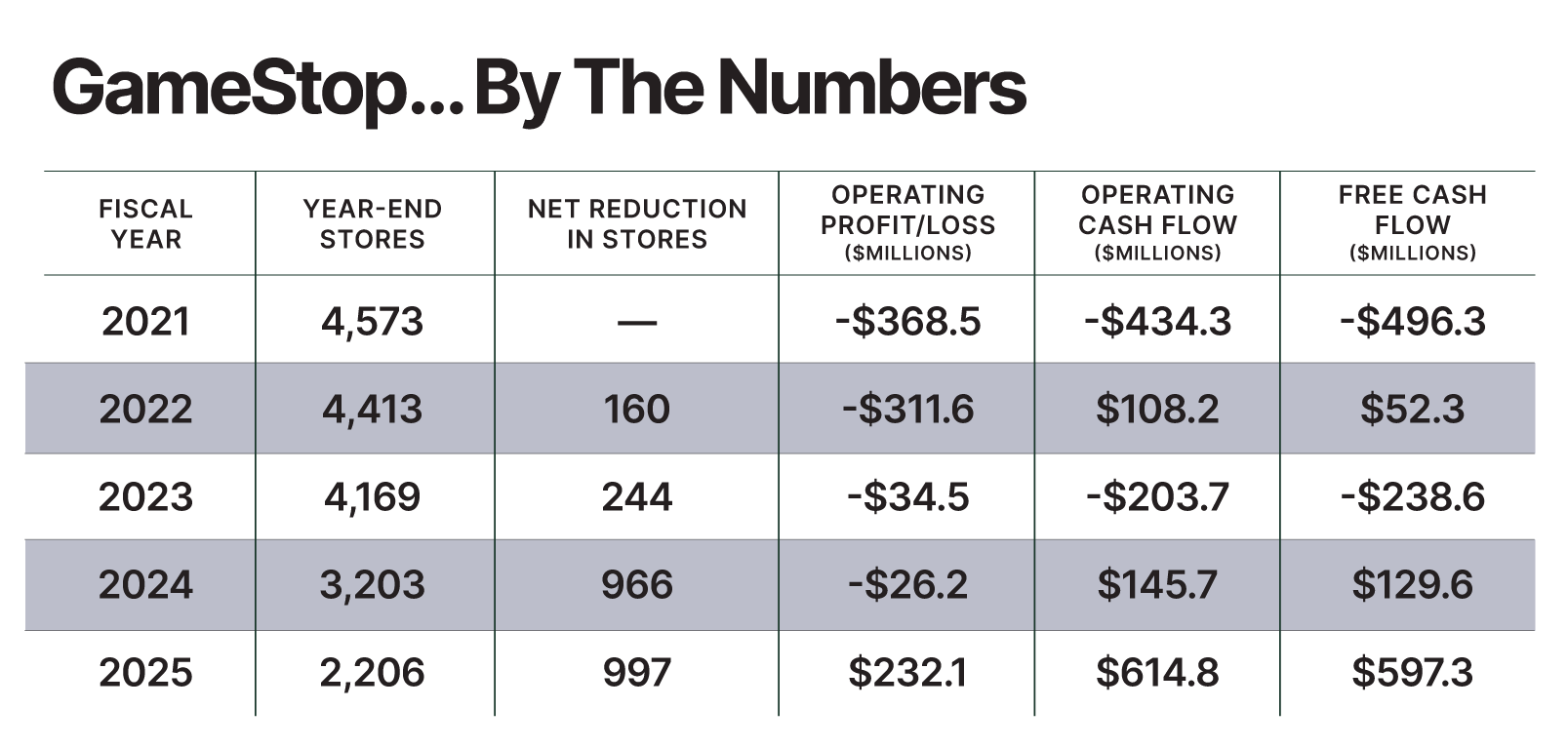
Cohen has cut GameStop (GME) worldwide store count by 51.8%, while free cash flow (“FCF”) improved from a $496.3 million loss in fiscal 2021 to a $597.3 million gain in fiscal 2025. That’s a $1.09 billion FCF improvement in four years. That’s an incredible turnaround. Hey Target (TGT), take notes: close half your stores.
Why does Cohen want to own eBay…?
Cohen proposes making every GameStop location the place where collectibles are validated and processed – to create vastly more volume on eBay, while also reducing fraud. He explains…
We can increase intake by bringing a lot more product onto the platform.
Cohen’s prospective customer is the collector who never lists his collectibles because completing the sale requires tedious work: boxing and shipping, dealing with counterparties, cashing checks at the bank… and the risk of fraud.
If a collectibles listing service works correctly, the seller gets convenience, and the buyer gets greater confidence and less fraud. eBay earns fees on merchandise that would otherwise never enter its marketplace. And GameStop wins by helping to sell an item, whether through a service fee, a resale margin, or some negotiated share of the transaction.
GameStop is already in the trading-card collectible business. It helps customers package and send trading cards to PSA (Professional Sports Authenticator) for grading. PSA checks whether collectible cards are genuine and grades their condition, giving buyers an independent assessment of what they’re purchasing. PSA has a partnership with eBay. Collectors can have their cards graded, stored securely, and offered for sale on eBay without having the cards shipped back home first.
Thus, GameStop handles the first step, while PSA and eBay do the rest. Cohen could connect those services into one simple transaction: bring your cards to GameStop and let the companies handle the work of selling them.
If that convenience persuades more collectors to sell (and I believe it will), eBay gains merchandise and transactions, while GameStop gives customers another reason to visit its stores.
No, this isn’t rocket science, but GameStop’s locations give it a huge advantage. eBay previously tried physical intake through its Valet service, which accepted merchandise for other people to list and sell and offered drop-off arrangements before closing in 2018. I suspect it failed because there wasn’t enough awareness of the service or enough scale. GameStop has both awareness and scale – even with the reduced store count.
Cohen’s broader vision includes live selling, creators broadcasting from stores, and additional categories of merchandise. These initiatives address the buyer’s reason to visit as well as the seller’s willingness to supply merchandise. A conventional listing waits for someone to search for an item. A live seller can demonstrate it, answer questions, and entertain an audience – all while creating a sale.
Does that work? Yes, eBay already operates live commerce. And remember the Home Shopping Network?
Why is Cohen buying shares now? Probably because GameStop forecasts more than $650 million of fiscal 2026 EBITDA (earnings before interest, taxes, depreciation, and amortization). That means it no longer needs an eBay acquisition to survive.
By issuing common stock in fiscal 2021 and fiscal 2024 for approximately $5.14 billion in combined proceeds, GameStop turned investors’ demand for its shares into assets Cohen could invest in another business. The question has long been: what will Cohen do with the money? The answer: buy eBay. GameStop already owns approximately 43.4 million eBay shares, or almost 10% of the company.
How will Cohen raise enough capital to buy control of eBay at $125 per share? His financing proposal included a “highly confident” letter for up to $20 billion of debt from TD Securities. The balance would come from GameStop’s cash, newly issued GameStop equity, plus eBay’s cash.
There are a slew of improvements Cohen could make to eBay, which hasn’t increased profits in a decade. But the real point of the deal is integrating GameStop’s physical network with eBay’s virtual marketplace.
How should you play this deal?
I recommend buying eBay. Under the most likely deal structure, it’s eBay’s shareholders who will retain most of the combined equity. And whether it’s Cohen who improves eBay’s results or a new management team, something’s gotta give.
Tell me what you think of today’s Daily Journal and whether you agree with me about buying eBay: porterstansberrydirect@gmail.com
Good investing,
F. Porter Stansberry
Stevenson, Maryland
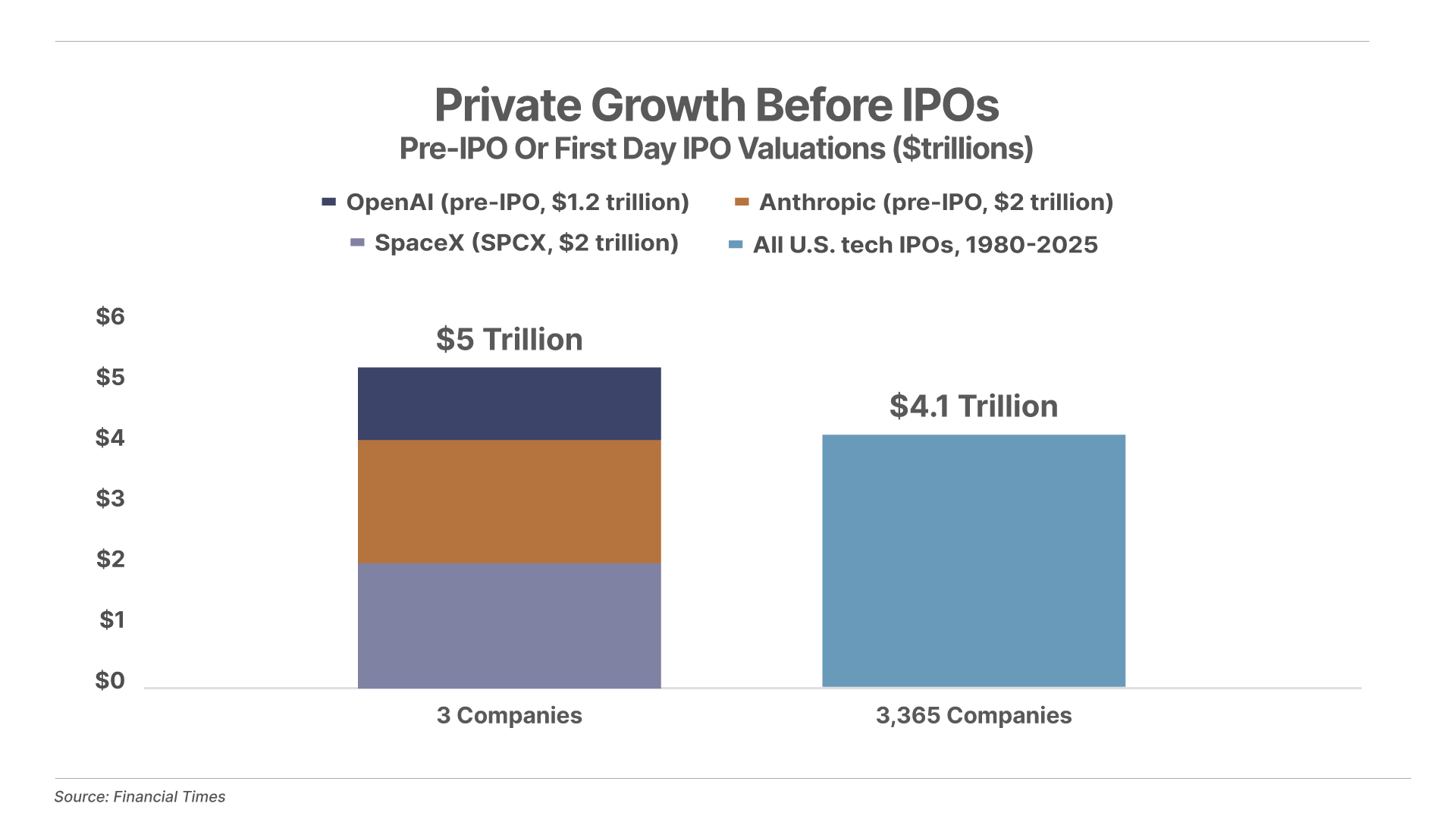
1. Three companies are worth more than 45 years of tech IPOs. SpaceX (SPCX) and leading AI platforms Anthropic and OpenAI carry a combined $5.2 trillion valuation – 27% more than the $4.1 trillion of the first-day value of all 3,365 U.S. tech IPOs from 1980 to 2025, per University of Florida Professor Jay Ritter. Apple (AAPL), Microsoft (MSFT), Amazon (AMZN), and Alphabet (GOOG) listed as small companies and compounded in public, where regular investors could own it. Today's giants are compounding in private rounds.
2. AI might be internet productivity 2.0. Labor productivity grew about 1.5% a year from 2004 through 2019, according to the Bureau of Labor Statistics. But since 2023, it has been growing at 2.5% a year. The last comparable such jump was from 1995 through 2004, with the bigger payoff after 2000, when the internet increased productivity to 3% a year. If this is the AI-driven sequel, the strongest productivity growth is yet to come.
3. The market has a bad breadth problem. Fewer stocks are hitting new highs, with nearly half of all S&P 500 stocks currently trading below their 200-day moving averages. Yesterday’s rare historic moment highlighted the trend, as the index rallied to within 1% of an all-time high while most stocks fell to new lows. There have been only two other days in the last 100 years that registered similar extremes: in July 1929 and December 1999. The average stock is telling a much less bullish story than the overall market index.
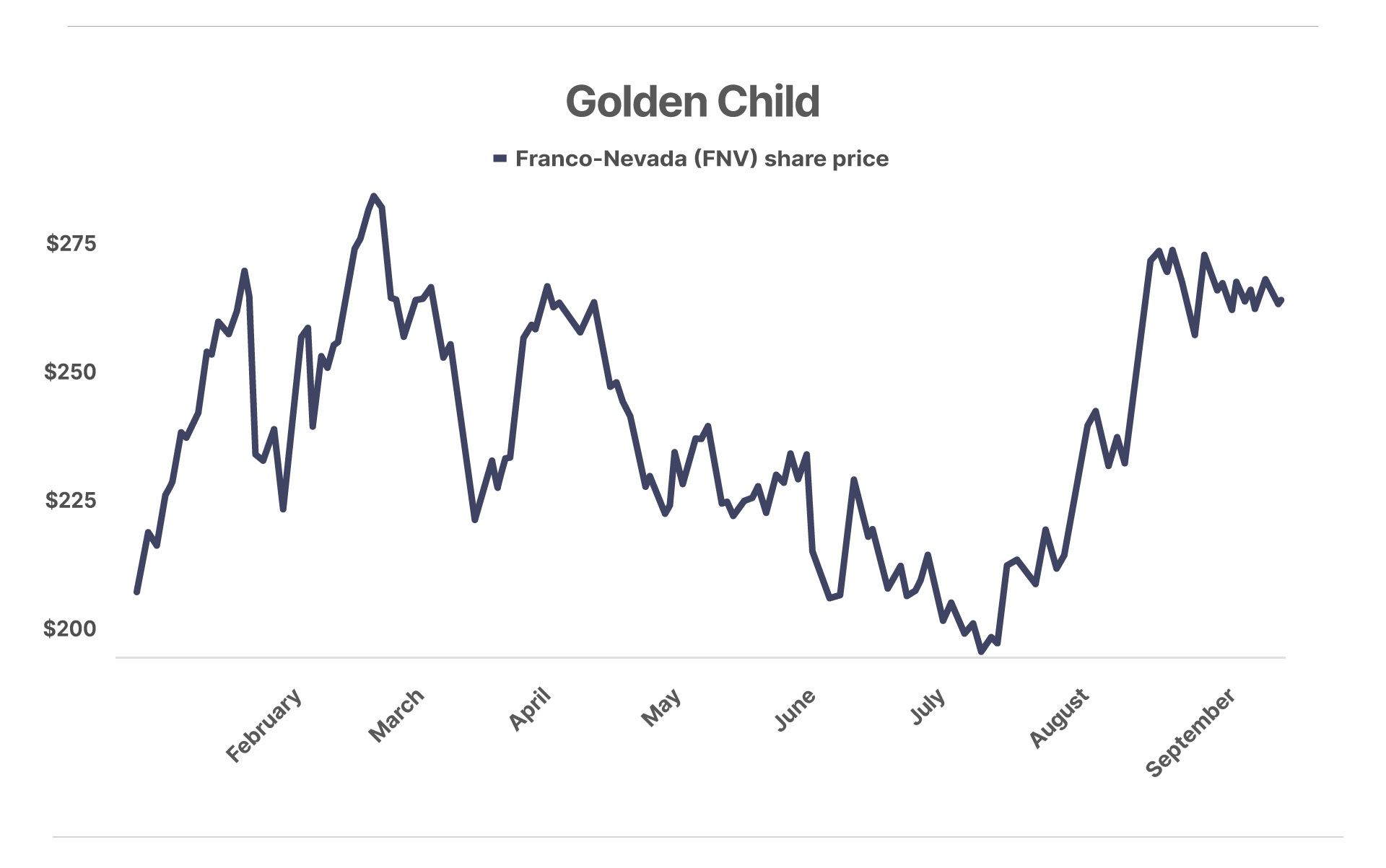
Shares of gold-royalty streaming business Franco-Nevada (FNV) – one of Porter’s favorite stocks – are up 26% year to date and 72% since we recommended them to Complete Investor subscribers.
Last week, Porter recommended selling all property-and-casualty (P&C) insurance holdings from Porter’s Permanent Portfolio and moving to “hold” the status of all P&C stocks in Complete Investor.
“A P&C Investment Approach”
Gary C. writes:
I thought you might find this interesting because your recent P&C allocation change, together with the launch of Porter & Company Property & Casualty ETF (PCPC), caused me to rethink the way I was carrying my own insurance exposure.
Over time I had built a fairly substantial individual P&C sleeve consisting of AXS, CB, IGIC, KNSL, L, PGR, SKWD, and WRB. The sleeve produced roughly a 14.8% aggregate gain over a multi-year holding period, with most of the capital built over roughly the last 18 months. Seven of the eight positions were profitable, with KNSL the lone holdout.
The approximate cost basis was $133,764, and the final liquidation proceeds were $153,614, for a gain of about $19,850.
So this was not a case of abandoning a strategy that had failed. Quite the opposite.
What changed my thinking was your recent decision to reduce the P&C allocation in Porter’s Permanent Portfolio, together with your reasoning around rates and the possibility that the group could see a more meaningful repricing if the rate environment remains difficult.
Rather than simply exit the theme, I decided to restructure it.
For me, PCPC is essentially doing what I would otherwise be trying to do myself – identify and maintain a concentrated group of high-quality P&C insurers – but with the added benefit of diversification and a disciplined rules-based structure.
I also spent some time comparing PCPC with the other insurance ETFs available. What stood out to me was how unusual the structure is. Only one other P&C-focused ETF really comes close in terms of concentration, and even that fund does not impose the same underwriting-quality requirements.
PCPC’s restrictions – the P&C underwriting/reinsurance focus, profitability standards, ROE requirements, combined-ratio discipline, and limited number of qualifying holdings – were actually a major part of the appeal for me. Those constraints give me confidence that the fund will remain focused on the type of insurers I would have been trying to select myself rather than gradually turning into a broad insurance-sector basket.
That combination – Porter & Co. defining the framework, Tuttle implementing it, and the index rules limiting what can qualify – was ultimately what made the economics of consolidating my individual sleeve into PCPC make sense.
Yesterday Porter reported that with skyrocketing government spending and increasing inflation, it is starting to look a lot like the 1970s.
“The More Things Change…”
Ed A. writes:
Great article! The more things change, the more they look alike. My concern is of another year, 1929! I hope and pray that we don't relive that.
Porter & Co. Market Snapshot
Porter & Co. Top Positions
Please note: The investments in our “Porter & Co. Top Positions” should not be considered current recommendations. These positions are the best performers across our publications – and the securities listed may (or may not) be above the current buy-up-to price. To learn more, visit the current recommendations page of the relevant service, here| New Window. To gain access or to learn more about our current recommendations, call our Customer Care team at 888-610-8895 or internationally at +1 443-815-4447.