Understanding Last Month’s Nobel-Worthy Breakthroughs
This is Porter & Co. Biotechnology – where Porter Stansberry presents a revamped portfolio to capitalize on the next biotech bull market. The details of the recommendations – and the specific name of the companies and buy prices – are for paid-up subscribers only. To learn more about subscribing to Porter & Co. Biotechnology, click here.
We’ve forgotten how hard it was to build modern healthcare.
In 1900, pneumonia, tuberculosis, and diarrheal diseases were the three leading causes of death in America. Staphylococcus aureus in the bloodstream killed 82% of the people who got it and most of them were young and healthy. Even as late as 1935, maternal mortality was still 600 per 10,000 live births.
Then, penicillin emerged – as an accident. A mold spore drifted onto a culture plate in Alexander Fleming's London laboratory in 1928. It killed the bacteria growing there. And, unbelievably, it was safe enough to be dosed into humans. Out of all the world’s innovations and technologies, only synthetic nitrogen fertilizer has enabled more human life than the discovery of antibiotics.
By 1950, maternal mortality had fallen to 100 women per 10,000 live births. Today, it’s between 10 and 20.
In 1900, 40% of the deaths from pneumonia were children under five. Today, only the very old and the very sick die from pneumonia. And, overall, less than 3% of all deaths in America are attributable to the leading causes of death in 1900.
But these innovations were not easy.
Modern drug discovery began at Rutgers University in the late 1930s. Professor Selman Waksman (pictured right, below) set out to discover new antibiotics with a systematic approach. His method was witchcraft crude by today’s standards. He dug up soil samples, cultured whatever was growing in it, and then painstakingly tested every culture against live bacteria, until something worked. It was like a blind man searching for a needle in 10,000 haystacks.
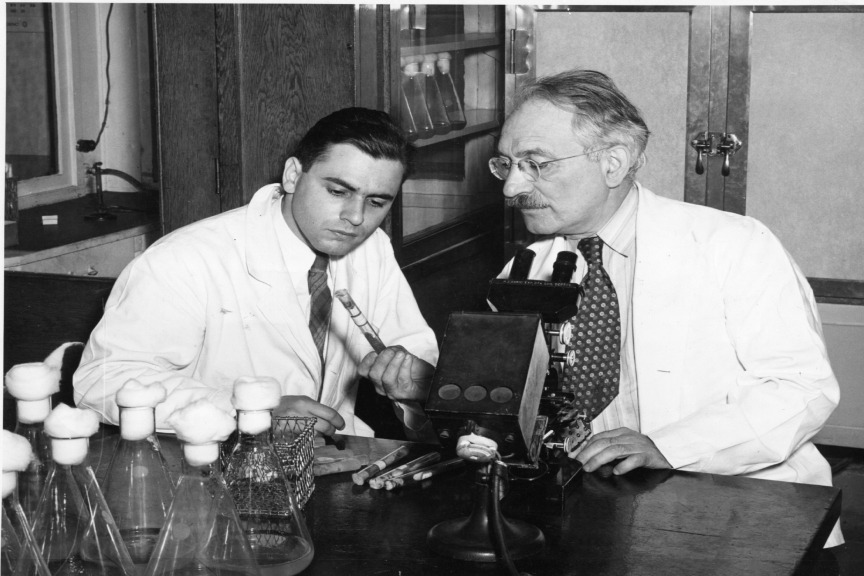 But it was foolproof. A student streaked a soil microbe in a line down the middle of a plate. Then he streaked a disease bacterium across that line at a right angle. If the microbes in the soil were producing something effective at killing bacteria, it left a clear band through the bacterial streak. About 1,000 of Waksman's 10,000 soil cultures produced a clear band. But that didn't mean he discovered 1,000 new antibiotics. This was only the first hurdle.
Nearly every antibiotic he discovered came out of actinomycetes: the thread-like soil bacteria that produce the smell of fresh-turned dirt. One actinomycete in 10 makes the same compound, streptothricin. Waksman isolated it, tested it, and discovered it was toxic.
And then there was another problem: many of the compounds he discovered killed the wrong type of bacteria. As you probably know, bacteria come in two forms: gram-positive and gram-negative. Gram-positive bacteria have a thick cell wall that's "naked." Gram-negative bacteria have a thin cell wall that's protected by a membrane.
Penicillin works by jamming the enzyme that builds the cell wall, which causes the cell to burst as it grows. Against bacteria with a thick bare wall (gram-positive) the drug is devastating. But against a gram-negative bacterium, it never reaches the wall at all: the outer membrane protects it. Plague, cholera, and typhoid are gram-negative – penicillin did nothing to them. What Waksman needed was a compound that could kill what penicillin couldn't. He needed to find a compound that could destroy gram-negative bacteria.
And then there was a final problem. Some of the gram-negative killing compounds could not be manufactured. Producing an antibiotic in quantity means growing the microbe in thousands of gallons of liquid inside a steel tank. Plenty of microbes that secrete freely across a solid plate will not secrete anything once they are submerged.
Out of 10,000 cultures, roughly 100 survived all of these challenges. Then they all had to be isolated. That meant separating the one active molecule out of the soup the microbe grew in, purifying it, and then making enough of it to inject into an animal. That took the sorting from 100 down to only 10.
Then the animals they were testing these new antibiotics on kept dying. In 1940, actinomycin, the first antibiotic the program found, was the most powerful anyone had ever measured. But just one milligram of it killed a full-grown chicken. Streptothricin passed its early animal tests and then destroyed kidneys weeks after the dose. Clavacin and fumigacin failed the same way.
Waksman discovered that, relatively speaking, killing bacteria wasn't that hard. Killing bacteria at a dose the patient can survive was vastly harder. But finally, one of Waksman’s researchers found one.
Albert Schatz, a 23-year-old graduate student working alone in the basement at Rutgers, isolated streptomycin on the afternoon of October 19, 1943. It cured tuberculosis, a deadly disease that had killed millions. The discovery won Waksman the Nobel Prize in 1952.
Diminishing Returns On Drug Research
Over the following decade, researchers in his laboratory worked through more than 100,000 more cultures. But instead of improving with time, his lab discovered fewer new compounds, even as it spent more money on discovery. Economists call the problem Eroom's Law, which is Moore's Law spelled backward. Just as Moore’s Law held that computer chip speed doubled every two years, Eroom’s Law holds that the number of new drugs approved per billion dollars of research spending has been cut in half roughly every nine years since 1950. In the early 1950s, an inflation-adjusted billion dollars of research bought 40 to 50 approved medicines. By 2018, that same billion bought 0.7.
Today, the Tufts Center For The Study Of Drug Development puts the all-in cost of one approved drug at $2.6 billion. Where does all the money go? It goes toward the overwhelming percentage of drugs that fail.
That’s why the drug business has always been organized around diversifying the risks as much as possible. But that's finally changing.
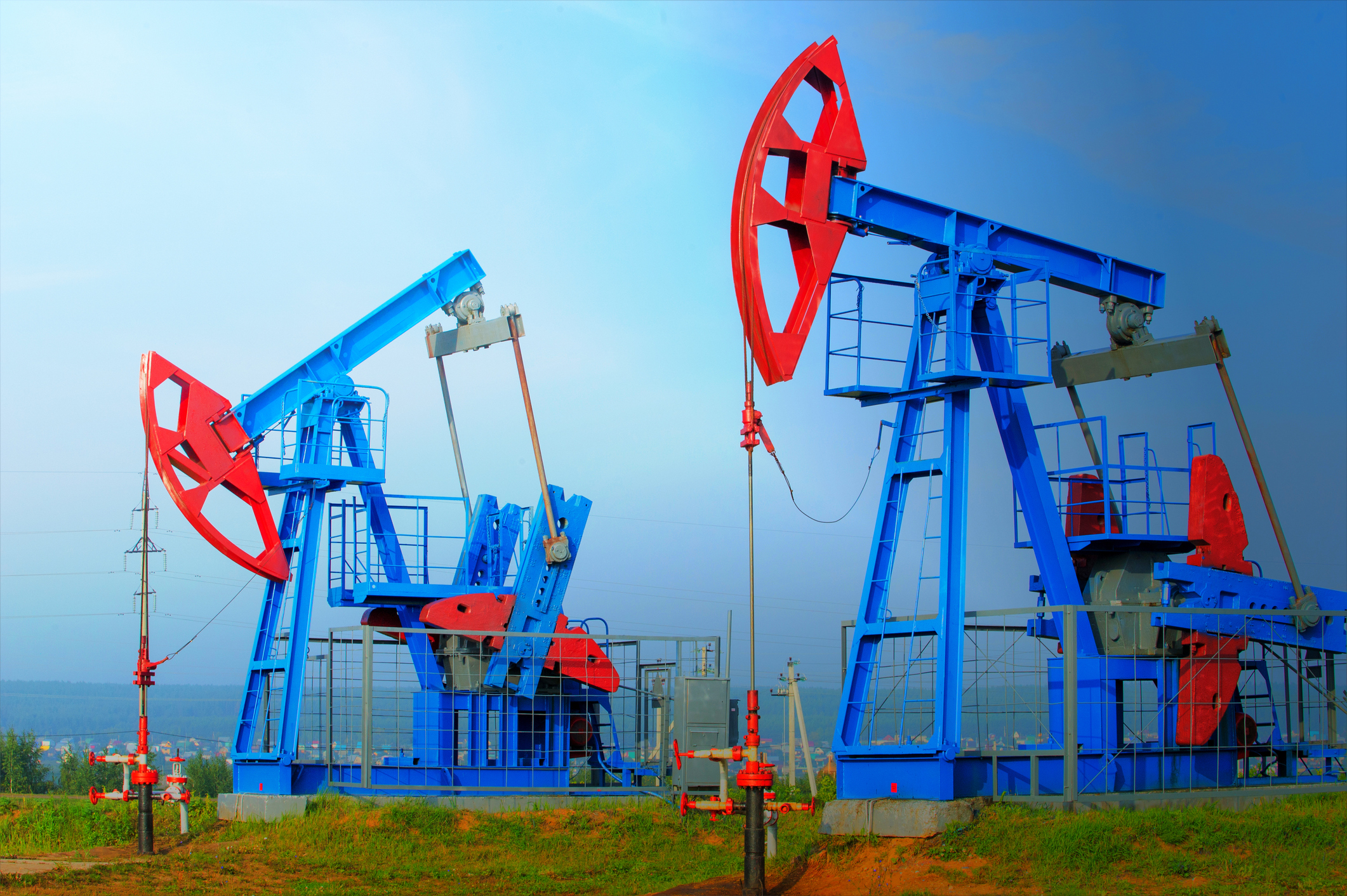
In much the same way that technology converted the oil-and-gas industry from a discovery challenge to an engineering challenge, with enormous horizontal wells, technology is changing the essential challenge of medicine from discovery to manufacturing.
For a century, the oil business ran on the same odds as when Waksman’s antibiotics were discovered. Until the late 1970s, the industry considered a 10% wildcat success rate attractive: one successful well for every nine dry holes. The American Association of Petroleum Geologists tracked it by decade. New-field wildcat success ran 11.3% from 1946 to 1955, 10.8% from 1956 to 1965, and 11.2% from 1966 to 1975.
Thirty years, and no improvement at all.
Then, the industry discovered three-dimensional seismic surveying. This technology bounces sound waves off rock layers and reconstructs the subsurface inside a computer. It first emerged in the 1980s and became standard practice by the 1990s. Amoco measured the difference. Between 1990 and 1996, wells drilled with 3D seismic hit 49% of the time, against 14% for wells drilled without it. Over those same years, the share of Amoco's prospects covered by 3D rose from 1% to 65%, and its cost of finding a barrel of oil fell dramatically – from $8 to less than $1.
And what came next made it virtually impossible to drill a dry hole.
Texas real estate developer George Mitchell spent 17 years and roughly a quarter of a billion dollars drilling the Barnett Shale in North Texas without turning a profit. In 1997, one of his engineers, Nick Steinsberger, replaced the expensive gel in the well’s fracturing fluid with water slickened by a trace of chemicals. The following year that well, S.H. Griffin No. 3, out-produced every well the company had ever drilled.
Mitchell did not discover where the gas was. Everybody already knew where the shale was: it covered thousands of square miles. What Mitchell proved was, with the right chemistry, gas could be manufactured out of that rock.
That’s what I mean when I say that drilling stopped being exploration and became engineering. Today the challenge isn’t finding oil and gas. Development wells in proven shale succeed 85% to 95% of the time. Today the challenge is purely engineering: how efficiently can you drill a given area of shale?
In 2010, the horizontal section of the average new Permian Basin well ran 3,870 feet. By 2025, it ran 10,867 feet and 15% of new wells now stretch past three miles. Occidental Petroleum (OXY) cut its drilling time in the Wolfcamp shale (within the Permian in West Texas) from 43 days per well in 2014 to 26 days in 2015, and the best operators now drill these wells in 13 days. Output per Permian rig went from 130 barrels a day in 2014 to 800 barrels a day by 2019.
Nobody found more oil. They engineered more oil.
Drug discovery is making that same turn right now. Artificial intelligence (“AI”) will play a growing role in testing new drug targets. Much like 3D seismic, AI will dramatically reduce the cost of discovery. The key to success in the drug business will be engineering – figuring out more efficient, more effective, and cheaper ways of hitting the best targets.
Our portfolio will be built around who owns the best engineering.
Chronicling The Remarkable Breakthroughs
As you know, our strategy in Porter & Co. Biotechnology is always to follow the science.
In the month of August, there were two Nobel Prize-worthy technological breakthroughs that I’d like to share with you.
Porter further expands on the portfolio that he developed last month – with two of his newest recommendations up more than 30%. To see the remainder of this issue, new recommendations, and full access to the Porter & Co. Biotechnology portfolio, click here.
This content is only available for paid members. If you are interested in joining Porter & Co. either click the button below now or call our Customer Care team at 888-610-8895.