What Anthropic Is Really All About
Inside Today's Issue
Editor's Note: If you missed Porter's presentation on the signal he's waited years to see fire, the replay is available for a limited time. Watch it here before it comes down to get every position we’re recommending.
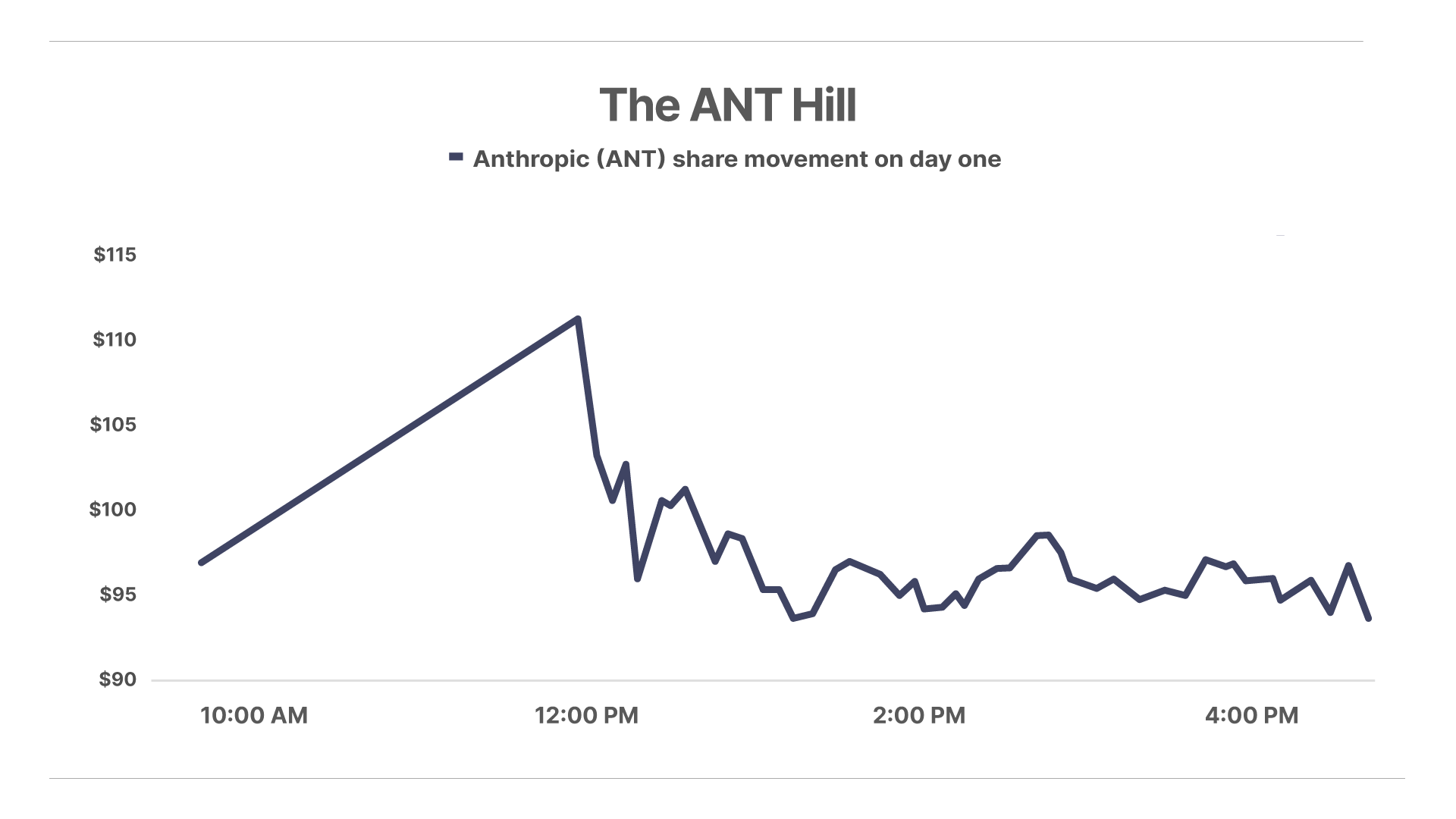
Anthropic (ANT) went public yesterday.
It’s the first company built by “effective altruists” to go public. And I’m certain most investors have no idea what they’re buying when purchasing ANT shares, or how dangerous the company’s charter is, not only to investors, but to humanity.
These folks believe that capitalism is a flawed system. And they believe they’ve created a better one – a system that relies on doing what’s best for the common good, not greedy shareholders.
The company is a Delaware “public benefit corporation.” Its charter assigns it a purpose:
the responsible development and maintenance of advanced AI for the long-term benefit of humanity.
Its directors are required to balance three things:
- the financial interests of shareholders
- the interests of everyone materially affected by the company's conduct
- that purpose
What in the heck does that actually mean? In reality it simply means that the company’s directors can do whatever they want. They aren’t accountable to the shareholders.
Anthropic’s directors owe no duty to any person on account of any interest of such person in the public benefit. A director who sacrifices your returns for the long-term benefit of humanity is deemed to have met his duties so long as the decision is informed, disinterested, and not such that no person of ordinary, sound judgment would approve. Anthropic's own prospectus concedes there is limited judicial precedent on how courts will judge that balancing.
Thus, Anthropic’s board is completely unaccountable to its owners. And… who selects the board?
A Long-Term Benefit Trust holds a single share of Class T stock. That share carries no economic rights and no expiration date. It gives the trust the power to elect and remove four of Anthropic's seven directors: a majority of the board. The filing describes the trustees as financially disinterested, with backgrounds in artificial intelligence (“AI”) safety, national security, public policy, and social enterprise. The men and women who pick the majority of the board of a $1.5 trillion company have not a dollar of their own money at risk in it.
And the other directors?
The seven co-founders hold a single share of Class F stock through an entity called Founder LLC. That one share carries 50.1% of the vote on nearly everything else shareholders decide, including the election of the other three directors. The filing says that voting power will not be subject to dilution. Counting their own shares, the founders control about 61.3% of the vote. Each has pledged to give away 80% of his or her stock. A founder keeps a seat in the LLC so long as he holds just 2% of his IPO-era shares.
One of the most powerful technology companies that’s ever been created is going to be controlled by a group of completely disinterested directors who believe they know what’s best for the common good.
What’s going to happen next? Here’s what one of the founders of the world’s largest altruist movement believes about the near-term future, thanks to technology:
“Man at last will begin to harmonize himself in earnest. He will try to master first the semiconscious and then the subconscious processes in his own organism, such as breathing, the circulation of the blood, digestion, reproduction, and, within necessary limits, he will try to subordinate them to the control of reason and will… Mankind will reduce the fear of death to a rational reaction of the organism towards danger… Man will become immeasurably stronger, wiser and subtler; his body will become more harmonized, his movements more rhythmic, his voice more musical... The average human type will rise to the heights of an Aristotle, a Goethe... And above this ridge new peaks will rise.”
Anthropic CEO Dario Amodei believes exactly the same ideas. In 2024 he published an essay called Machines Of Loving Grace. In it he wrote virtually the same words: “weight, physical appearance, reproduction, and other biological processes will be fully under people's control.”
He predicts the next 50 to 100 years of biological progress in five to 10 years, and a doubling of the human lifespan to 150.
He calls the machine that will do it a country of geniuses in a data center.
The first description of the coming technological revolution was written in 1924 by the leader of the world’s first effective altruism movement, Leon Trotsky, in the closing pages of his book Literature And Revolution. Yes, the communists were avowed altruists. They sought to create a “perfect man” that would always act for the common good. Trotsky wrote…
“The average human type will rise to the heights of an Aristotle, a Goethe, or a Marx.”
Beginning in 1918, Trotsky built the Red Army into a vicious fighting force that ravaged terror on the Russian people, cementing the communist takeover of the country into the Soviet Union. And eventually, the revolution he launched turned against him when Joseph Stalin sent an agent with an ice pick to kill Trotsky in Mexico City in 1940.
Effective altruism, like communism, began with an appealing idea: give to charity using evidence, not sentiment. Its leading thinkers concluded that because the people who will live in the distant future vastly outnumber the people alive today, the most important moral work is preventing events that could wipe out that future.
Of course, if you accept that logic, then virtually any sacrifice can be justified by the trillions of hypothetical lives on the other side of the ledger. It’s a preposterous idea. And it reveals a profoundly naïve false belief in their own judgment.
In March 2022, the economist Tyler Cowen asked FTX founder Sam Bankman-Fried, then effective altruism’s most famous donor, whether he would take a bet with a 51% chance of doubling the Earth and a 49% chance of destroying it, and keep playing double or nothing.
Bankman-Fried said yes.
Eight months later, his FTX exchange collapsed. A jury convicted him on seven counts of fraud and conspiracy. A federal judge found Bankman-Fried stole $8 billion and sentenced him to 25 years.
It’s arrogance to the level of insanity to believe that you know what’s best for everyone, even today. It’s arrogance to the level of insanity to believe you have the right to other people’s property because you know what’s best for them.
Is there a meaningful difference between what Sam Bankman-Fried did and what Dario Amodei has done with the structure of Anthropic? Only one. Bankman-Fried stole $8 billion. Amodei has stolen $1.5 trillion.
And where do these ideas always lead? To totalitarian systems of control.
In 1762, Jean-Jacques Rousseau wrote that society rests on a general will, and that “whoever refuses to obey the general will shall be compelled to do so by the whole body. This means nothing less than that he will be forced to be free.”
Thirty-two years later, his most devoted student explained what that meant in practice. On February 5, 1794, Maximilien Robespierre told the French National Convention:
Terror is nothing other than justice, prompt, severe, inflexible; it is therefore an emanation of virtue.
Robespierre's Committee of Public Safety arrested about 300,000 people. Roughly 17,000 were tried and executed. Thousands more died in prison or without trial.
The Bolsheviks replaced the general will with the dictatorship of the proletariat. Same structure: a vanguard that could see the good the masses could not.
Mao Zedong's Great Leap Forward promised to move China into industrial abundance – for the common good. Planners in Beijing set the targets, and the peasants starved. Demographers estimate the famine of 1958 to 1962 killed somewhere between 15 million and 45 million people.
You might object that these were fanatics with guns, and that the people running Anthropic are scientists with data centers. But it’s only a matter of time before they will create a reason to start killing people.
In the early 20th century, American scientists, reformers, and philanthropists embraced eugenics: the idea that society could breed out disease, poverty, and crime with the help of science. It called itself evidence-based. It was impartial and long-termist, concerned with the welfare of generations not yet born. The Supreme Court ruled on it in 1927. By a vote of 8 to 1, the justices let Virginia sterilize a young woman named Carrie Buck, whom the state had wrongly labeled "feebleminded." Justice Oliver Wendell Holmes, the most celebrated legal mind of his era, wrote: “Three generations of imbeciles are enough.” Somewhere between 60,000 and 70,000 Americans were sterilized against their will.
The eugenicists described their work as service to humanity. C.S. Lewis named it in 1949:
Of all tyrannies, a tyranny sincerely exercised for the good of its victims may be the most oppressive... those who torment us for our own good will torment us without end for they do so with the approval of their own conscience.
The longshoreman philosopher Eric Hoffer explained why sincerity makes it worse, not better. He wrote in The True Believer: “Faith in a holy cause is to a considerable extent a substitute for the lost faith in ourselves.”
The true believer does not want a raise. He wants to dissolve himself into something larger and cleaner than ordinary life. Setbacks prove the enemy is stronger than expected, which justifies harsher means. Enormous tragedy follows.
Alas, there is no such thing as the common good.
There are only goods, plural: the particular wants of particular people, which conflict constantly. You want a cheaper car. The autoworker wants a higher wage. The retiree wants a safe yield, and the founder wants your savings for his start-up. No committee – and no data center – can add those wants into a single number called "the good" and then maximize it. The wants are not knowable in advance, even to the people who hold them, until they have to choose.
But you cannot choose for others. You can only choose accurately for yourself. Acting in your own best interests is a vital part of the system.
Friedrich Hayek spent his entire career explaining why self-interest is integral to a functional free market. The curious task of economics, he wrote in 1988, “is to demonstrate to men how little they really know about what they imagine they can design.”
The knowledge that runs an economy is not understood by one man or group of men. It is not contained by any machine – not even a super-human AI.
The knowledge that runs an economy is local, tacit, and scattered. It surfaces only when people with something at stake make choices.
That is how what is "good" gets discovered: one transaction at a time, by people who bear the consequences of their choices.
Adam Smith wrote the most famous sentence in economics:
It is not from the benevolence of the butcher, the brewer, or the baker that we expect our dinner, but from their regard to their own interest. The merchant intends only his own gain, and he is in this, as in many other cases, led by an invisible hand to promote an end which was no part of his intention.
Then comes the line that every American should know:
I have never known much good done by those who affected to trade for the public good.
Anthropic’s shareholders are about to learn this lesson the hard way.
Tell me what you think of today’s Journal: porterstansberrydirect@gmail.com
Good investing,
F. Porter Stansberry
Stevenson, Maryland

1. Most Nasdaq 100 stocks are in a bear market. Through Thursday’s close, 58% of the index’s members were at least 20% below their highs. The index itself is only about 15% below its early-October record. The gap comes from how the index is built: it is weighted by company size, and its largest members have fallen less than the typical stock. In the 2018, 2020, 2022, and 2025 sell-offs, this reading peaked between 71% and 86%. In each of those, the index itself ended up down at least 20%. 2. More Fed rate hikes could push the economy into recession. Real short-term interest rates – what borrowers pay after subtracting expected inflation – are already near 2%, plenty high enough to slow borrowing and spending. But this year’s war-driven jump in energy prices is set to drop out of the annual inflation numbers beginning early next year. If interest rates merely hold steady while energy prices fall back to pre-war levels, real short-term rates would climb to their highest level since 2000. Yet the Fed is set to raise rates again in December, and Governor Christopher Waller wants a half-percentage-point hike. The Fed may be headed for another policy mistake. 3. Sell-off spreads to gold. Gold trades around $3,500 per ounce, 37% below January’s record near $5,600. Investors appear to be selling the precious metal to raise cash as stocks tumble, adding to pressure from rising yields and a stronger dollar. A similar thing happened in 2008 – gold fell 30% from March to October 2008 as investors scrambled for liquidity. This time, the Fed is expected to raise rates in December, leaving another near-term headwind for gold. Zooming out, the trend toward global monetary expansion shows no sign of ending, and thus we remain bullish on gold long term. Anthropic’s IPO made about 2,800 people millionaires. The maker of AI platform Claude priced at $83 a share on Wednesday and closed its first day (yesterday) at $97.17, creating a market value of about $1.8 trillion. Research firm Sacra estimates about 2,800 current and former employees now hold at least $1 million in stock, and 400 hold $100 million or more – nearly 3x the roughly 1,000 millionaires from Facebook’s 2012 IPO. The seven cofounders hold a combined $166 billion, according to Bloomberg. Amazon (AMZN) put about $18 billion into Anthropic, and at $83 a share that stake is worth $161 billion. Yesterday, looking back on his days at Salomon Brother, Merrill Lynch, and Morgan Stanley, Marty Fridson discussed examples of accounting trickery… and how to spot it. Kathy D. writes: Martin, wow, what you shared about the buy/sell recommendations from a trader's viewpoint reminded me of my dad's broker's recommendation after my dad passed and left stock to us. His broker wanted all of us to sell immediately. I assumed that advice was the only way he would earn a commission. All of my siblings took his advice and immediately sold, except for me. I held onto the $10,000 of stock I was gifted, selling 20% over 15 years. What I still hold is now worth $80,000. Thank you for confirming what I have always thought... No one cares about what is best for yourself except yourself. On Wednesday, Porter compared the emergence of AI to the creation of the farming tractor – and the role government, tariffs, and overreach can play in destroying both. Mike P. writes: I truly enjoyed the economic history that you presented. I remember about Ford and the assembly line but the transition in the farming industry was truly fascinating to read. Jim C. writes: I'm a subscriber, and your November 18 essay, "AI Is The New Tractor," hit home. It is very close to what I've been trying to teach for years: productivity is the only way prosperity happens, and people shouldn't fear innovation.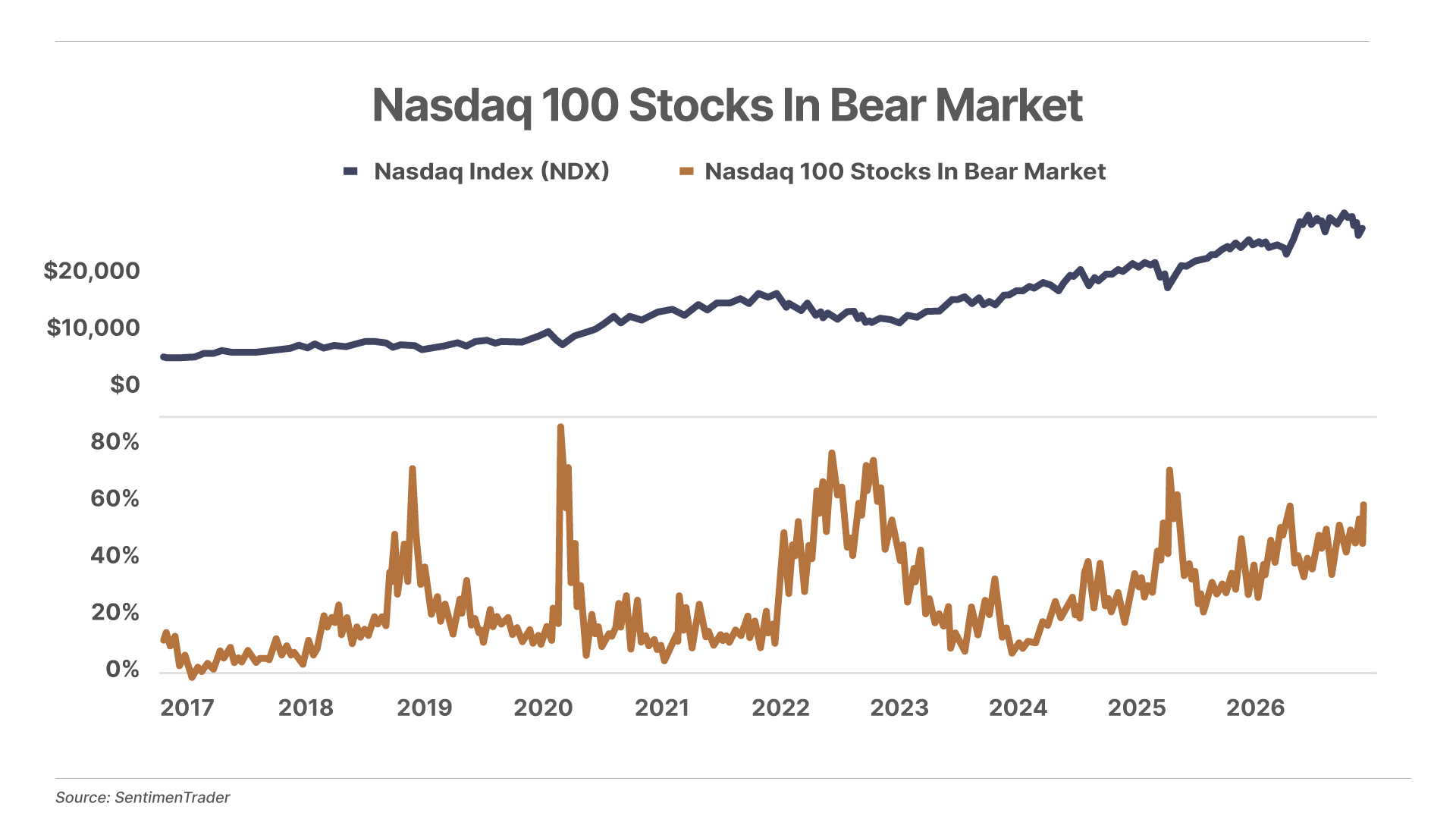
“Thank You, Martin”
Thanks for the great advice.
I'm 83, and I'm doing my part through a YouTube series called An Hour Of Work, based on my book Productivity, Wealth, Poverty. Each episode tells the story of an invention or a builder in plain English and shows how it lets one person's hour of work produce more. The main difference from your essay is that we try to cover everything people need to live: food, fiber, and shelter, not just one industry. And like you, we show that new technology is nothing to be afraid of.
One story from my book fits your argument perfectly. Andrew Carnegie's father was a handloom weaver in Scotland, and power looms put him out of business when Andrew was 12. The family borrowed money to come to America in 1848, and Andrew started in a cotton mill at $1.20 a week. One generation later, he did to steel exactly what the power loom had done to hand-weaving. He brought steel rail down from about $100 a ton to $18, cheap enough to build a nation's railroads and skyscrapers. Creative destruction put his father out of work, and it also made the son one of the great builders in American history.
If you'd like to take a look, the series is here.
Porter & Co. Market Snapshot
Through Thursday, November 19, 2026 close
Markets
Index or asset
Last
1-Day
YTD
1-Year
715.87
−1.96%
+5.8%
+9.2%
$3,685.50
−1.51%
−15.1%
−9.7%
$62,049.00
−0.77%
−29.1%
−30.7%
$83.21
−0.06%
+44.9%
+40.0%
$859,000.00
−0.52%
+13.8%
+14.2%
U.S. Treasury yields
Maturity
Yield
1-Day
YTD
1-Year
4.76%
−4 bps
+129 bps
+118 bps
5.04%
−3 bps
+86 bps
+91 bps
5.40%
−1 bps
+56 bps
+65 bps
Porter & Co. strategies
Strategy
1-Day
YTD
Since start
Per year
−0.74%
+3.4%
+30.3%
+13.1%
−1.61%
+0.7%
+1.0%
+0.7%
−0.10%
+2.6%
+25.0%
+8.6%
Porter & Co. Top Positions
Through Thursday, November 19, 2026 close
#
Position
Total return
1
+245%
2
+241%
3
+237%
4
+158%
5
+150%
6
+134%
7
+129%
8
+127%
9
+108%
10
+100%