
This is the free version of Porter Stansberry’s Complete Investor, which provides market analysis and investor insights. Paid subscribers get access to the full issue, including investment recommendations with buy-up-to prices, a real-time list of holdings, and more. Click here for details.
America’s Most Valuable Flywheel Is Finally Spinning Again
Just before 11 AM on February 28, 2001, chunks of brick started falling off Amazon’s headquarters.
The 6.8-magnitude Nisqually earthquake – the biggest tremor to wallop Seattle in half a century – sent injured Amazon employees limping for the parking lot as a hail of stonework rained down. They’d work from home for a few days, and the front entrance of the building would be unusable for considerably longer. Caution signs warned:
“Limited entry... Warning... Falling hazard.”
Amazon had been crumbling for a while. It seemed fitting.
The cracks had first started to show in late 1999, not long after Amazon founder Jeff Bezos had scored his first Time cover and AMZN stock had hit all-time highs of $113 (unadjusted share price). The transition from online middleman to physical retailer had been far more expensive than Bezos imagined...
Overstocked and overextended, the one-time online bookstore had sunk $429 million on warehouses across the U.S. and Europe, holding millions of dollars of unsold inventory. (Christmas 1999 left them with a 50-week supply of Kermit the Frog telephones that no one ever ordered.) By year-end 2000, Barron’s infamous “Amazon.bomb” cover story had been out for a few months, Amazon had reported a record net loss of $1.4 billion and – after six years online – had yet to turn a profit.
Worried about his ever-dwindling cash flow, Bezos, on the advice of CFO Warren Jenson, sold $625 million of junk bonds into the European market in February 2000, as the dot-com bubble was about to burst.
It was this bond sale that caught the eye of Ravi Suria, then a no-name 28-year-old analyst from Chennai, India, who researched debt for Lehman Brothers. In June 2000, he penned a scathing report on Amazon’s near insolvency, claiming Bezos would be bankrupt in four quarters, with a sobering financial breakdown of the situation.
Ravi’s report catapulted the young Indian onto the global stage as Amazon’s Public Enemy No. 1... and immediately sent AMZN shares down another 20%.
Without the cash from Jenson’s well-timed bond deal, Amazon would have gone under as the internet bubble unwound. As it was, the stock fell 94% from its peak, the company stacked up huge net losses, and Bezos had to lay off 15% of his workforce – though he vested them with stock in a trust fund, to be cashed out in 2003, in case things turned around later.
Bezos wasn’t rattled by Ravi, or so he claimed. Insisting the analyst’s numbers were off by factors of millions, Bezos even coined a term for a million-dollar rounding error, the “milliravi.” (Remember that word for later.)
But when he got a chance to see Ravi’s next report ahead of publication – with even more damning figures – Bezos panicked and sold $1.5 million worth of his own Amazon shares, triggering a Securities And Exchange Commission (“SEC”) investigation. He narrowly avoided prosecution for insider trading.
Bezos’ personal rock bottom coincided with Amazon’s low of 30 cents per share (split adjusted).
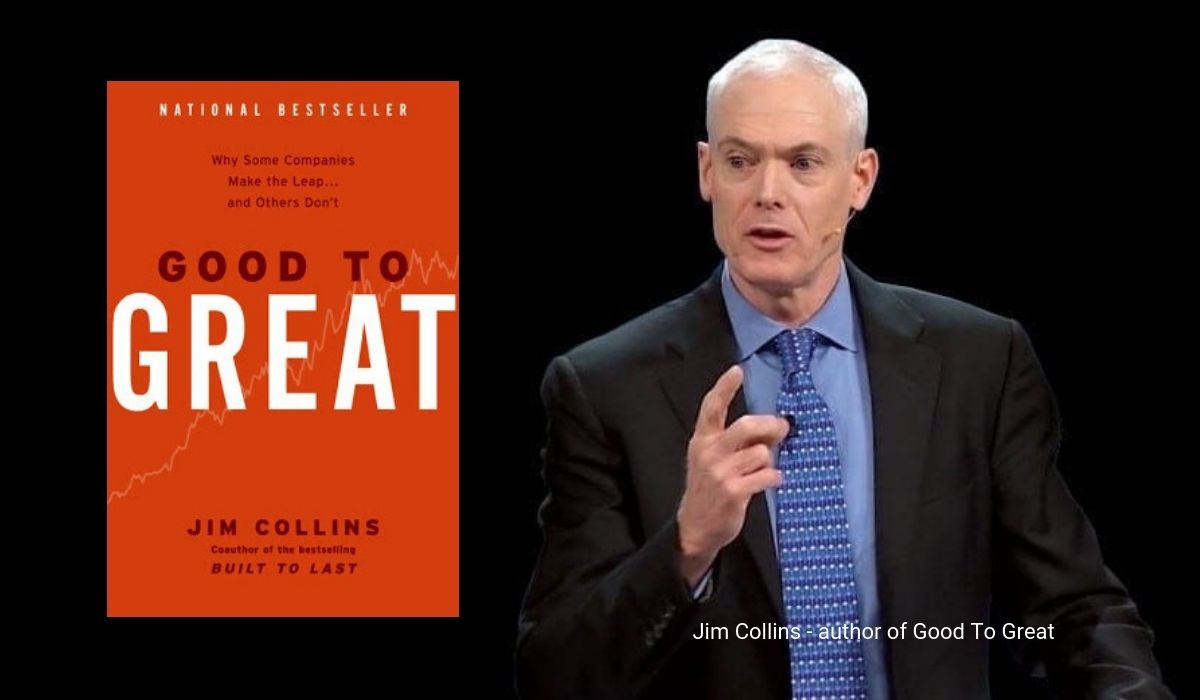
At this point, there was only one thing left for Jeff Bezos to do. He called Jim Collins.
(Fly)Wheel Of Fortune
Collins – a mild-mannered Stanford University professor – was an unlikely savior for “The Everything Store.” In 2001, Collins was holed up writing a business-management book – that would later become a business-school bible – called Good To Great: Why Some Companies Make The Leap... And Others Don't, centered on a principle he called “the flywheel.”
In physics, the flywheel is a kinetic energy powerhouse that, with each turn, stores energy to be released later. It’s used in waterwheels, pottery wheels, and has long held a quasi-mythical status as an almost-perpetual motion machine.
In business, per Collins, the flywheel is a series of small “pushes,” or good decisions, that get the larger wheel of the business spinning and create more momentum than any single push could have done on its own. As he described it:
Each turn of the flywheel builds upon work done earlier, compounding your investment of effort. A thousand times faster, then 10 thousand, then a hundred thousand. The huge heavy disk flies forward, with almost unstoppable momentum.
At the end of his rope, Jeff Bezos invited Collins to present a seminar on the flywheel to Amazon management in October 2001. The notes the company founder took there – a napkin sketch that looked a little bit like a fried egg – would change the course of Amazon history.
As Collins said later, the Amazon team “took the flywheel concept and made something of their own out of it.”

Bezos’ version of the flywheel started with customers. Improve the experience for them (push!), and they’d buy more. This would entice more third-party vendors to sell on Amazon’s platform (push!), which would attract more customers (push!) – thus, giving Amazon more money to funnel into cheaper products and a better customer experience (push! push! push!)
Bezos knew some small, incremental pushes he could make right away. He threw open the doors to third-party sellers like Target and Toys “R” Us and let them pay to ship through Amazon. He slashed prices for customers across the board. And he launched a free-shipping program for customers who bought over a certain amount – a program that would later become the immensely popular Amazon Prime.
Slowly, then faster and faster, the wheel began to turn…
By Q4 2001, Amazon had reported a small but symbolic profit of one cent per share. By year-end 2003, stock had rebounded from under a dollar to $2.63, and Amazon’s laid-off former employees were able to cash out their once-worthless stock options for a 100% gain.
In his press release announcing profitability, Bezos added a coded “F You” to Ravi Suria, in the form of an awkwardly phrased headline:
Meaningful Innovation Leads, Launches, Inspires Relentless Amazon Visitor Improvements
The initial caps spelled out MILLIRAVI – his name for the Lehman analyst’s million-dollar rounding error.
Ravi, chastened by the failure of his high-profile bad predictions, left Lehman. Today, of course, Amazon is Amazon – it’s bigger than the river it was named after. The multitrillion-dollar company continues to drive business with Jim Collins’ flywheel – and so do scores of other high-profile companies that have drawn on Collins’ work: Apple, HubSpot, and Wells Fargo among them.
So does the company we are recommending today, although it was fueling its flywheel when Jim Collins was watching Mickey Mouse on TV...
This company built from scratch a massive, self-replicating economic engine: the most valuable flywheel ever created, by one of the greatest forever companies of all time.
That flywheel is about to be re-launched…with what we believe will be the most valuable acquisition of the next decade.
The Flywheel Before It Had A Name
 Subscribe to Porter Stansberry’s Complete Investor to unlock the rest of this issue and more.
Become a Complete Investor subscriber today to get instant access to the rest of this issue and other valuable subscriber-only content.
A Complete Investor subscription gets you:
-
Monthly Issues – a detailed analysis on a new recommendation plus ongoing updates on the existing list of recommendations
-
Special Reports – deep-dive analyses covering every major market-moving trend such as artificial intelligence and other breakthrough technologies. Plus, why property & casualty insurance stocks are a must-own, the best ways to invest in energy and commodities.
-
Buy / Sell Alerts – instant notifications when any stock in our recommended list makes a major move worthy of your attention.
-
Monthly Roundtable – listen in to this exclusive podcast as Porter and his editorial team discuss the markets, the open recommendations, and the strategies subscribers can use to maximize their returns
-
Custom Investment Indexes – such as the Better Than Berkshire Index, a systematic approach to building your own Berkshire Hathaway holdings using superior companies, and The Lindy Index, the top-40 companies that have been compounding returns for at least 50 years, to name just two
-
Porter’s Permanent Portfolio – a fully balanced portfolio with 25% allocated to bond-like investments, 25% in the world’s best businesses, 25% in hard assets, and 25% in cash-like investments. Despite having half the risk of the market, this portfolio has consistently outperformed the S&P since inception
-
And more…
Use the link below today and lock in our lowest available rate --> a savings of $575 off the usual annual rate.