Why American Natural Gas Is The World's Most Important Fuel Source
Inside Today's Issue
- Essay: The Gods Of Gas Are On The Move
- GPU Chip Prices Rise Rapidly
- The Fed And Interest Rates
- Peltz Wants Wendy’s
- Chart Of The Day… Wingstop (WING)
- Today’s Mailbag
Editor's Note: If you haven’t claimed your free seat yet, hurry. Tomorrow at 1 PM ET, Porter goes live with his explosive new broadcast – revealing the worrying policy endorsed by both parties that could put every dollar you’ve saved and invested under threat.
In the emergency event, you’ll learn why JPMorgan Chase CEO Jamie Dimon warns it could even lead to “civil unrest” – and an investment Porter believes every American should know about before they go to the polls.
Save your free seat here – before the broadcast begins
America's natural gas is trading below $3.00 – but not for long.
On Monday, leading U.S. natural-gas producer and long-time Complete Investor recommendation EQT (EQT) agreed to buy Range Resources (RRC) for about $12.8 billion in stock. Eleven days earlier, Venture Global (VG), the fastest-growing exporter of American liquefied natural gas (and a “strong buy” in Complete Investor), signed agreements with GE Vernova (GEV) and Baker Hughes (BKR) for up to 16 gas-fired power plants at its Louisiana terminals.
To understand what’s about to happen to U.S. natural gas prices and U.S. natural gas suppliers and exporters, you must understand one critical fact: natural gas has two prices.
This week, next-day gas at the Henry Hub in Louisiana, the American benchmark, sold for $2.52 per million British thermal units (“MMBtu”). That was its lowest price since November 2024. On Wednesday morning, gas at Europe's main trading hub, the Dutch TTF, traded at $108.51 per megawatt-hour. That works out to roughly $32 per MMBtu.
The exact same molecule costs 12x more in Europe than it does in America.
Why doesn't America’s cheap gas simply flow to the market that’s paying more? Physics.
Gas is a vapor. To ship it around the world, it must be chilled to minus 260 degrees Fahrenheit, which shrinks it to 1/600th of its volume, converting it into a liquid, so it can ride in a tanker. Chilled gas is called liquefied natural gas (“LNG”). And right now, America’s LNG facilities are running flat-out. America’s nine large LNG export plants consumed 18.3 billion cubic feet per day (“Bcf/d”) of natural gas in October, just shy of the monthly record of 18.8 Bcf/d.
Long-term LNG contracts call for using the American price (Henry Hub) plus a fee for the liquefaction and shipping. At this week's prices, by our arithmetic, a long-term LNG supply contract cargo costs a buyer about $9.70 per MMBtu at the Louisiana dock. European buyers are paying $32. That means the importers and the trading firms that own these contracts are making a fortune – for now. That spread represents a huge opportunity for America’s leading natural gas businesses.
On March 18 and 19, Iranian missiles struck Ras Laffan, Qatar's export complex and the largest LNG plant in the world. They knocked out two of its 14 liquefaction trains, which together made 12.8 million tonnes a year. That is about 17% of Qatar's export capacity.
QatarEnergy's chief executive, Saad al-Kaabi, says the repairs will take three years and cost about $20 billion a year in lost revenue. He has also said the damage set the region back 10 to 20 years.
Why will the repairs take so long? The answer is the machinery: every LNG train runs on giant gas turbines that drive the compressors in its refrigeration loop. According to Rystad Energy, only three manufacturers in the world make those turbines, and all three entered 2026 with two- to four-year order backlogs, driven by data centers and the replacement of retired coal plants.
QatarEnergy has extended its force majeure, a legal suspension of contract deliveries, through the end of 2026. The International Energy Agency expects the damage to delay the global wave of new LNG supply by at least two years.
And then, last week, Qatar signed two long-term agreements to buy up to 4 million tonnes a year of American LNG from Cheniere Energy (LNG), through 2054. The country that built the world's LNG trade is now buying our gas!
The buyers who lost Qatari gas went shopping in America too. Asia took about 12% of American LNG exports in January. By May, it took about 40%.
America is going to dominate global energy trading for decades, mostly through the growth of LNG.
America is the largest natural gas producer on earth. In 2025, America produced 1,074 billion cubic meters of natural gas, 26% of the world's total, according to the Energy Institute. Russia, in second place, produced 15%. In July 2026, American dry gas production hit 113.7 Bcf/d, the highest monthly rate in the government's records, which go back to 1973.
And don’t worry. We are not going to run out of natural gas. In fact, the more we produce, the more gas we discover. In 2022, we noted that U.S. Geological Survey estimates of the gas in the Marcellus Shale, located mainly in Pennsylvania and West Virginia, had grown from 2 trillion cubic feet two decades earlier to 97 trillion, and that Penn State researchers put the recoverable gas above 400 trillion. The combined EQT and Range will hold more than 30 years of drilling locations on nearly 3 million net acres in that basin alone.
We are the world’s leader in natural gas infrastructure too: America has more than 3 million miles of gas pipelines and more than 400 underground storage fields. America supplied about 26% of the world's traded LNG in 2025, more than any other country.
In our June 2022 Complete Investor, we reported that the Rice brothers (EQT’s leading executives) had cut EQT's well costs by 47% and nearly doubled its drilling speed in just over a year. Those gains in productivity have continued. In 2025, EQT's average well cost per foot fell another 13%. This summer, it drilled the Longwell 9H in Wetzel County, West Virginia, with a horizontal section of 29,070 feet: 5.5 miles of pipe steered sideways through a single layer of rock. EQT says it is the longest lateral in the history of shale development.
Across the industry, researchers at the University of British Columbia found that American shale wells drilled in 2019 produced more than four times as much as wells drilled a decade earlier.
The major opportunity for EQT is to reach foreign markets directly and capture the higher spot prices for natural gas, while it continues to push down its cost of production.
In June 2022, we predicted EQT would become the first independent American shale producer to sell its own gas directly to foreign buyers with "a long-term supply contract via LNG with a major foreign trading partner at a price that's well above average U.S. prices." We named Lithuania as one of the European countries that would buy.
In July, EQT made its first major move to sell its own gas abroad. It took over a five-year LNG export contract for about 500,000 tonnes a year from a large Asian energy company, which EQT did not name. Finance chief Jeremy Knop said EQT was "able to pick the capacity up off… an integrated Asian buyer that is dealing with some tariff-related issues." The LNG will come from two Gulf Coast plants that are close to finished. To serve those cargoes, EQT contracted salt-dome storage on the Gulf Coast, raising its storage there to as much as 11 Bcf, so it can hold gas near the export plants until a cargo is due. This week, it told Bloomberg it is leasing two LNG tankers and plans to start trading cargoes by next year. EQT expects the deal to add about $45 million to its 2028 free cash flow.
And that’s only the first step. On September 21, Ignitis, Lithuania's state-owned gas supplier, signed to buy 10 LNG cargoes from EQT, one a year from 2027 through 2036. Part of the price is tied to Henry Hub. Part is tied to the European TTF price.
A European government utility will now pay EQT for American gas at the price set in Europe – just like we predicted. By our count, EQT has nearly 1 Bcf/d of its gas sales exposed to international prices and will continue to grow that exposure over the next decade. That’s the entire rationale for the Range deal that was just announced.
Range is the Fort Worth company that helped start the Marcellus Shale boom in western Pennsylvania. Range shareholders will receive 0.987 EQT shares for each Range share, worth $54.91 at Friday's close. That is a 21% premium. EQT shareholders will own 73% of the combined company. It will produce more than 9 billion cubic feet of gas equivalent per day and own more than 3,700 miles of pipeline, making it America’s largest natural gas business. EQT expects the merger to cut the gas price it needs to break even on free cash flow to less than $2 per MMBtu.
EQT CEO Toby Rice told Reuters the deal increases EQT's access to "the two premium markets in this world," which he named as "domestically in Appalachia and on the international front with LNG." He called the moment "an incredibly attractive opportunity," with American gas under $4 and gas in Europe and Asia over $30. On the merger call, he said holding international exposure at 15% after adding Range's volumes gives EQT room for about 2 million more tonnes a year of LNG.
Rice has also put a number on demand, and we think it is conservative: through 2040, EQT expects gas demand to grow by about 20 Bcf/d in American markets and about 200 Bcf/d internationally. That forecast implies American demand growing about 1.3% a year from the record 92 Bcf/d Americans used in 2025. Outside America, it implies growth of about 3.3% a year, from roughly 315 Bcf/d today to more than 500 Bcf/d by 2040. That would add about 65% to what the rest of the world burns now, and more than twice what America itself consumes. Over the past decade, world gas demand grew about 2% a year.
The leverage in that bet is simple. EQT produces 9 billion cubic feet equivalent a day, or about 3.4 billion MMBtu in a year. By our arithmetic, every $1 increase in the gas price adds roughly $3 billion a year to the combined company's revenue, before hedges and taxes. With a breakeven below $2, EQT earns a bit over cash at today's price, but every dollar above $2.50 is profit.
Now consider what happens if Europe's price stays near $32. EQT wants 15% of its sales exposed to international prices. On the combined company's 9 Bcfe/d, that is about 1.35 Bcf/d, or roughly 511 million MMBtu a year. Selling that gas at $32 instead of the $3.16 Henry Hub price the government forecasts for 2027 would add about $14.7 billion a year to revenue. After paying 15% of the gas price as fuel, a liquefaction fee of $6.79 and, by our assumption, about $2 for shipping, EQT would keep an extra roughly $10 billion a year before taxes.
EQT will issue about 231 million new shares to Range holders, bringing its share count to roughly 856 million. Spread across those shares, the European premium adds about $8.90 a share to annual earnings. Analysts' 2027 estimates for the two companies, plus the $325 million in promised savings, come to about $4.20 a share for the combined company. At European prices, that rises to about $13 a share, roughly three times as much.
Now look at Venture Global.
In February 2025, in "Faster Gas, Bigger Profits," we added Venture Global to our Watchlist. And a month after that issue, we formally recommended Venture Global at $10.71 a share. Our reason was speed: Venture builds its liquefaction trains in factories, ships them to the site in modules, and bolts them together. That approach produced the two fastest-built LNG terminals in American history: Calcasieu Pass and Plaquemines. Both phases of its third terminal, CP2, are under construction, with first LNG targeted for the second half of 2027.
Venture's terminals do not draw from the public grid. They run in what the company calls "Island Mode": they burn their own gas to make their own electricity. It already has six power islands operating, under construction or on order, about 4.5 gigawatts in all. On October 15, it signed frame agreements for up to 16 more, each rated at 720 megawatts, or about 11.5 gigawatts of new combined-cycle generation. The company says that it could support up to 10 gigawatts of computing capacity by the end of 2034, on land it owns or controls near its terminals in Plaquemines and Cameron parishes in Louisiana. It plans to place the first order by the end of 2026, with power available as early as late 2028. Local press reported the equipment deal at $17.2 billion.
Why would an LNG exporter sell electricity? Because the scarce input for artificial intelligence in America is reliable power, and the turbines that make it. Qatar's repair crews are waiting in the same line for the same kind of machine. Venture has locked up turbine and transformer supply from two of the largest makers through 2034. And a kilowatt-hour sold to a data center beside the terminal is gas sold without a tanker, a toll, or a foreign buyer.
How much gas is that? By my estimate, 11.5 gigawatts of combined-cycle plants running at full output would burn about 1.7 Bcf/d. That is roughly a tenth of all the gas fed to American export plants in October. It would be a major new buyer for Gulf Coast gas, bidding against the export trains next door.
Gas currently generates 40% of America's electricity, the largest single source in the country. Over the next decade, I’m certain we’ll see natural gas become the majority energy source (over 50%) for electricity in the U.S. That’s bullish for both EQT and Venture Global.
Tell me what you think of today’s Daily Journal: porterstansberrydirect@gmail.com
Good investing,
F. Porter Stansberry
Stevenson, Maryland
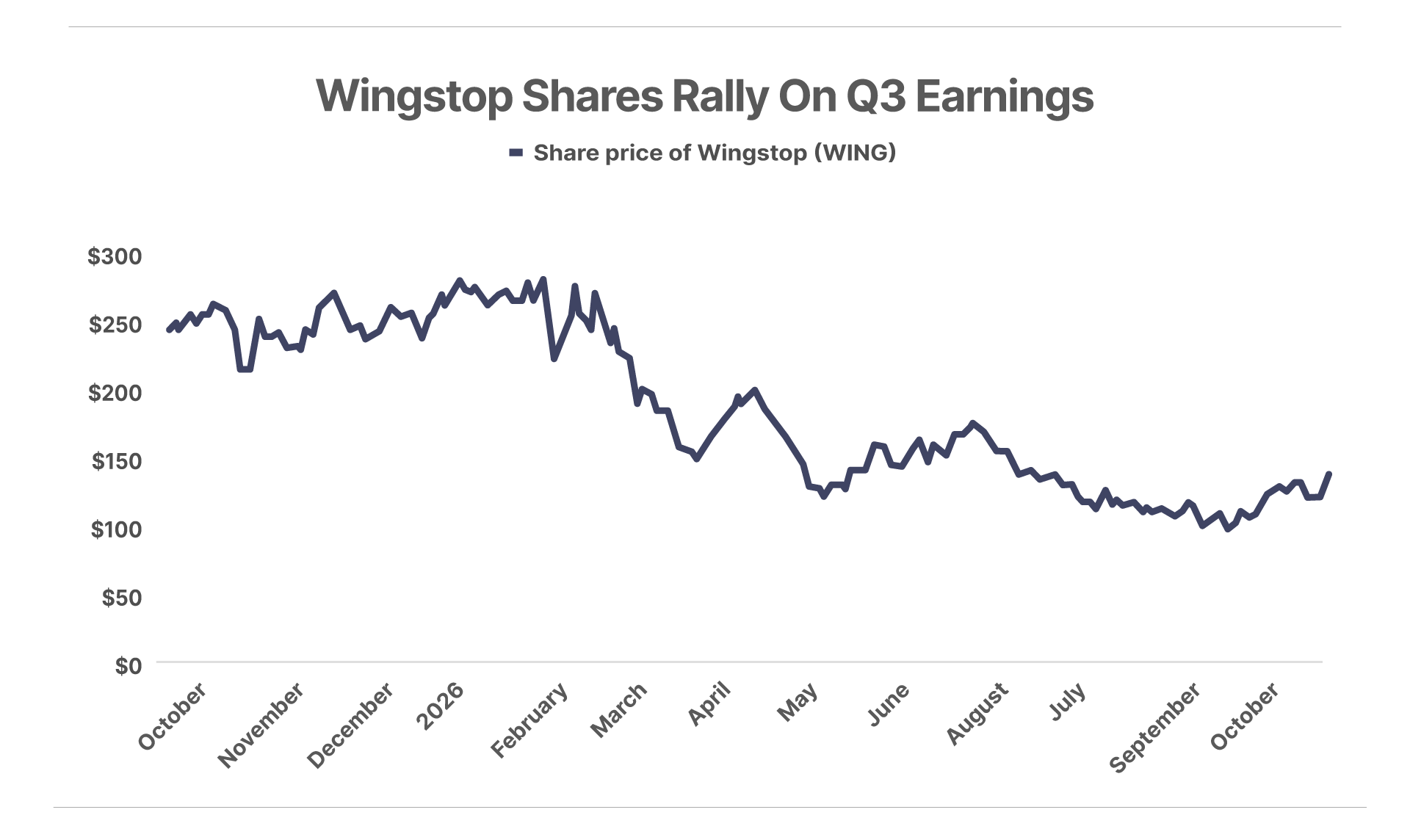
1. Demand for compute isn’t slowing down. The price to rent an H200 Nvidia (NVDA) GPU computer chip is up roughly 160% since January 1, the B200 is up 120%, and the four-year-old H100 is up 35%. Nvidia’s Blackwell GPU prices have risen 17 days in a row. Rental rates rise across every generation at once when demand is outrunning supply. As long as a dollar of compute earns more than it costs to produce, the chips keep selling. 2. The Fed paused its rate hikes, but two officials wanted to keep going. This afternoon, the Federal Reserve held the federal funds rate at 3.75% to 4%, six weeks after its first hike since 2023. Governor Lisa Cook and Cleveland Fed President Beth Hammack dissented in favor of another quarter-point increase. Chair Kevin Warsh acknowledged that inflation remains well above the Fed’s 2% target, but explained the pause by noting that borrowing has already gotten harder and more expensive for some businesses and households since September. 3. Nelson Peltz targets Wendy’s takeover. Shares of fast-food chain Wendy’s (WEN) rallied 15% on news that Trian Fund Management offered to acquire the business for $1.4 billion, or $7.15 per share. The fund, led by activist Nelson Peltz, already owns 16% of Wendy’s, which has struggled with declining sales and profitability in recent quarters, losing market share to top competitors like McDonald’s (MCD). Taking the business private could give Peltz more control over the company’s turnaround effort. Shares of chicken-wing chain (and Complete Investor recommendation) Wingstop (WING) rallied 10% after reporting Q3 earnings this morning. Despite same store sales declining 5.4% year-on-year (“YOY”), the company increased sales and earnings per share by 5% driven by a 14% YOY expansion in its store base. This is a testament to the company’s strong unit economics, which continues driving robust demand for new franchise locations even as the company works through sluggish consumer spending impacting the broader fast-food industry. Kevin O. writes: Thank you for the copy of your book 2029: The End Of America, which I received when I signed up for your presentation on Thursday. I really appreciate it. Porter & Co. Comment: To sign up for Porter’s presentation tomorrow – and to also get a copy of 2029: The End Of America, click here. His explosive broadcast reveals the worrying policy endorsed by both parties that could put every dollar you’ve saved and invested under threat. The program begins at 1 PM ET tomorrow. Al R. writes: I wish I understood the accounting (the process) outlined in [yesterday’s] Journal better, but I do understand and value the conclusion. And just so you understand why I say that: I’m a retired 78-year-old carpenter with a very substantial investment portfolio that I’d prefer to have growing rather than shrinking. Bill K. writes: Well done write up. It will be interesting to see how this all plays out.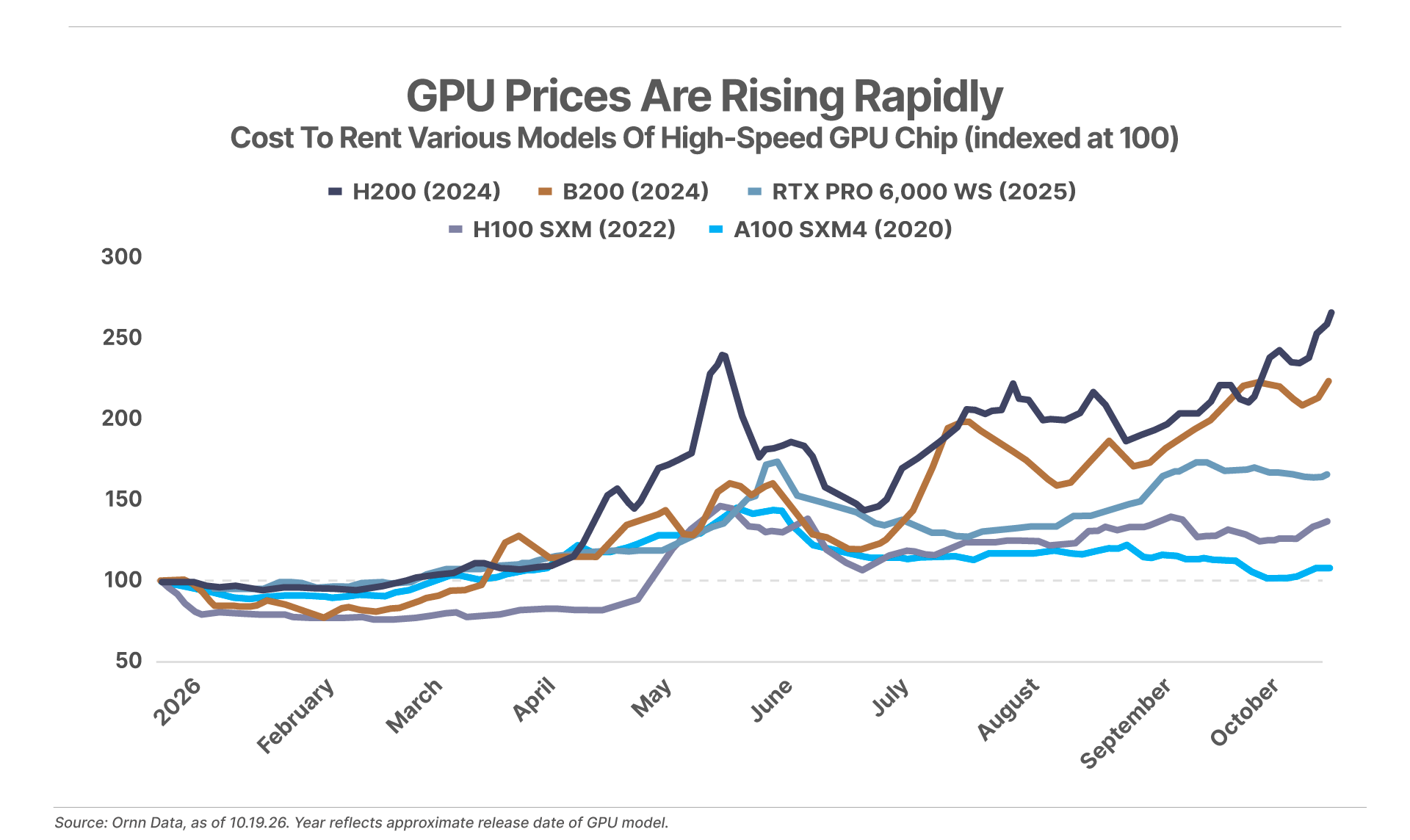
“A Truly Gifted Writer”
I read the book as soon as I downloaded it. You are a truly gifted writer.
I started reading your work in August 2024. I follow several different people in your line of work. I can honestly say your information and insights are a cut above the rest. I have learned more from you than all the rest combined. Thank you for everything.
“Running The Numbers On Anthropic”
Porter & Co. Market Snapshot
Through Tuesday, October 27, 2026 close
Markets
Index or asset
Last
1-Day
YTD
1-Year
769.66
+0.56%
+13.7%
+13.5%
$4,074.60
+0.90%
−6.1%
+1.4%
$80,709.00
+1.04%
−7.8%
−29.8%
$99.90
−1.83%
+74.0%
+62.9%
$810,106.00
−1.44%
+7.3%
+10.6%
U.S. Treasury yields
Maturity
Yield
1-Day
YTD
1-Year
4.70%
+2 bps
+123 bps
+122 bps
4.99%
−1 bps
+81 bps
+98 bps
5.30%
−1 bps
+46 bps
+73 bps
Porter & Co. strategies
Strategy
1-Day
YTD
Since start
Per year
−0.37%
+5.4%
+32.9%
+14.6%
−0.19%
+3.0%
+3.4%
+2.3%
0.00%
+5.6%
+30.1%
+10.2%
Porter & Co. Top Positions
Through Tuesday, October 27, 2026 close
#
Position
Total return
1
+216%
2
+209%
3
+199%
4
+194%
5
+152%
6
+138%
7
+138%
8
+137%
9
+113%
10
+93%