Issue#154, Volume#3


Updates On Novartis And Roivant Sciences
Inside Today’s Issue
We don’t normally update stock recommendations from our various services in the Daily Journal, but from time to time something happens that’s important enough to discuss with the entire audience.
On Friday, Porter & Co. Biotechnology recommendation Novartis (NVS) announced that its heart and cholesterol drug pelacarsen failed in a Food And Drug Administration (“FDA”) Phase III trial to reduce cardiovascular events despite lowering the harmful cholesterol Lp(a).
One of our main themes in Porter & Co Biotechnology is a technology called RNA interference. It can prevent harmful proteins from being produced inside cells, before they cause harm in your body. As this intervention occurs earlier in the pathology of disease and inside cells, it has a good safety profile and can be extremely effective. We believe it’s going to become a dominant new approach to treating chronic disease.
One of the biggest potential market opportunities for RNA interference is preventing the production of certain kinds of cholesterol that are linked to cardiovascular disease (heart attack, stroke). Cardiovascular disease is a leading cause of death, so there are potentially huge markets for these drugs – if they’re safe, and if they can prevent disease.
Novartis has been conducting a six-year-long, huge (8,323 people) clinical trial (“HORIZON”) using an older form of RNA interference (antisense) to target lipoprotein(a). Lp(a) is a cholesterol-carrying particle found in the blood. It resembles an LDL particle, the type commonly called “bad cholesterol,” with an additional protein called apolipoprotein(a) attached to it.
Your genes determine most of your Lp(a) level. Diet, exercise, and statins generally do little to change it. People born with high Lp(a) experience more heart attacks, strokes, and aortic-valve disease over their lifetimes. And currently there’s no FDA-approved treatment to reduce Lp(a), which makes it one of the most valuable potential drug targets in medicine.
Novartis’ Lp(a) drug is called pelacarsen. On Friday afternoon, Novartis announced that pelacarsen did not lower the risk of cardiovascular events in the treatment population of the clinical trial. We don’t have complete data from the trial, so we don’t know exactly how it failed. We do know that Pelacarsen did what an antisense drug is supposed to do: it lowered the protein it was designed to lower. The problem is that patients did not suffer fewer cardiovascular events as a result.
There’s a lot of controversy about cholesterol drugs (statins) already. Many people claim that LDL isn’t the cause of heart attacks. While cardiovascular disease is multi-faceted, there’s no question that lowering LDL, especially before cardiovascular disease has begun, can dramatically reduce the risk of heart attack and stroke. We know this because some people have natural mutations that result in much lower levels of LDL and they have much less (88% less, in one landmark study) incidence of heart disease. Likewise, some people have natural mutations that lead to much higher levels of LDL – they get heart disease when they’re still very young.
Using drugs to replicate lower levels of LDL improves cardiovascular health: The Cholesterol Treatment Trialists combined 26 randomized trials containing 170,000 participants. Each 38.7 milligram-per-deciliter (“mg/dL”) reduction in LDL produced a 22% reduction in major vascular events and a 10% reduction in overall mortality. A meta-analysis of patients beginning at very low LDL levels found a 21% reduction in major vascular events for every 38.7 mg/dL reduction, combining statins and nonstatin drugs.
I’m explaining all of this because I suspect there will be a lot of people (especially on the internet) who point to this clinical-trial failure and then claim that cholesterol isn’t a factor in heart disease. But that isn’t what this trial means. LDL has bidirectional genetic evidence and repeated outcome benefits from several mechanistically different drugs.
Still, if high Lp(a) leads to heart attack, then why didn’t lowering it reduce heart attacks?
Pelacarsen is an antisense oligonucleotide (“ASO”) – a short, manufactured strand of genetic material designed to bind to one specific messenger RNA. When pelacarsen binds to the message for apolipoprotein(a), the cell destroys that message. With fewer instructions available, the liver makes less apolipoprotein(a), and the patient’s Lp(a) level falls.
What The Trial Tested
This clinical trial enrolled 8,323 patients who already had cardiovascular disease and Lp(a) levels of at least 70 mg/dL. Patients received either an 80-milligram pelacarsen injection once a month or a placebo injection containing no active drug. Neither the patients nor their doctors knew which treatment they received (this was a “double-blind” clinical trial).
The trial measured a composite endpoint. A composite endpoint combines several medical outcomes into one score so that the trial can accumulate enough events to reach a conclusion. The Pelacarsen trial, Lp(a)HORIZON, counted the first occurrence of cardiovascular death, a nonfatal heart attack, a nonfatal stroke, or an urgent procedure to restore blood flow to the heart.
Researchers often call this collection of outcomes MACE – major adverse cardiovascular events. Pelacarsen did not significantly reduce these events in the overall trial population, even though it lowered Lp(a).
“Did not significantly reduce” has a precise meaning. The difference between pelacarsen and placebo was not large or consistent enough for the trial to rule out chance under its pre-specified statistical test. Novartis has not disclosed the actual difference, known as the hazard ratio, or the range of plausible values around it, known as the confidence interval.
We therefore do not yet know whether pelacarsen produced no benefit, a small benefit, or a benefit concentrated among patients with the highest Lp(a). Novartis also has not disclosed the separate event counts, the amount of Lp(a) lowering achieved during the study, or the complete results for patients who started at 90 milligrams per deciliter or higher.
Why Pelacarsen May Have Failed
- Lp(a) may identify cardiovascular risk without being a useful drug target. A marker can predict disease without causing enough of the disease to make its removal helpful. Medicine has seen this before: raising HDL cholesterol improved a laboratory number but did not reliably prevent heart attacks.
- Treatment may have started too late. Genetic studies measure the effects of high Lp(a) across an entire lifetime. Lp(a)HORIZON began treatment after patients already had cardiovascular disease. Lowering one source of damage for several years may not reverse decades of plaque formation and injury.
- Pelacarsen may not have lowered Lp(a) far enough. Its earlier trials produced reductions near 80%. Competing siRNA drugs have produced reductions above 90%. If cardiovascular benefit requires crossing a threshold rather than merely lowering the level, the deeper reduction could matter.
- The trial may have enrolled too many patients whose remaining risk came from something other than Lp(a). The median starting Lp(a) was 108 milligrams per deciliter, and 21.4% of patients entered below 90 milligrams per deciliter. About 77.5% received high-intensity statins, and roughly 11% received a PCSK9 inhibitor.
PCSK9 inhibitors are powerful LDL-lowering drugs. A 2025 analysis of 273,770 patients with established cardiovascular disease found that the connection between Lp(a) and recurring cardiovascular events weakened as LDL treatment intensified and disappeared statistically among patients receiving PCSK9 inhibitors. If modern treatment had already removed much of the risk attributable to Lp(a), pelacarsen had little left to prevent.
The missing results will distinguish these explanations. We need the actual event rates, the hazard ratio, the confidence interval, the achieved Lp(a) levels, and the results among patients starting at 90 mg / dL or higher. We also need to know whether the event curves moved apart late in the study, which would suggest that benefit requires more time.
What The Result Means For Lp(a)
Lp(a) remains a genetically established risk factor.
Genetic evidence tells us that people exposed to high Lp(a) for decades have more disease. A successful clinical trial must show that lowering Lp(a) with a drug, later in life, improves patient outcomes. Pelacarsen failed that test.
The next decisive Lp(a) study belongs to Amgen (AMGN). Its drug, olpasiran, is being tested in an ongoing large-scale trial called “OCEAN.” This trial required a higher starting Lp(a), uses an siRNA that produces deeper lowering, and excludes stroke from its three-part primary endpoint. Those differences address several possible weaknesses in Lp(a)HORIZON. But they do not guarantee success.
Eli Lilly’s (LLY) lepodisiran also uses siRNA to target Lp(a) and is being tested in a larger population that includes some patients without established cardiovascular disease. Lilly’s muvalaplin is a daily pill that prevents Lp(a) particles from assembling rather than silencing messenger RNA (“mRNA”).
What Does This Setback Cost Novartis…?
Ionis Pharmaceuticals (IONS) discovered pelacarsen. Novartis licensed it and became responsible for worldwide development, manufacturing, and commercialization.
The contract allowed Ionis to receive as much as $900 million. The amount included a $75 million upfront payment, a $150 million license payment, a $25 million development payment, up to $290 million tied to regulatory progress, and up to $360 million tied to sales. Ionis had received more than $275 million through the end of 2025. It would have received another $50 million if the FDA accepted a pelacarsen application.
Novartis has never disclosed the cost of Lp(a)HORIZON. Our reconstruction is $250 million to $700 million, with $450 million as the base estimate. The study operated for more than six years, enrolled 8,323 patients at 902 sites, administered monthly injections, and continued until independent reviewers confirmed 993 cardiovascular events.
Novartis paid Ionis more than $65 million for a separate next-generation Lp(a) ASO program that it terminated in 2025. Including that program, other pelacarsen studies, drug manufacturing, launch preparation, Lp(a) testing campaigns, and the original Ionis equity investment, our total Novartis Lp(a) spending estimate is $850 million to $1.55 billion.
Here’s what matters to shareholders: Novartis expensed the clinical work as it occurred. Pelacarsen has no current sales. Its failure therefore has almost no effect on 2026 earnings.
The pelacarsen call option from our August recommendation should be treated as lost. But Novartis is a broadly diversified, major pharmaceutical company. It does not depend on pelacarsen alone. Its LDL drug, Leqvio, is growing rapidly. It silences PCSK9 rather than apolipoprotein(a), lowers LDL cholesterol rather than Lp(a), and operates in a pathway already validated by successful outcomes trials using PCSK9 antibodies.
Our August valuation was $180 per Novartis share. We don’t believe the failure of this trial impacts that valuation by more than $2 to $4 per share. Our next evaluation will occur when we get the full Lp(a)HORIZON data set.
What’s actually driving the share price of Novartis down today was a different clinical trial failure. And it matters more because this was a major ($12 billion) acquisition, not just a licensing deal.
Earlier this year, Novartis bought Avidity Bioscience, which was a clinical-stage biotech company developing RNA medicines for inherited muscle diseases.
Avidity’s core technology is an antibody that can deliver RNA drugs into muscle cells. The company had three advanced programs, including a Del-desiran for myotonic dystrophy (type 1). This inherited muscle disease causes weakness and myotonia: the inability to relax a muscle normally after using it.
The drug uses small interfering RNA, or siRNA, to destroy the toxic genetic message that causes DM1. An antibody carries Avidity’s siRNA into muscle. Earlier biopsies proved that this delivery system worked: del-desiran reached human muscle and reduced its intended RNA target by 37% to 46%. Its Phase III clinical trial (“HARBOR”) enrolled 159 patients. Its primary test measured how quickly patients could open their hands after squeezing them. Del-desiran did not improve that measurement significantly versus placebo. Novartis said other measures showed some clinical activity, but it has not released the full data.
The failure does not prove that the drug missed its molecular target or that Avidity’s muscle-delivery system is broken. The trial may have used a noisy new measurement, enrolled too few patients for a variable disease, treated them for too little time, or failed because partial correction of the molecular defect cannot restore damaged muscle. The complete strength, walking, daily-activity, and biological results will distinguish those explanations.
But, a lot more money is at stake in these drugs. Novartis assigned $7.5 billion of the purchase price to Avidity’s muscular dystrophy programs. If del-desiran is abandoned, most or all of that accounting asset could be written off. Our base estimate is a $6.2 billion loss of equity value, or about $3.25 per Novartis share.
While failed clinical trials are never good news, these are normal costs. We see no reason to change our outlook on Novartis and continue to expect it to become the market’s leading RNA-interference company.
And… there’s a reason we take a portfolio approach to our biotech investing.
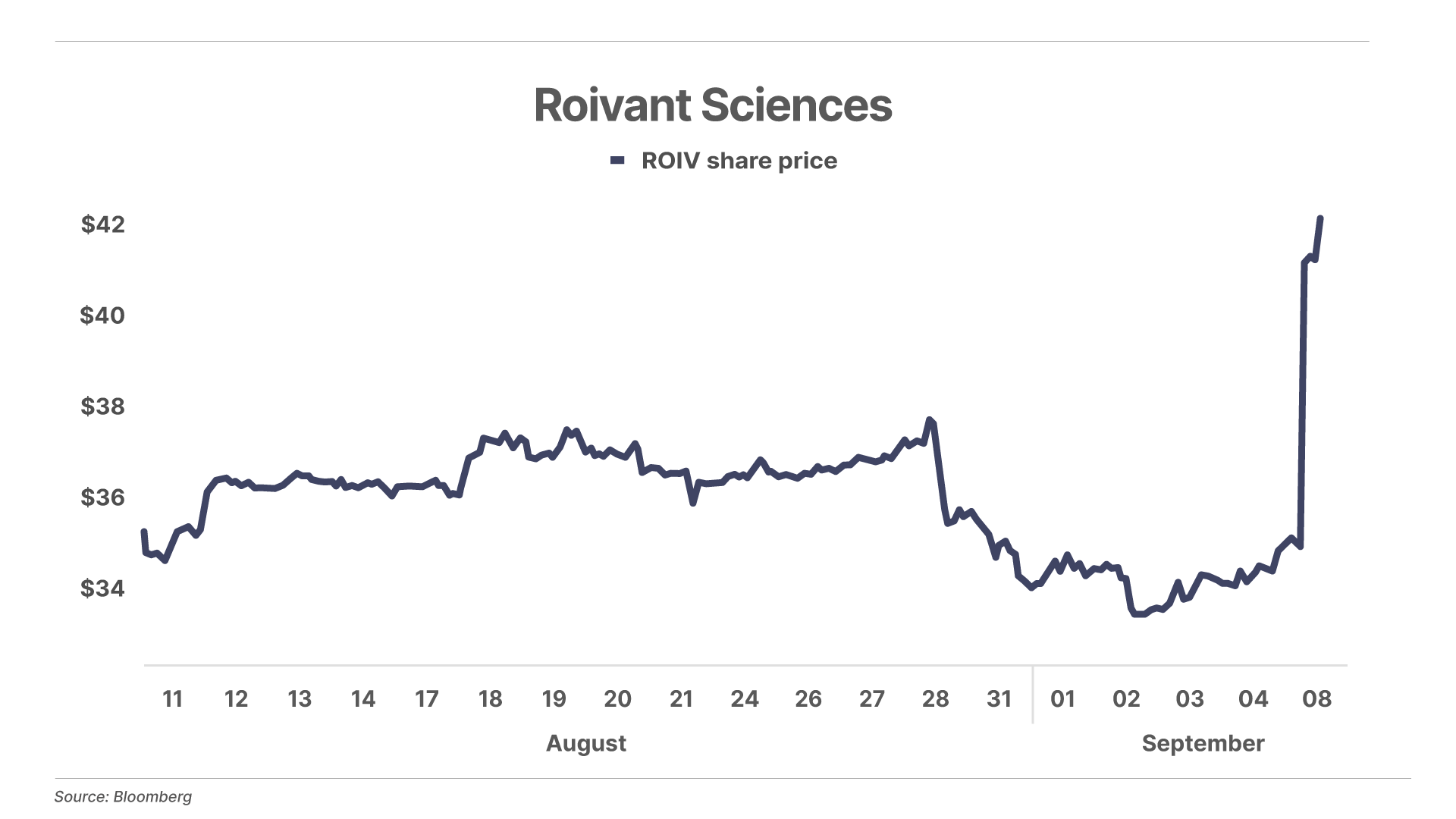
Roivant Sciences (ROIV) is up about 20% today on strong Phase II results for mosliciguat in pulmonary hypertension caused by interstitial lung disease. Mosliciguat is an inhaled medicine designed to relax the blood vessels in damaged lungs, making it easier for the heart to pump blood through them. The drug reduced resistance in the lung’s blood vessels by 56.3% versus placebo. Patients also walked 35.2 meters farther in six minutes, while NT-proBNP, a blood marker of cardiac strain, fell 53.2%. The result is persuasive because the drug improved three different things: blood flow through the lungs, patients’ physical ability, and stress on the heart. Roivant has begun Phase III (“PHrontier”).
Tell me what you think of today’s Journal: porterstansberrydirect@gmail.com
Good investing,
F. Porter Stansberry
Stevenson, Maryland

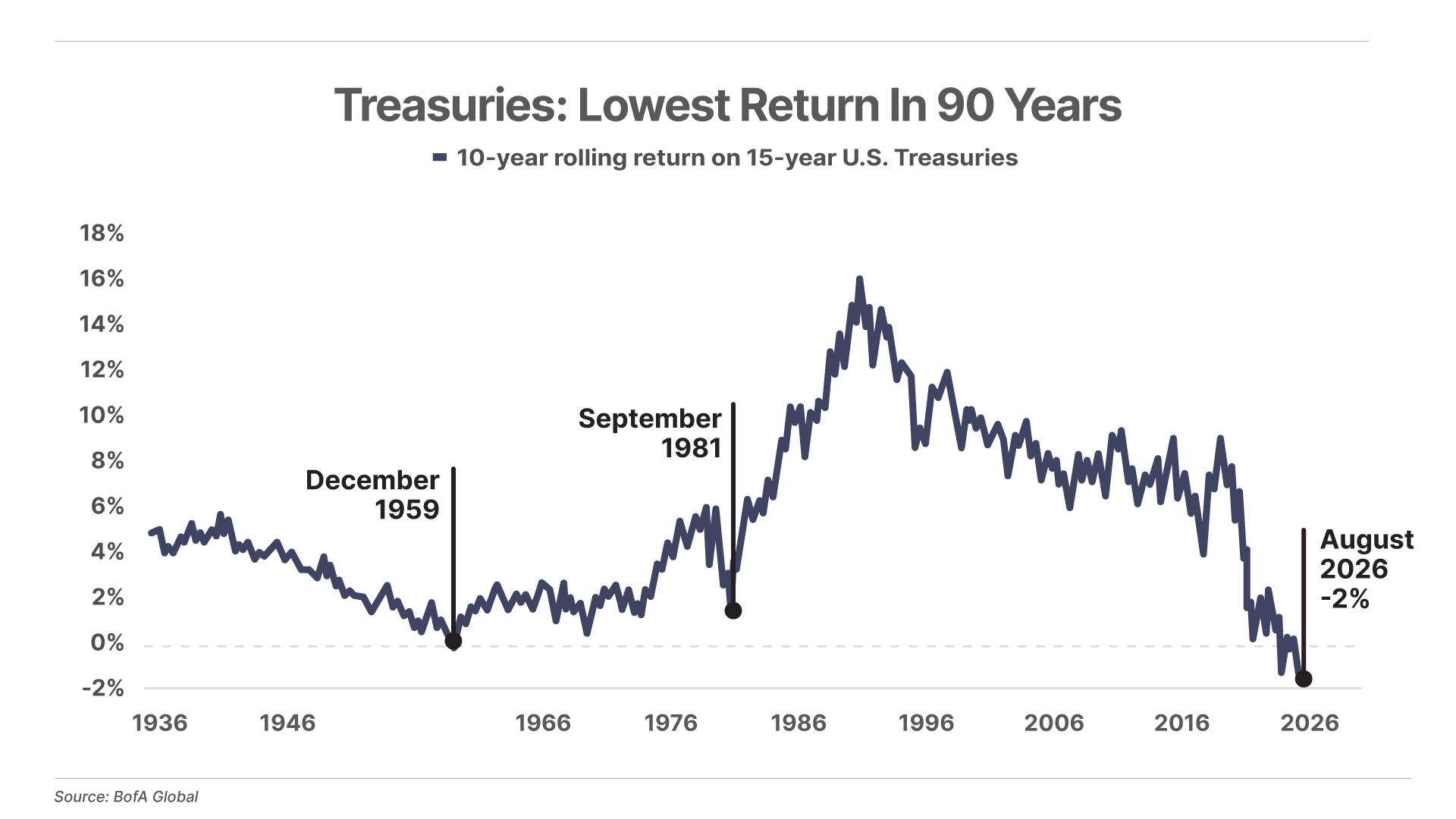
1. U.S. Treasury bonds have lost money over the past decade. U.S. government debt maturing in 15 years or more returned roughly -2% a year over the 10 years through August, according to BofA Global Investment Strategy. That is the worst 10-year stretch since 1936, and the only time the figure has dropped below zero. The math is simple: the 30-year Treasury yielded 2.23% in September 2016 and yields 5.25% today. Bond prices fall when yields rise, and the longer the bond’s duration, the further it falls. The iShares 20+ Year Treasury Bond ETF (TLT) has dropped 52% from its July 2020 peak – a deeper decline than the S&P 500 suffered in 2008.
2. A big insider buy at Uber. Uber Technologies (UBER) president and COO Andrew Macdonald bought 70,000 shares on the open market on September 4 at $75.83 – a $5.31 million purchase that boosted his holdings by 20%, to 426,320 shares. Macdonald sees the growth possibilities from the inside every day. After 14 years of equity compensation, he’s buying more with his own cash.
3. Japan sells Treasuries to fund currency intervention. Japan liquidated a record $88 billion of foreign securities in August, which includes U.S. Treasuries. The sales likely funded Japan’s $98.6 billion currency intervention in August, designed to shore up the yen after it fell near 40-year lows in July. As the largest foreign owner of U.S. Treasuries, any further pressure on the Japanese currency risks spilling over into additional weakness in the U.S. bond market.
As Porter reported above, shares of Porter & Co. Biotechnology recommendation Roivant Sciences (ROIV) jumped 20% today to a new high after its Pulmovant subsidiary reported a record 56.3% reduction in pulmonary vascular resistance in a Phase II trial of mosliciguat – stacking a second catalyst on top of Lisraya’s early commercial launch.
On September 1, Porter & Co. released details of the latest buy signal for our Porter & Co. Systematic Crypto service, available to Partners.
“Very Informative”
Greg R. writes:
The article was very informative. Most especially, news of your Bitcoin (BTC) pricing model. Some time ago I became aware that the value of hard assets is correlated to economic liquidity, as opposed to market swings. Your writing has helped solidify that thesis for Bitcoin as well.
I have been purchasing small amounts for several years, and see no reason to stop, even as the price climbs. (Is there ever a reason not to buy good, quality assets if you have the means?)
I think that in my lifetime people who are late to find their way to BTC will speak of Satoshis as a unit of measure, not whole coins, because the price of a single BTC will be out of their reach. I’d back the truck up to it if I had the present means!
Schuler B. writes:
Fantastic – made Bitcoin so simply understood.
“Bitcoin?”
JM writes:
Bitcoin? I think I’ll stick with investing in insurance companies.
Porter & Co. Market Snapshot
Porter & Co. Top Positions
Please note: The investments in our “Porter & Co. Top Positions” should not be considered current recommendations. These positions are the best performers across our publications – and the securities listed may (or may not) be above the current buy-up-to price. To learn more, visit the current recommendations page of the relevant service, here| New Window. To gain access or to learn more about our current recommendations, call our Customer Care team at 888-610-8895 or internationally at +1 443-815-4447.