Issue#160, Volume#3

Why The Insiders Never Talk About The Dividends That Matter
Inside Today's Issue
- Essay: The Three Secret Dividends
- Gold Beats Out Treasuries
- The Fed Raises Rates
- Private Credit Slips Again
- Chart Of The Day… Veeva Systems (VEEV)
- Poll Results
- Today’s Mailbag
You will not get rich on regular dividends.
And you’ve probably never heard of the three kinds of secret dividends that public companies use to make the insiders incredibly rich.
The average payout ratio of the S&P 500 is around 35%.
That means, if you’re counting on regular dividends, you’re missing out on roughly two-thirds of the earnings of the companies you own. Where does all the money really go...?
It probably won’t surprise you that company insiders try very hard to make sure that you never understand where the wealth really accrues. It ain’t the dividend you read about in the paper that matters, that’s for sure. It’s the dividends you never hear about that will make you rich.
Ask me how I know...
In October 2023, while I was CEO of MarketWise (MKTW), our board declared a “special” $50 million cash dividend. This was the largest cash distribution we’d ever made as a public company. It was about 4x more than our regular annual dividends. But it never showed up on the securities databases as an “indicated” dividend. It went virtually unmentioned and unnoticed. It doesn’t even show up as part of the total return in most equity databases. It’s like it never happened.
And unless you were a shareholder on November 10, 2023, you didn’t get any of the money. None. Even if you’d held the stock for years previously. But... if you owned the stock on that one day, you got your pro-rata portion of a huge pile of money. Otherwise, you got zilch.
A trailing 12-month dividend yield divides the regular dividends of the past year by the current share price. But the databases exclude these kinds of “special” or one-time distributions. It’s like they don’t exist. Nasdaq's methodology only reinvests regular dividends. And market makers deduct special dividends from the price of the stock on the open after the ex-date, when the stock trades “ex-dividend.” So the largest cash payment a company makes in a decade can be absent from the yield figure on public-pricing screens and buried in the return series we use to judge the stock. It’s like they never happened.
But it’s these kinds of huge dividends that will make you rich.
It’s funny how the most powerful thing public companies can do with their cash payments is virtually a secret from the public.
Why? Well because that’s how the insiders want it. High-quality companies that are closely managed and closely held by insiders use these kinds of dividends to massively enrich themselves.
For example, RLI (RLI) is one of America’s leading specialty property-and-casualty (P&C) insurance companies. I’ve followed it and written about it in my newsletters since 2006. They sure wish I wouldn’t...
On May 14, 2026, RLI declared a $2.00 special dividend, expected to total approximately $184 million, payable June 12 to holders of record on May 29. They've been paying out most of their profits in this way for decades. Since the Global Financial Crisis, RLI has paid out a total of $611 million in regular dividends. But where did the real money go...? RLI has paid out a total of $1.8 billion in special dividends – 3x more.
Or there’s TransDigm Group (TDG). You’ve probably never heard of the company, but it is the best managed aerospace company in the world. On September 20, 2024, TransDigm declared an enormous special cash dividend of $75.00 per share ($4.4 billion in cash!), paid October 18, 2024, to holders of record on October 4. Where did the money come from? TransDigm borrowed it. Its stated goal is to deliver returns comparable to a well-performing private equity fund – but only to the insiders who know when these huge payments will be made.
Four dates govern every dividend. The declaration date is when the board announces it. The record date is the day you must appear on the company's books as an owner. The ex-dividend date is the trading cutoff, set by exchange rule rather than by the company. The payment date is when cash arrives.
Since May 28, 2024, American stocks settle one business day after the trade. Buy a stock and you become the owner of record the next business day.
The TransDigm board declared the $75 dividend on September 20, 2024, with a record date of Friday, October 4, and a payment date of Friday, October 18. To collect $75 per share, you had to buy no later than the close on Thursday, October 3, so that the trade settled on October 4.
These big special dividends are fun to track and are great for padding your account with cash. But ... there’s a problem with big cash distributions. First, they trigger taxes. And second – and more important – they take capital away from the company, where it will no longer compound.
If you want to become vastly wealthy, you need to look for the second kind of secret dividend.
These are truly invisible. They’re not typically announced. And no payment will reach your account directly, so there’s no taxes you’ll owe. Instead, this is a hidden way of buying more shares. Only... you don’t have to pay for them.
AutoZone (AZO) began paying this kind of secret dividend in 1998. Through November 22, 2025, the company has spent $38.9 billion on these dividends – none of which was announced publicly.
What kind of dividend is this...? The kind that buys more of a company for you, silently and automatically.
Berkshire Hathaway (BRK) bought about 10% of American Express (AXP) in 1995. It hasn’t spent a dime on the stock since then, 31 years ago. And yet... today Berkshire owns 22% of one of America’s greatest companies. Berkshire paid $1.29 billion for 10% of American Express. But today it owns 22% ... worth almost $50 billion. Without the secret dividends it received, Berkshire’s stake would only be worth $20 billion.
There are many of these kinds of leading secret dividend paying stocks. And, I believe, most of the passive wealth in America today was created through these secret dividends.
My favorite example of America’s leading secret dividend payer is homebuilder NVR (NVR), a company that I’ve been recommending since 2007. It’s just a homebuilder. It’s not rocket science. But it has created massive wealth through its secret dividend program and almost no one knows it even exists.
If you bought 5% of NVR in 1996, it would have cost about $7 million (732,955 shares). You became a major shareholder in a national homebuilder. And you never bought another share. But over the last 30 years, NVR has paid out $17 billion in secret dividends. None of this money hit your account, directly. You paid no tax. But your wealth exploded as a result.
Today, your 732,955 shares would be 26% of the company. Your stake would be worth $4.59 billion. You didn’t just become rich, you became massively wealthy. All from dividends that no one else can see. All you had to do was understand how they work.
These kinds of secret dividends create so much wealth, all the libtards want to make them against the law. And they were against the law until the mid-1980s. I’m convinced there’s simply no better way to become truly wealthy in America. And it’s easy: you literally do nothing and get incredibly rich.
But even they aren’t the best kind of secret dividend.
The best kind of secret dividend is so rare and such a closely guarded financial secret that I honestly shouldn’t ever write about it. If I was smarter, I would never explain this to anyone else – ever. This is, without question, the single greatest wealth secret I have ever discovered.
You see, companies like AutoZone, American Express, and NVR become pretty famous for their secret dividends. A lot of analysts and investors know about these stocks and track the size and scope of their big secret dividends.
But no one has ever told you about HEICO (HEI). And no one ever will.
In 1990 the Mendelson family took control of a tiny $25 million South Florida company with about 200 employees. Laurans Mendelson and his sons Eric and Victor did not attempt a transforming acquisition. They didn’t fire a bunch of people to cut costs and raise profits. They didn’t borrow a ton of money, either. And like a regular business, they paid cash dividends twice a year. HEICO occasionally pays special dividends, too.
But that’s not where the money went. The Mendelsons were amongst the savviest capitalists in the United States. They weren’t going to waste their cash on dividends. HEICO’s payout ratio is 4%. The Mendelsons took 96% of their earnings and they invested in the most valuable secret dividend stream of all...
Look at last year. In fiscal 2025, HEICO reported record net sales of $4.49 billion, up 16%, and record net income of $690.4 million, up 34%, on a consolidated operating margin of 22.7%. Nothing extraordinary. Just a good business with solid growth.
But where did the money go? HEICO completed five acquisitions during the year, three at the Electronic Technologies Group and two at Flight Support, whose net sales have now grown sequentially for 21 consecutive quarters.
Thirty-five years of that arithmetic turned a $25 million company into a company earning $690 million a year.
Instead of paying you cash, HEICO invests your pro rata share of their earnings into better businesses than you can invest in yourself. It manages them. It grows them. And you reap the returns with higher earnings, higher cash dividends, and a vastly higher stock price.
These kinds of special dividends mean you don’t need the stock market to go up to get very rich. These companies are, independent of other factors, their own compounding machines.
Danaher (DHR), AMETEK (AME), Roper Technologies (ROP), and Constellation Software (CNSWF) run this same strategy in life sciences, instruments, vertical software, and industrial niches. These stocks aren’t called private equity firms, but that’s what they do. And they’re among the best in the world at it. They buy small businesses at sensible prices with modest leverage and the returns compound quietly for decades.
Shhhhhh...!
Don’t tell anyone.
Good investing,
F. Porter Stansberry
Stevenson, Maryland

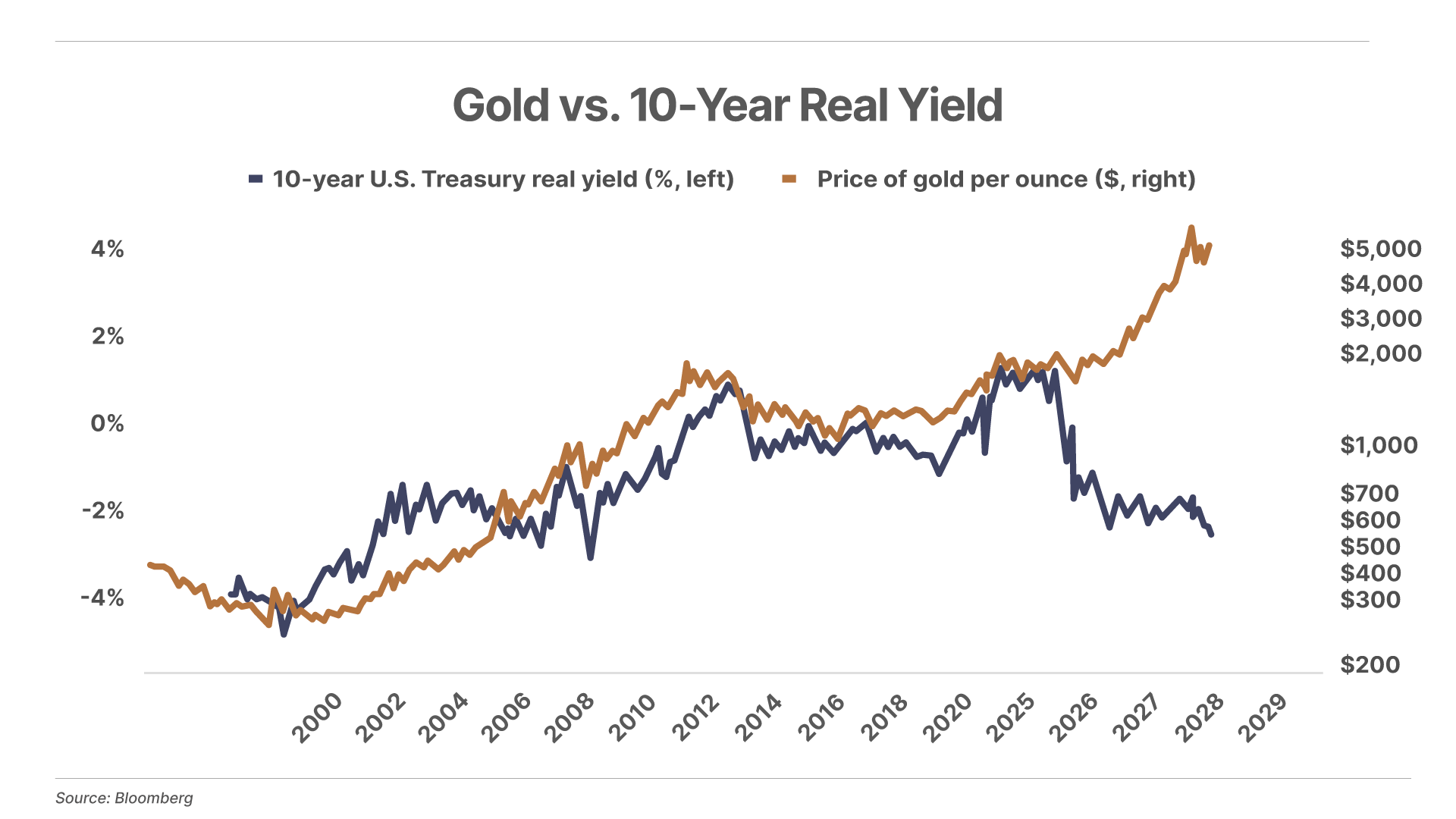
1. Gold Is breaking away – and cementing itself as collateral. The U.S. 10-year real yield sits at 2.6%. By the relationship that governed markets for 25 years, gold should be near $2,000 per ounce. Today it trades around $4,300 an ounce. The chart shows exactly when the two lines separated: the week Washington froze Russia's reserves because of its invasion of Ukraine. Global central banks reacted. From their perspective, Treasury bonds stopped being a risk-free asset and became a potential tool for U.S. foreign policy. Gold now makes up 27% of their reserves against 22% for Treasurys, the first reversal since 1996, and 89% of reserve managers expect to hold more gold a year from now.
2. The Fed raised rates for the first time since 2023 and expects to raise them again. This afternoon, the Federal Open Market Committee (“FOMC”) unanimously lifted its benchmark interest rate a quarter point to a range of 3.75% to 4%. Chairman Kevin Warsh said: "The plain fact is that inflation is too high and has been for too long." Sixteen of 18 officials project at least one more increase this year. Whether higher rates will actually lower price inflation is a separate question. Interest on federal debt passed $1 trillion in the first 11 months of this fiscal year, up 13% from a year earlier, and each hike raises it further. The four largest hyperscalers plan more than $700 billion of capital spending this year, funded mostly from cash flow rather than interest-rate-sensitive debt. Consumer spending is being carried by the top of the K – the high-income households who are still spending while lower-income households pull back – and their high cash balances will earn even more as rates rise. But higher rates will do nothing to open the Strait of Hormuz or ease energy supply disruptions.
3. New highs in private credit defaults. Credit ratings agency Fitch revealed that the private credit default rate jumped to 6.3% in August, marking the fifth consecutive month of new highs. With the majority of private loans financed with short-term floating interest rates, the pressure on the sector will likely intensify after the Fed’s decision to raise rates today for the first time in three years. Given the size of this $1.8 trillion asset class, a further rise in default rates could eventually create ripple effects in the broader U.S. economy.
In August, Porter recommended the pharmaceutical software platform Veeva Systems (VEEV) to Porter & Co. Biotechnology subscribers. Shares are up 31% since then and 43% over the last six months.
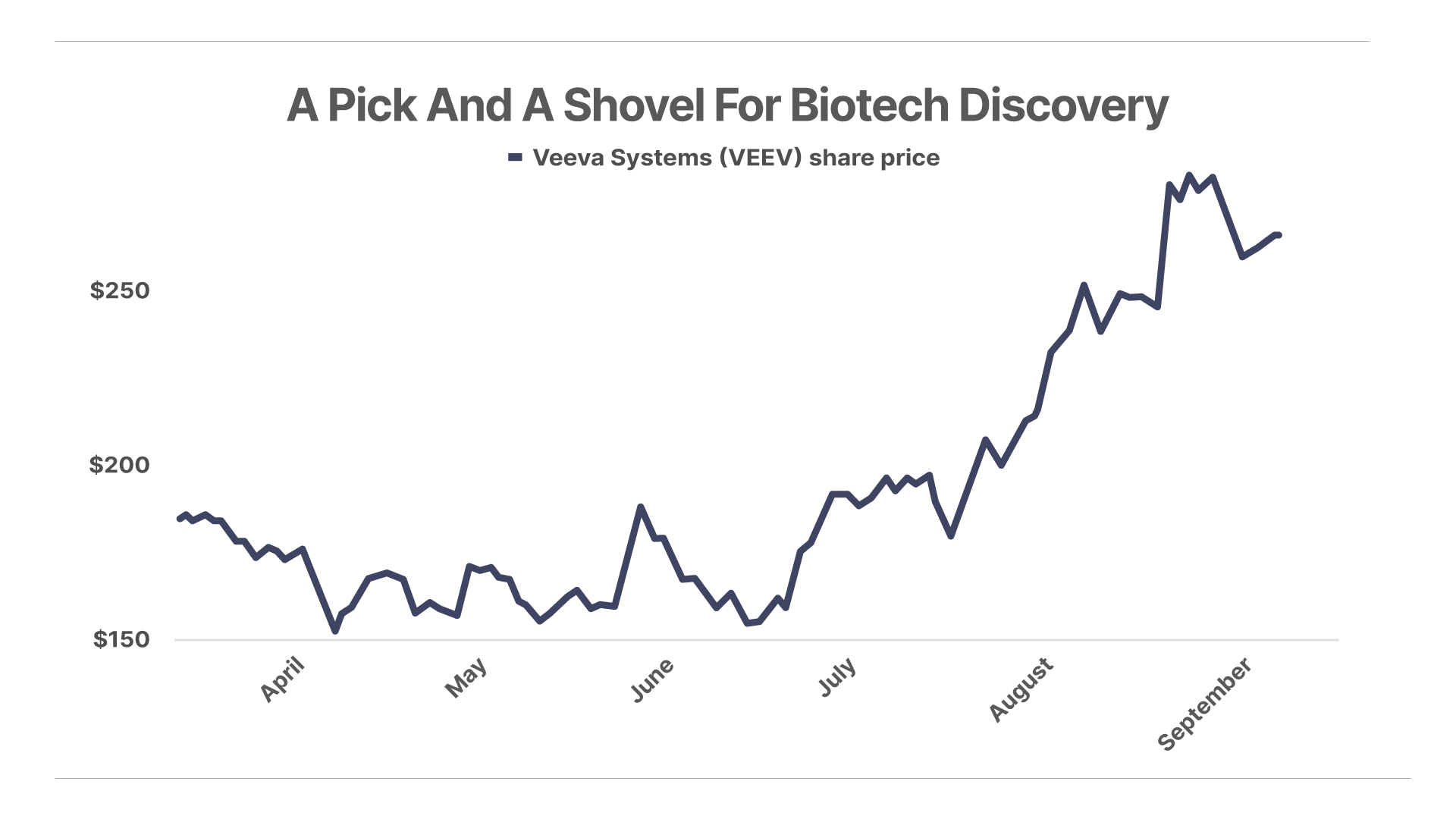
Just today, Porter released explosive new details as to why we are likely to see this sector take over in dramatic fashion in the near term. To watch Porter’s video – released just hours ago – click here now.
Poll Results… Interest Rates
Yesterday, we asked readers what they thought the FOMC would do regarding interest rates… hike, cut, or keep the same… well, 60% of survey takers selected “increase rates by 25 basis points,” while 34% selected “keep rates where they are.” Just 5% expected a 50-basis-point increase while not one survey takers predicted a rate cut.
“What To Do About P&C”
Jon H. writes:
Thank you so much for the material I have been reading since 2007. It was an education that I never could have afforded on my own.
After reading your rebalancing of Porter’s Permanent Portfolio, I have the following question.
Will your review of these P&C companies be affecting the other Porter & Co. letters?
Thank you again for all you do for us.
Gary C. writes:
In Tuesday’s “Important Allocation Update” in the Daily Journal, you wrote that, for a conservative investor, the recommendation is to stand aside from the P&C insurance industry “until interest rates find a ceiling.
I understand the rationale behind that decision, especially the risks from claims inflation, higher bond yields, and potential valuation compression, and I agree with the rationale.
What I’m trying to understand is how that view fits with the P&C exposure that still exists elsewhere in the Porter & Co. portfolios.
Complete Investor currently holds AXS, CB, IGIC, KNSL, L, PGR, SKWD, and WRB, while the new PCPP ETF provides broader, but still concentrated exposure across a larger group of P&C insurers and offers greater diversification across the sector.
Has this macro view changed your thinking about P&C exposure across those other strategies or portfolios, or is the Permanent Portfolio action primarily a portfolio-construction decision specific to that portfolio?
I suspect this may come up at next week’s Annual Conference. I’ll be at the Farm and look forward to the discussion, but I’d appreciate any clarification beforehand.
Porter & Co. Comment: In Saturday’s Complete Investor issue to paid-up subscribers, we will recommend how this outlook on P&C stocks plays out across the eight P&C stocks there.
Regarding PCPP, Porter wrote yesterday:
Note: This change applies to our own track record, not to every account built around this idea. The Porter & Company Porter Portfolio Index ETF (PCPP) that Tuttle Capital Management runs keeps its rules-based 25% allocation to each of its four sleeves. And your own allocation may not need to change either, depending on your tax situation, your time horizon, and how much of this risk you are already hedging elsewhere.
Porter & Co. Market Snapshot
Porter & Co. Top Positions
Please note: The investments in our “Porter & Co. Top Positions” should not be considered current recommendations. These positions are the best performers across our publications – and the securities listed may (or may not) be above the current buy-up-to price. To learn more, visit the current recommendations page of the relevant service, here| New Window. To gain access or to learn more about our current recommendations, call our Customer Care team at 888-610-8895 or internationally at +1 443-815-4447.