Rising Rates Are Bond Predators – But These Evade Volatility
Inside Today's Issue
Bonds can provide a head start in an investor’s race against inflation…
Bonds are called “fixed income” because (99+% of the time) the amount and the timing of the interest payments and principal repayment are predetermined. This means investors know exactly what their annual return will be – assuming they hold the bond from issuance to payoff.
The market – shorthand for all investors – allocates capital. Bond buyers are willing to lend on terms that they expect will generate a “real” return that exceeds the inflation rate. When a bond is issued, its pricing embeds the lenders’ consensus about many factors, most notably how much the cost of living is projected to rise.
In practice, this consensus changes continuously. If inflationary expectations rise, new lenders will require a higher rate of return – and a lower one if the outlook for the general price level gets rosier.
For example, assume the U.S. Treasury issues a 10-year bond that pays 5% annually. If inflation at the time is expected to be about 3% annually, the real return would be 2% per year. For each $1,000 face value, the buyer would receive $25 every six months, and $1,000 back at maturity.
Now assume the market becomes more concerned about inflation and the market interest rate for a new 10-year Treasury bond rises from 5% to 6%. To sell the 5% bond at the market-clearing 6% yield, its price needs to fall by $70 per $1,000. The buyer paying $930 and receiving the same $50 a year is now earning 6% yield. By the same logic, if the market interest rate on the new 10-year Treasury bond were 4% instead, the price of the 5% bond would rise by roughly $80. At $1,080 its yield to maturity for a new buyer would be 4%.
Bond prices swing when market-driven interest rates change, and the longer the bond maturity, the sharper the price movement. If we were to repeat the last exercise using a recently issued 30-year bond with a 5% coupon, the price would fall to roughly $860 to yield 6% annually or rise to $1,170 to return 4% per year.
In other words, rising interest rates are bond predators. Much (but not all) of the time, interest rates rise when concerns about inflation pick up and fall when those concerns subside.
In 1997 the U.S. government took steps to reduce bond volatility by introducing Treasury Inflation-Protected Securities (“TIPS”). These securities offer protection from inflation by indexing the $1,000 face value to the level of the consumer price index (“CPI”). Every six months from the date of issuance through its maturity date, the bond’s principal amount changes to reflect movements in the CPI during the period.
Though the interest rate on TIPS is fixed, the semi-annual interest payments go up in proportion to the bond’s increasing principal value. In this example, we assume a 10-year inflation-protected treasury bond, a 2% coupon, and annual CPI increases of 3%.
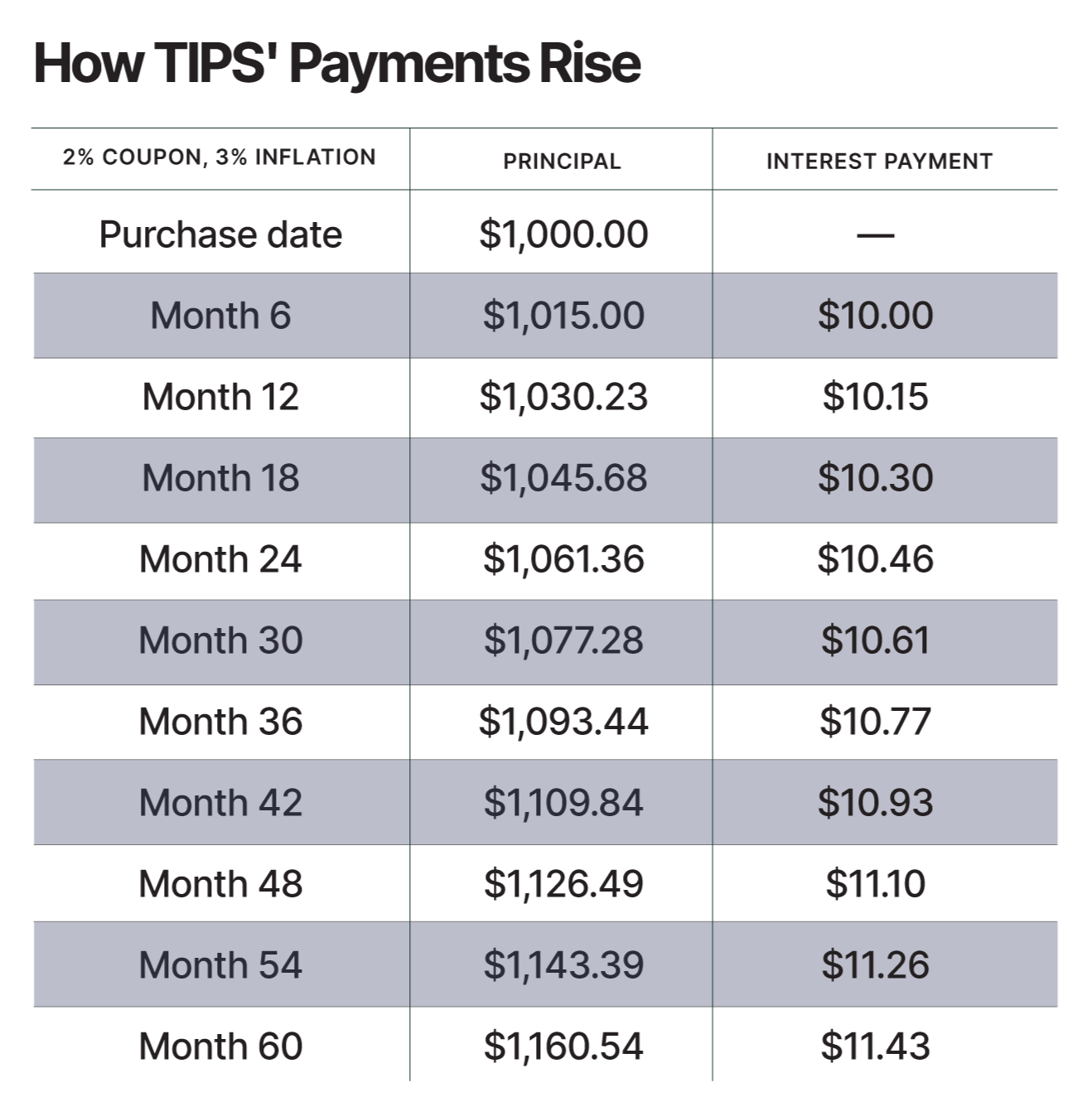
The interest rate on inflation-protected bonds is lower than on standard Treasury bonds. In this case, the low coupon and modest inflation rate lead to an annual return of roughly 5%.
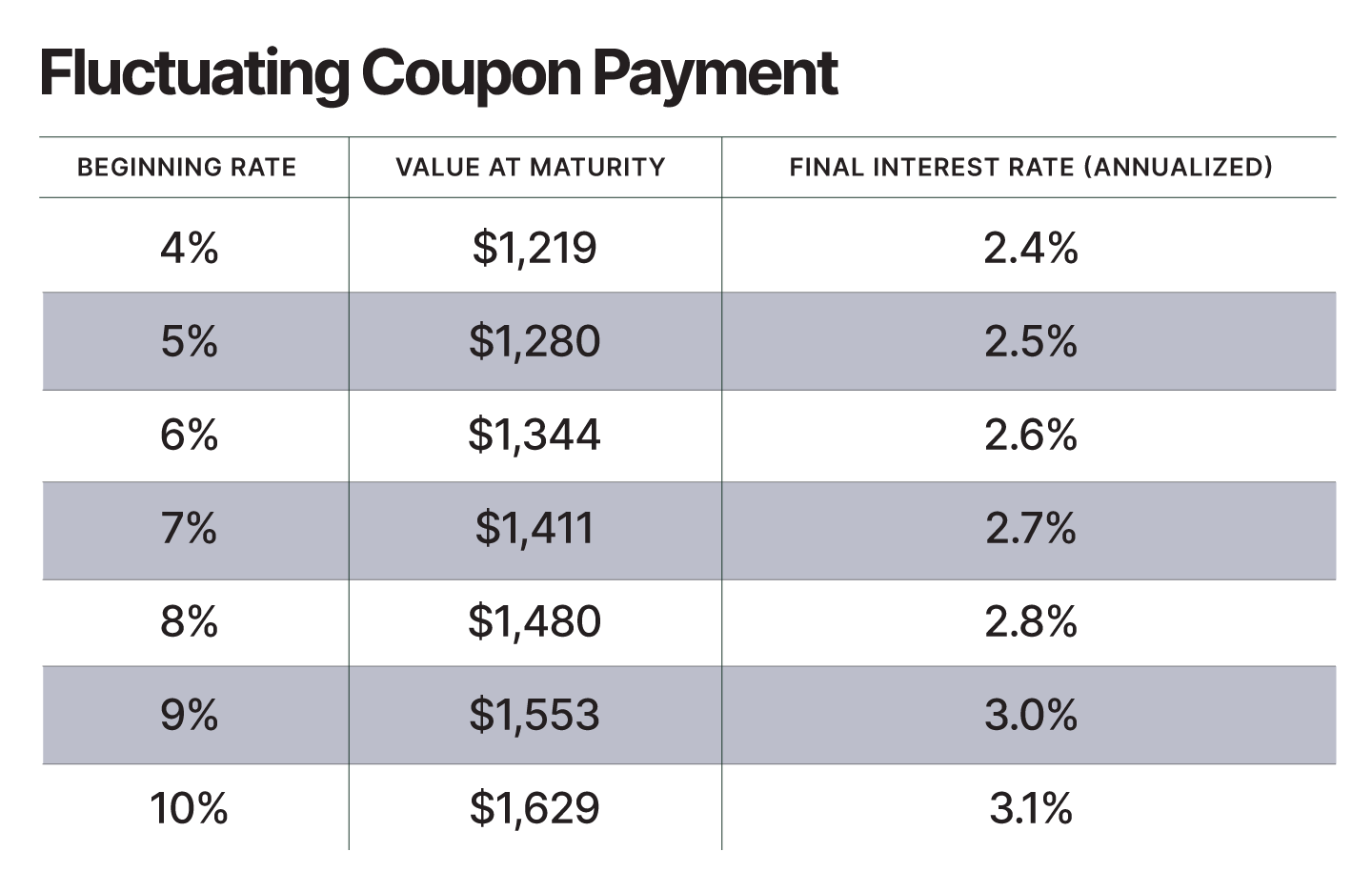
Though there are no current signs that inflation is poised to move sharply from its recent range, we note that the return on TIPS improves as changes in CPI get larger. If we assume an average annual CPI increase of anywhere between 4% and 10% over five years, the $1,000 principal amount rises to between $1,219 and $1,629 at maturity. Though the interest rate on the bond remains the same, the effective rate given the higher principal value is between 2.4% and 3.9% based on initial cost.
The TIPS Curve Points To The Market’s Inflation Projections
As mentioned, the interest rate paid on TIPS is lower than the rate paid on standard Treasury bonds of the same maturity. The excess of the Treasury-bond yield over the TIPS rate represents the cost/value of the inflation protection. Here’s a simple equation…
Yield on x-year Treasury bond – Yield on x-year TIPS = Cost/Value of inflation protection
This difference, known as the breakeven inflation rate, represents the market’s consensus on inflation. As of October 9, the breakeven rates were:
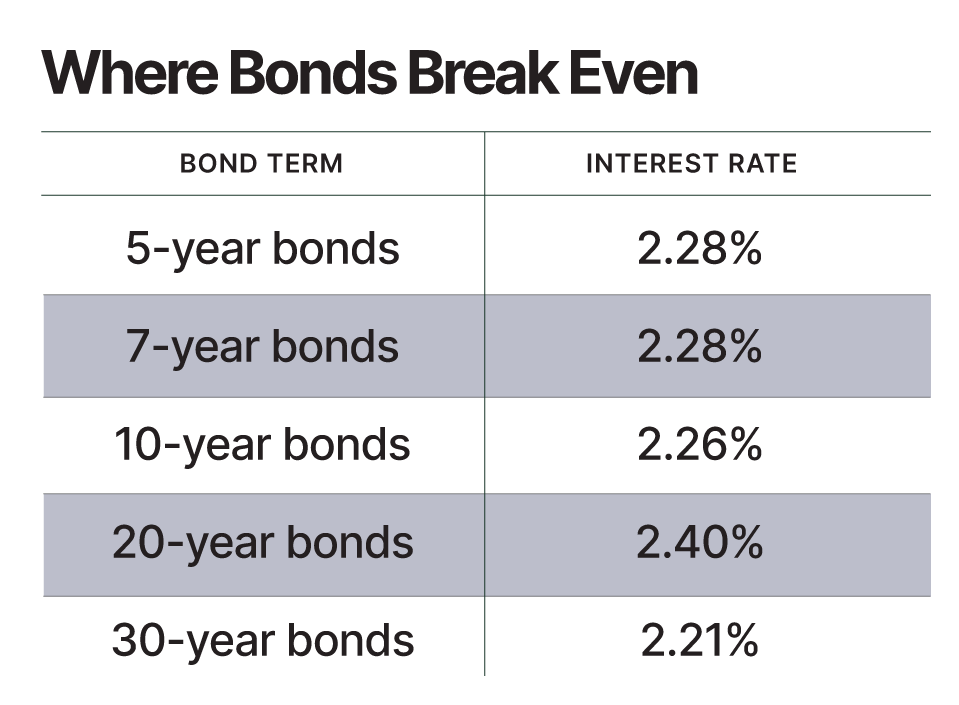
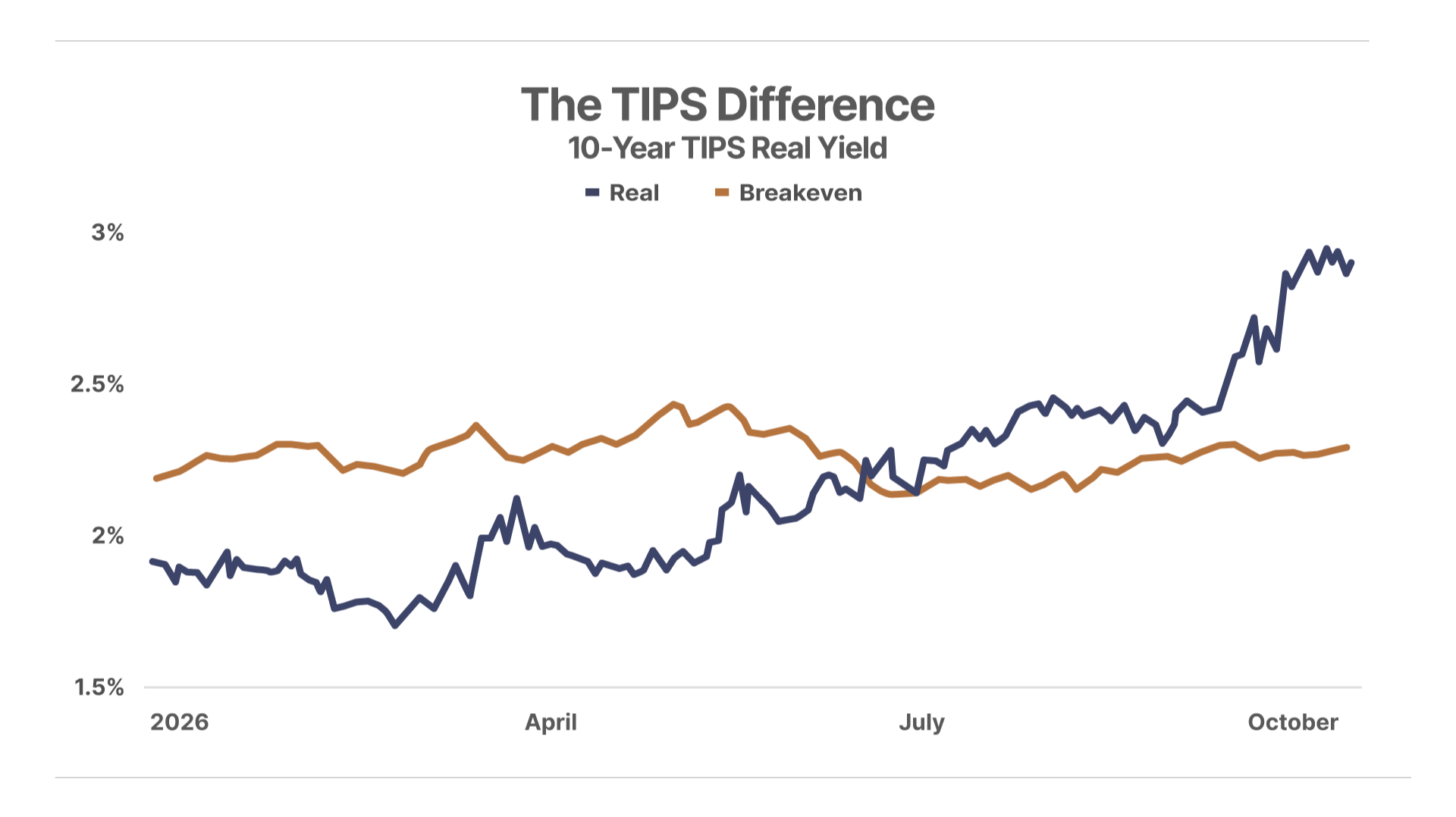
Since January 1, the yield on the 10-year Treasury has risen dramatically, from 4.19% to 5.26% on October 9. At the same time, the inflation breakeven rate on 10-year TIPS rose only slightly from 2.20% to 2.26%. This means that very little of the increase in 10-year Treasury bond yields is due to inflationary expectations. Most of the increase in Treasury bond rates is likely attributable to the skyrocketing demand for capital to finance AI projects.
Advantages And Disadvantages Of TIPS
Recall that TIPS are indexed to inflation rather than to interest rates. If changes in the CPI remain constant and interest rates rise, as both have done recently, the value of TIPS declines. For example, the 1.875% 10-year inflation-protected bond issued on January 15 declined 8% in value over the last two months.
In addition to interest rate risk and relatively low coupons compared to standard treasury bonds, the CPI adjustments to TIPS’ principal value is federally taxable at the time of the increase. Depending on the size of the CPI bump, the tax due could exceed the cash interest rate, which is also subject to federal tax. It is best to own TIPS in a tax-deferred account like an IRA.
Another negative is that if the CPI were (ever) to decline, that change would reduce the cumulative CPI adjustment to the TIPS principal value. In no case can the bond’s principal value fall below the $1,000 issue price.
TIPS are interesting securities that offer long-term protection from inflation. They generate low guaranteed returns if held to maturity – and their market value can swing significantly. We believe they are best viewed as a way to preserve, rather than increase, capital.
Of course, one flavor of bond comes in the form of distressed debt. Marty Fridson and I look for bond issuances that have fallen well below their $1,000 face value, but that we feel are poised to march back up – bringing our Distressed Investing subscribers juicy returns. In fact, we have averaged a 25% return on our closed recommendations over the last three years.
Care to join us? Click here to learn more.
Tell us what you think of today’s Daily Journal: porterstansberrydirect@gmail.com
Good investing,
Andrew Lipman
Southampton, New York

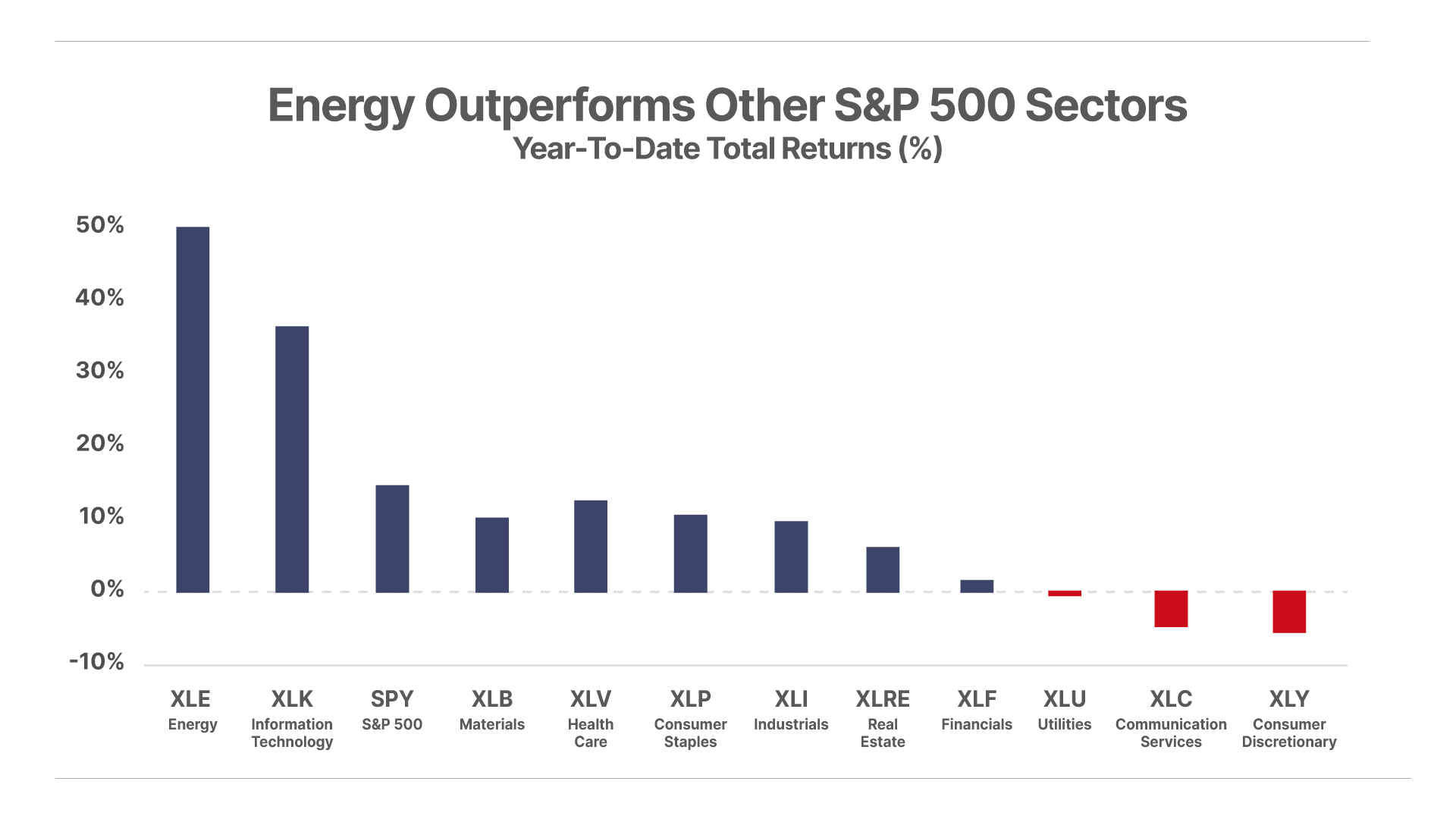
1. Higher fuel prices are creating massive dispersion in market returns. Through Monday, the Energy sector – which Porter & Co. called our highest-conviction idea heading into 2026 – has returned 50.6% this year. Meanwhile, Consumer Discretionary, which includes sellers of nonessentials such as cars, online shopping, and travel, has lost 5.4% – creating a 56-percentage-point gap between the index’s best- and worst-performing sectors. War-driven inflation is rewarding energy producers and weighing on consumers.
2. Nvidia is worth more than the entire Russell 2000. The chipmaker Nvidia (NVDA) has a stock market value of about $5.8 trillion. That is more than $2 trillion above the combined value of all 2,000 companies in the Russell 2000, the widely-followed index of small U.S. companies. The gap looks extreme until you compare profits. Nvidia earned about $193 billion over the past 12 months. Russell 2000 companies, added together, lost about $14 billion. Investors pay about $30 for each $1 of Nvidia’s annual earnings. Taken as a group, the small-cap index has no profit at all.
3. Deep value in Domino’s. Leading global chain Domino’s Pizza (DPZ) released solid Q3 results this morning, including 3.2% year-on-year (“YOY”) growth in global sales and a 9.2% YOY increase in net income. The company’s aggressive stock-buyback program resulted in an even faster pace of earnings-per-share (“EPS”) growth at 12.7% YOY. The blemish in the report was a disappointing 0.3% increase in domestic same-store sales (“SSS”). But good by comparison – top rivals Papa John’s and Pizza Hut each posted negative SSS growth. Trading at just 16x earnings, while increasing market share and delivering double-digit EPS growth, we see deep value in Domino’s.
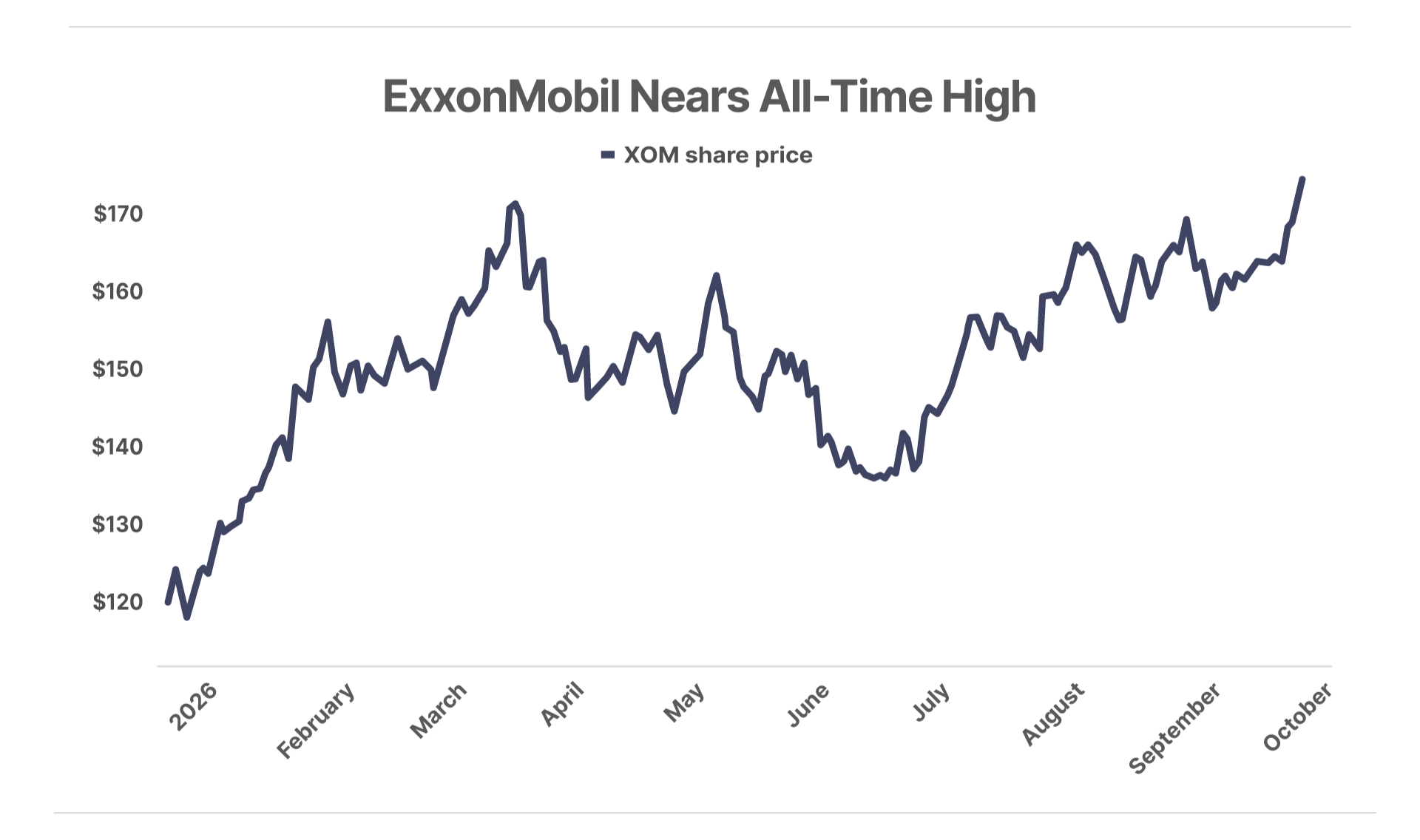
Oil supermajor (and Complete Investor recommendation) ExxonMobil (XOM) is up 45% year-to-date and on the verge of a new all-time high. The company’s integrated business model is perfectly positioned for today’s environment: Higher oil prices are boosting its exploration and production activities, while the refinery segment captures the record spread between crude oil feedstock ($95 per barrel) and product prices like jet fuel ($190 per barrel) and diesel ($260 per barrel).
“Consumer Brands On Sale”
Jonathan M. writes:
Quick note to say that the October 12 Journal was excellent and informative. Some of these beaten-down top consumer brands are looking tempting. I have been selling calls against General Mills (GIS), Clorox (CLX), and PepsiCo (PEP) and keeping my nose above water, but not by much. I'd really like to buy Campbell’s (CPB), but I don't care for catching falling knives.
Again, great insight.
Lynda T. writes:
Your Journal today got me thinking about consumer behavior. When talking with friends, my adult children, and my bridge group, there is a message.
They all want to eat right: Cut out chips, soda, and commercially prepared foods, but they hate to cook!
About half of these people are overweight, or obese. The GLP-1 drug sounds like heaven to a quarter of them who can afford it. Many get it because they are diabetic, so Medicare is paying some or all the cost. My point is: These companies you reviewed in the Journal all have a problem. They are not healthy, home cooked, or green and fresh. To add to the problem, sugar and added sugars are proven to be death accelerators. Tomato paste is not a fresh vegetable!
So I think a paradigm shift is underway. The company who changes direction to meet this change will make a great investment. Problem is – I can't think of any. Chipotle is closer and maybe Subway if they would use whole grain "real bread."
Thanks.