Issue #69, Volume #3


What Was Said At Saturday’s Berkshire Annual Meeting
Inside today's Daily Journal…
|
The Berkshire Hathaway annual shareholder meeting was on Saturday. And, as I’m sure you anticipated… I was watching closely to see if any of the company’s core problems (which I’ve been writing about since 2018) have improved.
Sadly, the answer is “no.” Berkshire continues to own a “train wreck,” BNSF Railway – the worst tier-one railroad in the U.S. (The best is Union Pacific (UNP).) Incredibly, after telling shareholders for the last five years that BNSF’s operations would be improved, the company’s operating margins fell in Q1.
It continues to own a “capital trap” of a regulated utility. Berkshire Hathaway Energy owns $40 billion in windmills, which are not economically competitive with natural-gas-based power systems in a new regulatory regime that will no longer pay for them. It also faces upwards of $50 billion in wildfire liabilities. Please remember, the man, Greg Abel, who personally oversaw the $100 billion Berkshire invested in these delusional travesties is the same man who is now running all of Berkshire Hathaway.
Finally, in my view, Berkshire remains just as delusional as it ever was about technology. Its refusal to invest in technology over the last 25 years was described as “stupid” by Warren Buffett himself. Buffett was personal friends with both Bob Noyce (co-founder of Intel) and Bill Gates (Microsoft) and he didn’t make a cent on technology stocks over the last 40 years. How is that possible? Likewise, his refusal to invest in technology directly has seen Berkshire’s leading insurance business, GEICO, nearly wiped out by Progressive (PGR) – more about this later this week.
But now (envision me horse-laughing)… Windmill Boy (Greg Abel) says rather than buying technology from the established leading providers, Berkshire Hathaway is going to build its own, proprietary technology systems and become a technology leader. I just (nearly) pissed my pants.
Why do I care? Why have I been writing about Berkshire’s struggles for almost a decade? Why have I built my own version of Berkshire Hathaway (Complete Investor subscribers have full access to our Better Than Berkshire Index)? Berkshire, for 50 years, was the complete solution: it was a risk-free, fee-free way for anyone who wanted to invest in stocks to beat the market 80% of the time, and by huge margins. It was the best way for Americans to become capitalists. It was, for a very long time, the best example of how corporate America should behave: great products for the customers, great results for the owners.
What it has become over the last 25 years, unfortunately, is exactly what Buffett promised it would never become: a bloated conglomerate that can’t beat the S&P 500 and won’t return any capital to its shareholders. Like so much else in America, Berkshire is living on a reputation it hasn’t earned in decades.
Today, most of the commentators on the stock point to the company’s enormous cash hoard of almost $400 billion as proof that Berkshire is a good buy. But that’s only true if Berkshire eventually does something smart with the money.
Buffett is famous for getting “great deals” for his investors. But I’ve noticed something most other analysts don’t: in virtually every case where Buffett got a special deal for his shareholders, the outcome was marginal, at best.
Here’s the most recent example.
On August 8, 2019, Buffett announced an incredible deal: Berkshire Hathaway was buying $10 billion in preferred stock in Occidental Petroleum (OXY). Berkshire got 100,000 shares of cumulative perpetual preferred stock, and it got warrants (long-term options) to purchase 80 million shares of OXY common stock at $59.59 per share. No other investors, at the time, could have gotten a deal like this.
But that begs a question… Why would the board of Occidental offer such a sweet deal to Warren Buffett? Maybe because the company desperately needed the money. And, sure enough, a year later Occidental’s stock fell 50%.
Oddly, Berkshire didn’t buy any more Occidental stock when it fell. Instead, it waited until March 2022 when the share price was back to around its warrants’ strike price to begin buying aggressively.
From March 2022 through February 2025, Berkshire made 29 different purchases of OXY, building a position that grew from zero (common shares) to approximately 265 million shares – representing 26.9% of OXY outstanding common stock. In 2023, OXY redeemed $1.5 billion face value of Berkshire’s preferred stock, 15,103 shares. Thus, currently Berkshire owns 83,858,849 OXY warrants with a strike price of $59.59 (the number of warrants increased because OXY issued more common stock in the summer of 2020). It owns 84,897 preferred shares, which paid a $679 million dividend in 2025 (part of $5 billion in preferred dividends that Berkshire has been paid). And it owns 26.9% of the common OXY shares. Today, the common stock trades below the strike price of Berkshire’s warrants.
That all sounds incredible. Invest $10 billion. Get paid half of the money back in seven years! Have the option to buy a lot more of the company at a reasonable price. Buffett being Buffett, the media will say, with rapturous amazement.
And if you believed Buffett, you had to think this was one of the greatest investments of all time. Buffett’s praise for Occidental CEO Vicki Hollub was effusive and continuous. In his 2023 shareholder letter he called her "uncommon," praised her operational knowledge of separating oil from rock, and wrote that she was "doing the right things for both her country and her owners." At successive annual meetings (2022, 2023, 2024) he declared he had no interest in acquiring Occidental outright because he loved having Hollub run it. She announced her retirement recently and received more praise from Buffett this weekend.
Simple question. What is the CAGR (compound annual growth rate) of Occidental’s common stock over the 10-year duration of Vicki Hollub’s tenure as CEO? Buffett didn’t mention it at Saturday’s meeting. It was negative 22%.
Here’s a detailed summary of Warren Buffett’s capital allocation into Occidental:
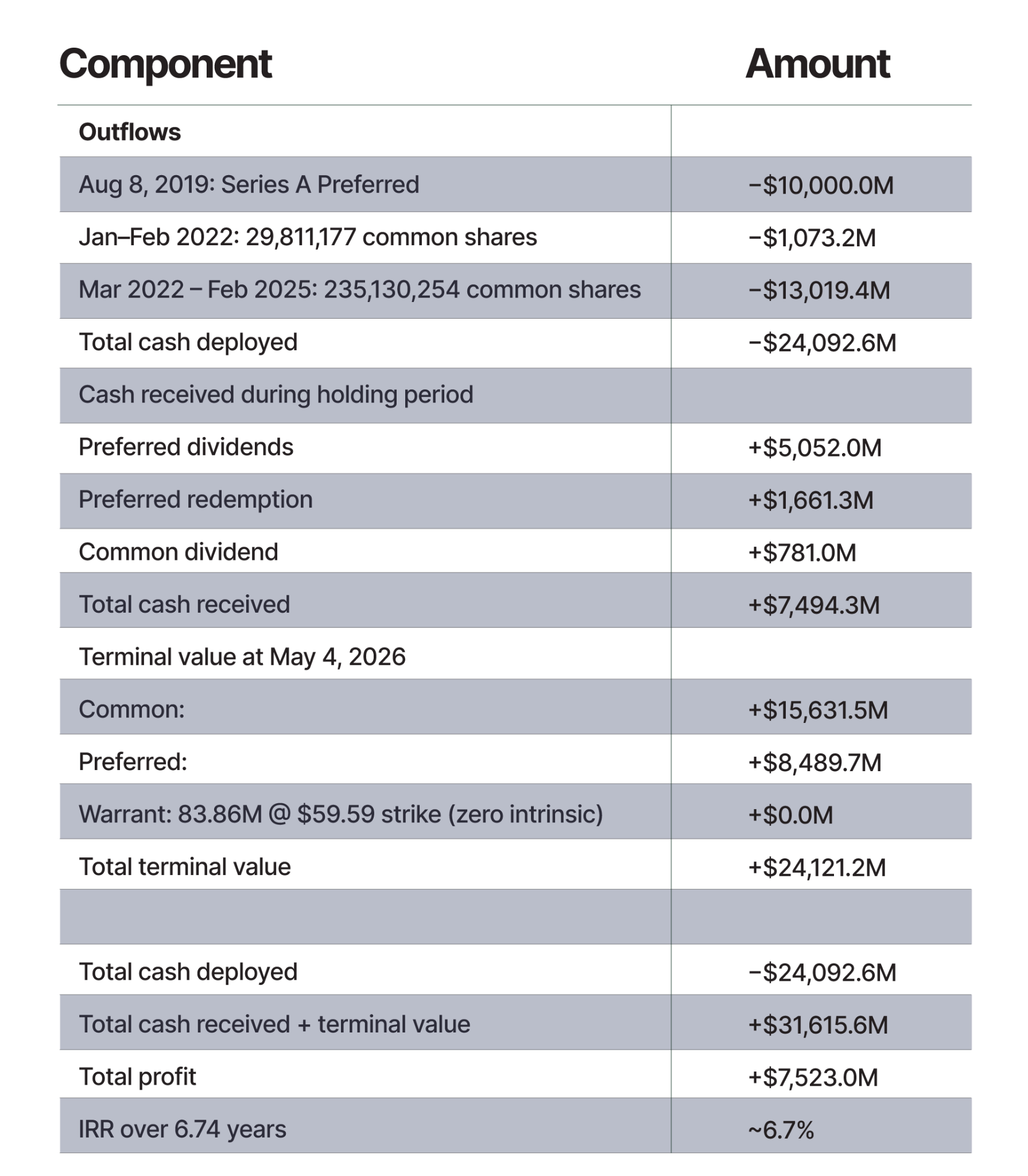
Berkshire would have earned a far higher rate of return over the last seven years if Buffett had invested in just about any other reasonably high-quality, moated business. The S&P 500, just for comparison, is up 16% annually in the exact same period.
The enormous gulf between how Buffett performed in his final 25 years compared to the press he received is one of the major reasons Berkshire is in so much trouble.
(And one of the main reasons I recently wrote a book chronicling Buffett’s blunders. You can order Warren’s Mistakes on Amazon.)
The board should have stepped in a long time ago, but it never did.
Oh, and about that “great deal” Vicki Hollub offered to Buffett. If he’d simply waited 12 months, he could have just invested in the common at half the valuation. That investment – without any of the preferred payments – would have compounded 12% a year, or almost double what his investment has produced.
Sometimes when people offer you deals that are “too good to be true,” they usually are.
Tell me what you think of today’s Journal: porterstansberrydirect@gmail.com
Good investing,
Porter Stansberry
Stevenson, Maryland
P.S. If you've been following along with Porter's recent Daily Journals about Berkshire's recent troubles, you may be interested in his new book: Warren's Mistakes. This is a book Porter has been writing for 10 years. But the book isn't only about where Berkshire has gone wrong. It's also the most thorough explanation yet published about how Buffett compounded at 24% a year for 50 years. If you want to become a great investor, you must know how he did it – and why it all went wrong. That's exactly what Porter's new book – which will surely become a best-seller – delivers. Get your copy here.
P.S.S. Here’s a great gift idea – for others or for yourself. The Ultimate Luxury Shave Bundle. Porter perfected the perfect shave with One Blade years ago and wants to share this special offer for Porter & Co. subscribers only. Click here to learn more.
White House Authorizes ‘Secret’ $100B Fund
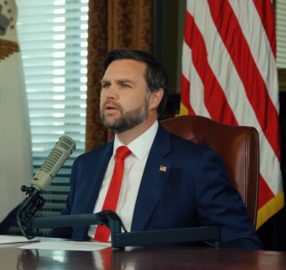
There are three tiny contractors poised to scale exponentially off of Trump’s most recent national security order.
And a legal mandate at the center of it – one that’s creating forced demand for a set of highly-specialized contractors.
Due to geopolitical tensions, the war in Iran, and the trade war with China this situation is accelerating at an unprecedented rate.
And JD Vance just revealed that the U.S. government could funnel as much as $100 BILLION into this private sector initiative.
Get the exclusive details right now.
Editor’s Note: Keep in mind, we only accept advertising from publishers we know to offer well-researched ideas vetted by a legal team, excellent customer service, and reasonable refund policies. Paradigm Press is one such partner. We do not, however, under any circumstances make any representations about their investment ideas or strategies, nor will we warrant them as equal to our own. We do recognize that the markets are tempestuous and, at times, ideas that we may not endorse prove valuable.
3 Things To Know Before We Go…
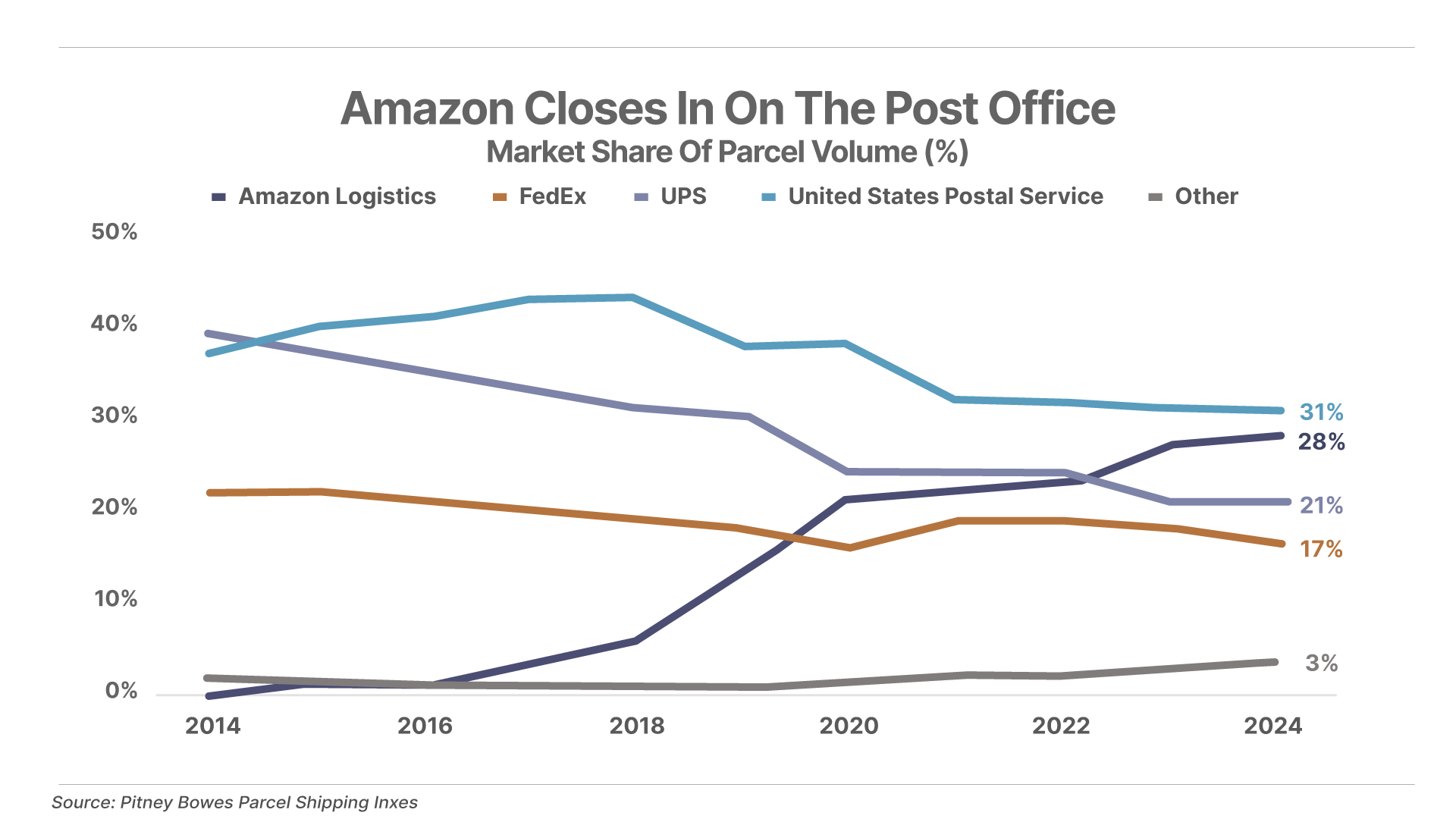
1. Amazon takes direct aim at UPS and FedEx. Amazon (AMZN) already moves 28% of U.S. parcel volume – just three points behind the U.S. Postal Service, and well ahead of UPS (21%) and FedEx (17%). Yesterday, Amazon made a step to increase its share even more… launching Amazon Supply Chain Services, opening its full logistics network – freight, distribution, fulfillment, and parcel shipping – to any business. Procter & Gamble (PG), 3M (MMM), and Lands' End (LE) have reportedly already signed on. The move turns Amazon's internal supply chain into a third-party platform – bringing even more businesses into its ecosystem.
2. Investors double down on risk. Risky-asset fund inflows have outpaced safe-asset inflows by a record $220 billion over the last four weeks – exceeding the 2021 meme-stock frenzy peak of $200 billion. When the music stops, $220 billion of recent risk inflows will be looking for the same exit at the same time. This is the moment to own real assets, dividend-paying compounders, and short-duration cash flows – not story stocks bought on margin.
3. AI capex becomes the economy. Morgan Stanley raised its 2026 hyperscaler capex forecast to $805 billion and $1.1 trillion for 2027. This is from just five companies – Oracle (ORCL), Alphabet (GOOG), Meta (META), Amazon (AMZN), Microsoft (MSFT). The 2026 spend alone equals total non-tech S&P 500 capex from 2025. But the funding side tells a different story: big tech has issued $100 billion of bonds this year, and Amazon's trailing 12-month free cash flow has collapsed from $26 billion to $1.2 billion. AI drove 75% of Q1 GDP growth – but two-thirds of this spend is funded by debt.
Chart Of The Day… Eli Lilly (LLY)
Last week, pharma giant Eli Lilly (LLY) posted Q1 revenue of $19.8 billion (up 56% year-over-year) and adjusted EPS of $8.55 – both crushing consensus. Sales of weight-loss drug Mounjaro surged 125% to $8.7 billion globally, and Zepbound climbed 80% to $4.2 billion in the U.S., reminding the market that GLP-1 demand is anything but tapped out.
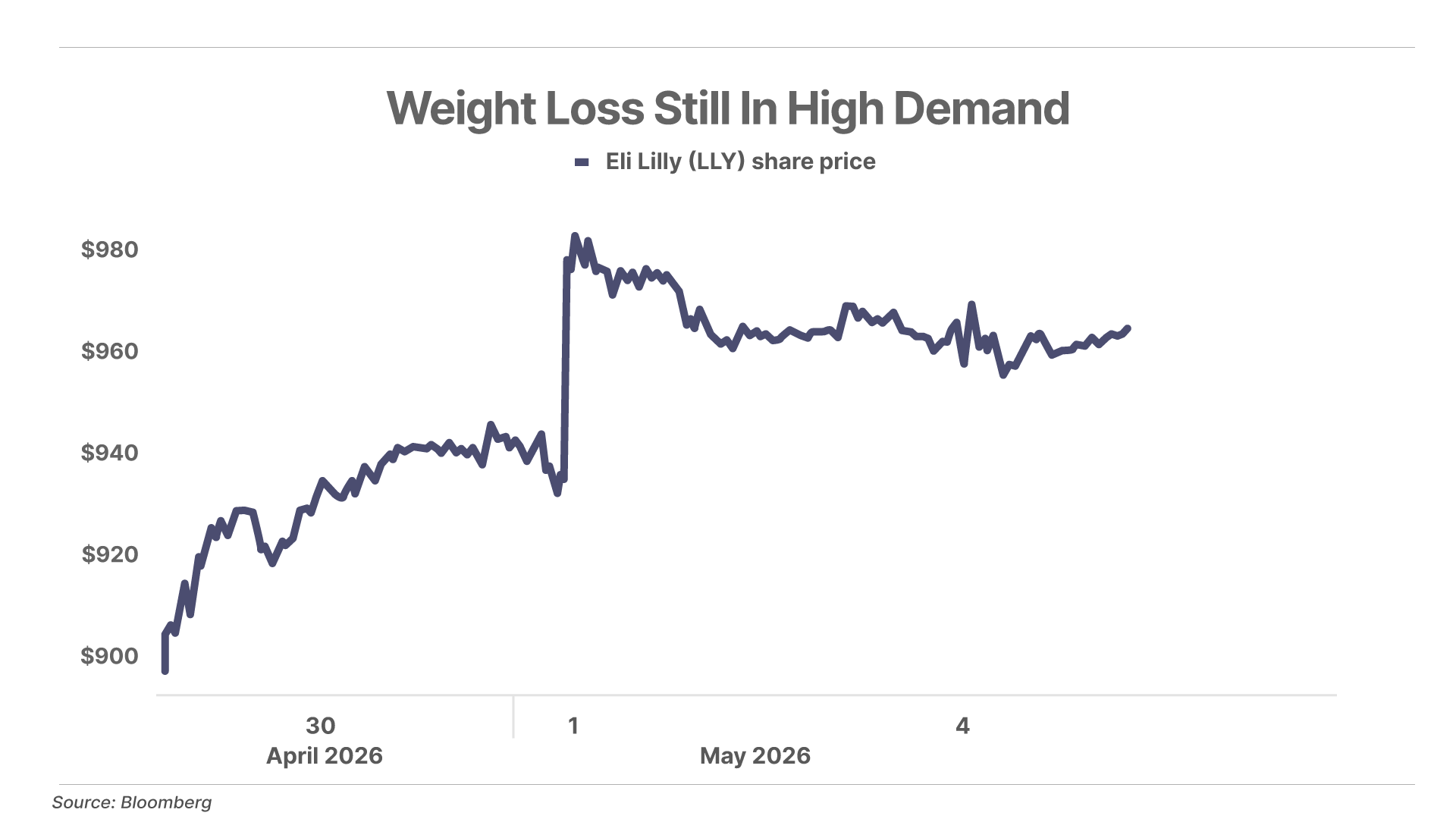
We recently added Eli Lilly to Porter & Co.’s Best Buys… Since we launched Best Buys – selecting the three most-attractively priced of all Porter & Co. recommendations – they have outperformed the S&P 500 41.1% to 35.7%. To subscribe and get our next three Best Buys, click here.
Mailbag
“Thank You For Your 2029 Update”
Carl J. writes:
Good morning, Porter…
I read your book 2029 yesterday. I plan to call close friends and loved ones today… to urge them to read your book in its entirety and take action soon.
I view the day I met you and our River’s End salmon fishing week as the most fortunate experiences of my life.
Thank you for all the benefits your guidance has provided to/for me and my family.
“Physical Gold Versus High-Quality Gold Royalties”
Leslie V. writes:
Hi Porter,
I am wondering what your thoughts are about investing in physical gold as an asset versus investing in high-quality gold royalty companies like Franco-Nevada. One aspect that currently has me leaning toward Franco-Nevada is that (a) it is easy to liquidate (sell) and (b) having physical gold requires safe storage, and redemption offshore could be a problem for my kids in the future.
Guest writer Emmet Savage of MyWallSt shared his thoughts in Friday’s Journal, and at least one reader shared her thoughts…
“Owning 40 Stocks Is Unmanageable?”
Mary L. writes:
Owning 40 stocks is unmanageable? I actually have 63 stocks in my portfolio (I thank Porter & Co. for its research leading to my buying EQT, FNV, and BWXT, among a few others). I follow each of my stocks daily and am (so far) doing well (79.5% return to date). I try to decide which ones to sell every day, but I always decide I don’t want to sell any. I suppose I should take some profits, but then I fear that I will never get back to my current advantageous situation. I know this will be my great downfall someday, probably sooner rather than later, but I have six children and I want to leave each of them some sort of inheritance, so I carry on, probably unwisely. But I just can’t help it. I think this is one of the hardest problems to overcome when investing.
On another note, I can relate to the feeling of regret that Emmet Savage mentioned about not keeping some stocks that turned out to be real winners. A long time ago, I had shares of Micron Technology (MU) that I had bought for (I think) around $5 or $10 a share. It’s now around $500 per share, but I waited and waited, and I saw no progress at all, so I sold it. I forgot about it until I came across its recent success and that was quite upsetting to me. In retrospect, maybe that’s another reason I don’t want to sell anything anymore… the only ones I have that aren't moving well are a few graphene stocks, but I hold on to them solely so as not to suffer another MU situation in the future!
Porter & Co. Market Snapshot
| Price | Friday's Return | Year-to-Date Return | |
|---|---|---|---|
| S&P 500 Index | $7,230.12 | 0.30% | 6.0% |
| Gold per ounce | $4,614.21 | -0.06% | 4.5% |
| Bitcoin | $78,909 | 0.59% | -9.0% |
| Oil (West Texas Intermediate) per barrel | $101.94 | -3.04% | 83.8% |
| Berkshire Hathaway (BRK) | $710,300.00 | -0.22% | -5.90% |
| Porter's Permanent Portfolio | - | -0.13% | -1.0% |
| The Better Than Berkshire Index | - | -1.23% | 1.5% |
| Total Return | Annual Return | ||
| Porter & Co's Top Ranked* | 32.6% | 15.1% | |
| Yield | Friday's Change | Change Year-to-Date |
|
| U.S Treasury 30 - Year Yield | 4.96% | -1 bps | 11 bps |
*A Complete Investor risk rating of 1 is defined as a "low risk, high allocation" security, while positions rated closer to a 5 are higher risk. Porter & Co.'s top-ranked positions include those rated either 1 or 2 in Complete Investor portfolio.
Porter & Co. Top Positions
| Publication | Ticker | Description | Total Return |
|---|---|---|---|
| Complete Investor | BWXT | BWX Technologies | 278% |
| Tech Frontiers | QURE | uniQure | 237% |
| Complete Investor | BTC/USD | Bitcoin | 190% |
| Tech Frontiers | SGMT | Sagimet Biosciences | 141% |
| Tech Frontiers | ROIV | Roivant Sciences | 123% |
| Complete Investor | PM | Philip Morris | 108% |
| Distressed Investing | HLF | Herbalife | 102% |
| Distressed Investing | PTON | Peloton Interactive | 99% |
| Tech Frontiers | TGTX | TG Therapeutics | 99% |
| Tech Frontiers | SGMT | Sagimet Biosciences | 96% |
Prices as of 4:00 pm ET May 1, 2026
Please note: The investments in our “Porter & Co. Top Positions” should not be considered current recommendations. These positions are the best performers across our publications – and the securities listed may (or may not) be above the current buy-up-to price. To learn more, visit the current recommendations page of the relevant service, here. To gain access or to learn more about our current recommendations, call our Customer Care team at 888-610-8895 or internationally at +1 443-815-4447.