And The Company Leading The Charge On Drug Development
Inside Today's Issue
Editor’s note: Because of a massive Microsoft global outage, we were not able to release yesterday’s Daily Journal. For that, we apologize.
At the end of 2009, you could have bought Regeneron (REGN) for about $24 a share.
By July 2015, it traded above $550. That’s 23x your money in less than six years. What happened?
A new kind of medicine took over.
For most of the last century, drugs were small, simple chemicals, like aspirin. After 2010, many of the biggest new drugs were antibodies: complex proteins built to grab one target in the body and hold on. Regeneron learned to build these new drugs better than almost anyone. Its eye drug Eylea, made from antibody parts, won approval in 2011. Dupixent, its antibody for eczema and asthma, followed in 2017.
For years, I’ve told you that Alnylam Pharmaceuticals (ALNY) offers investors the same kind of opportunity, with a new class of gene-silencing drugs. That’s why we made it the subject of our very first issue of Porter & Co. Biotechnology, on August 1.
This week, Regeneron published the first human results for a gene-silencing drug that Alnylam designed. The results ran in The New England Journal of Medicine, which is the most prestigious medical journal in the world.
How does gene silencing work? It interrupts the cellular process that creates proteins that cause disease by “silencing” the messenger RNA inside the cell. A siRNA (short for “small interfering RNA”) is a tiny strand of RNA that’s built to match the exact RNA that your body is using to make these faulty proteins. Blocking the message means you’ve “silenced” the gene.
Two scientists, Andrew Fire and Craig Mello, discovered this process in worms in 1998. They won the Nobel Prize for it in 2006. Alnylam spent 16 years turning their discovery into medicine. In 2018, its drug Onpattro became the first approved siRNA in the world. Today, six approved medicines come from Alnylam’s science.
Why do we think this matters so much? There are three reasons.
- It’s precise. Each siRNA matches one recipe, so it leaves the rest of the cell’s cooking alone. That usually means fewer side effects.
- It lasts. A pill works for a day. One shot of an siRNA can work for months.
- The list of potential drug targets is huge. Any disease caused by too much of one protein is a candidate. Alnylam’s science already treats a nerve disease, a heart disease, a disease that causes kidney stones, high cholesterol, and hemophilia. The mechanism of action is the same, for all of these diseases.
The hard part is getting the siRNA to the right cells. Alnylam solved the liver first. It attaches a sugar to each siRNA, and that sugar takes the drug directly into the liver.
That opens up a lot of new potential treatments.
For example, about 1 in 150 carried a broken copy of a gene called CIDEB, which helps liver cells store fat. The people with the broken copy had 33% lower odds of liver disease. Their odds of cirrhosis (deadly scarring of the liver) were about half.
This new drug conveys those protections to people who don’t have this faulty gene: it silences CIDEB in the liver. That’s a huge potential market because about 30% of adults around the world have fatty liver disease.
Forty adults with fatty liver disease took part in this trial. Thirty got one shot of the drug, at one of four doses. Ten got a fake shot – a placebo. Doctors then measured liver fat with an MRI scan.
After six weeks, the people who got the drug saw their liver fat fall 49% to 72%. After 36 weeks, it had fallen even further: 58% to 80%. The placebo group’s liver fat fell just 2.9%.
By week 36, 62% of the patients on the drug had normal liver fat. None on placebo did. And 93% cut their liver fat by at least 30%, a level that past studies have linked to real healing seen under a microscope. Blood tests for liver damage improved at every dose.
What about side effects? There was no nausea and no vomiting, and no one quit the trial. One shot lasted at least 36 weeks. The researchers say that time frame supports dosing just twice a year.
Now compare that with Madrigal Pharmaceuticals (MDGL). Its pill, Rezdiffra, became the first approved drug for the advanced, scarring form of this disease in 2024. Patients take it every day. Diarrhea and nausea are its most common side effects, and they’re the most common reasons patients stop taking it. (We rate Madrigal a Hold for our Biotechnology subscribers.) A shot twice a year with no stomach trouble is a long-range threat to a daily pill.
Regeneron is now recruiting patients for larger trials, including a final-stage Phase III study. Drugs take a long time to develop and cost around $1 billion each.
But who gets paid? Regeneron runs the program and pays all the bills. Alnylam collects milestone payments as the drug moves forward, plus royalties of up to 20% of sales.
We rate Alnylam a Buy below $200.
Tell me what you think of today’s Daily Journal: porterstansberrydirect@gmail.com
Good investing,
F. Porter Stansberry
Stevenson, Maryland
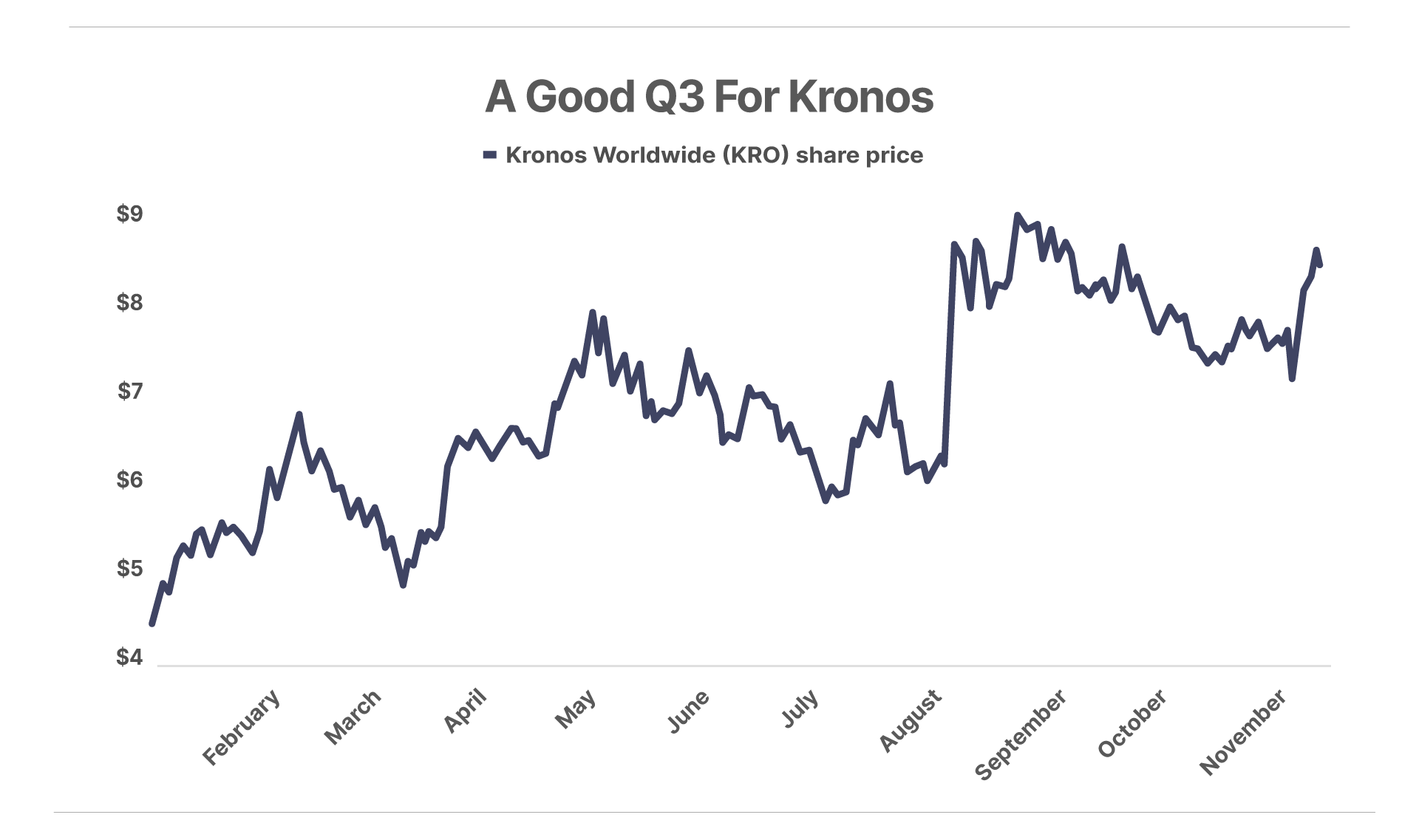
1. Nvidia CEO resigns amid scandal. Jensen Huang resigned Thursday as head of the giant chipmaker after a week-long scandal that began after he admitted to an affair with a woman U.S. intelligence officials identified as a Chinese spy who allegedly helped funnel $7.5 billion of Nvidia chips into China. The scandal widened when The New York Times revealed a second affair with an Nvidia vice president who reported to Huang. The next critical step for the company is finding a replacement CEO who can calm internal strife and keep churning out high-speed GPU chips to power the AI build-out. NVDA shares dropped to an 18-month low of $150 yesterday before recovering to around $162. Shares have risen 16% since our Complete Investor recommendation last year. 2. Small businesses to raise prices again. A net 37% of owners plan price increases over the next three months, up from 31% in September and the highest since July 2022, according to the National Federation of Independent Business (“NFIB”). From 2009 through 2019, that figure never topped 30%. Owners are already raising prices: a net 33% did so over the past three months, more than double the survey’s historical average of 14%. 3. Health insurance costs are rising. Premiums for the standard plan on the Affordable Care Act exchanges, where Americans without employer coverage buy insurance, jumped 26% this year and will rise another 13% in 2027 – the largest increases since 2018. Employer coverage is following the same trajectory. Workers paid 9% more toward family premiums this year, while wages rose just 3.7%. Insurance giant Marsh projects employer costs per employee will rise 8.2% in 2027, the largest increase since 2003 and the fifth straight year of growth. The average employer family plan now costs $28,303 a year. Shares of pigment maker Kronos Worldwide (KRO) are up 92% year-to-date – most recently bolstered by Q3 results that exceeded expectations. They now trade above the buy-up-to price for Distressed Investing, where it was recommended last year. Marty Fridson will release his next distressed-equity recommendation tomorrow. If you are not a Distressed Investing subscriber and want to get access to Marty’s newest recommendation, click here. On Wednesday, in anticipation of next week’s IPO for leading AI platform Anthropic, we asked readers where they thought shares of Anthropic (soon-to-be ticker symbol ANT) would be valued after day one of public trading… Two-thirds of survey takers think Anthropic will be at a valuation between $1 trillion and $2 trillion, while 29% are less bullish, seeing a market cap below $1 trillion. And 5% see shares taking the company above a $2 trillion valuation. Jim V. writes: Porter, great article and well-parsed explanation regarding CoreWeave and the AI space. I refer back to your historical review of railroads, autos, dot-com eras, and their "growing pains." The parallels to the current AI boom are clear, but somehow even more glaring. It seems the markets have lost all objectivity and logic and now rely on algos and computers. Ken L. writes: Tuttle presents a viewpoint that I've encountered before but his approach seems more solid than some of the other explanations I’ve read about.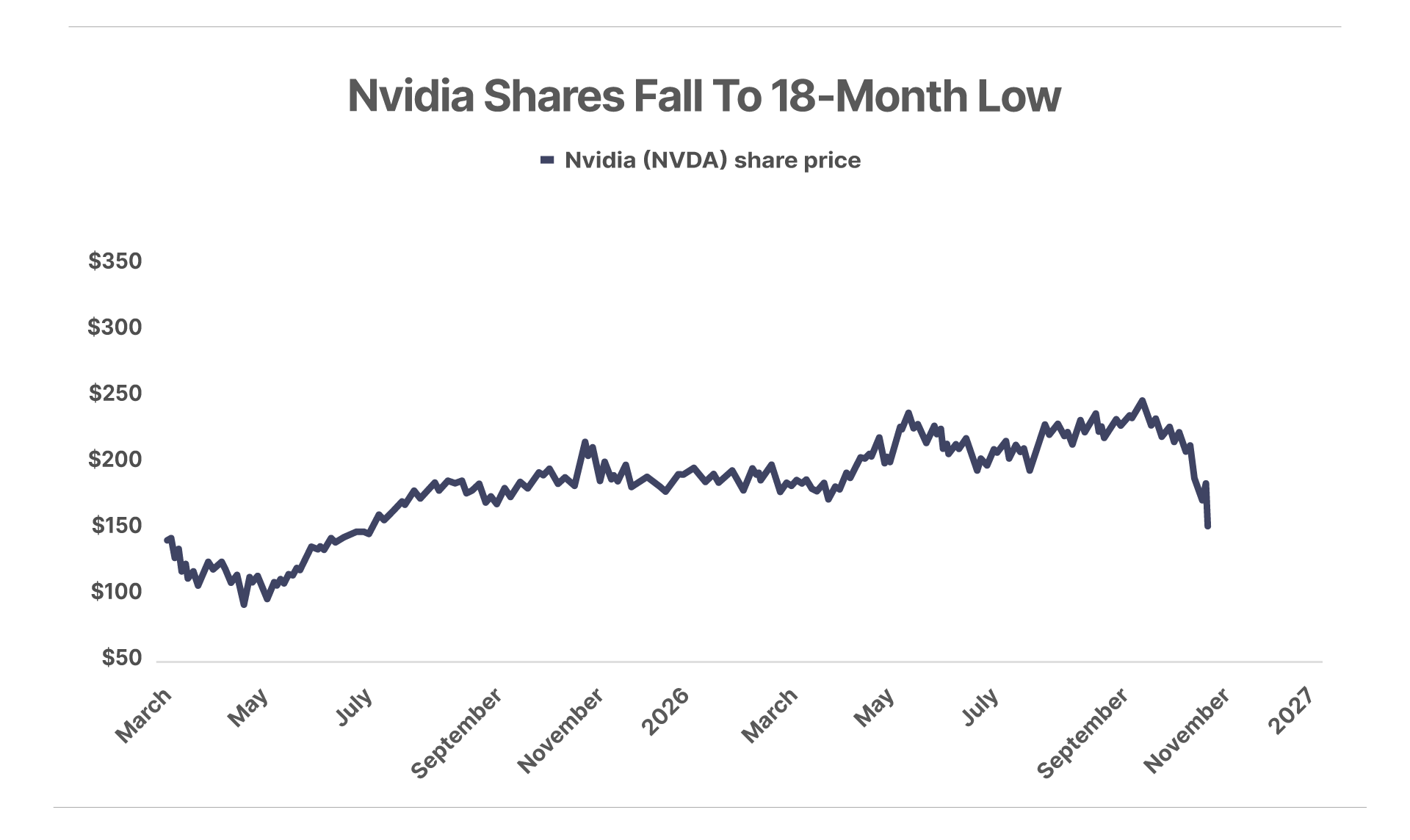
Poll Results... Anthropic IPO
“I’m A Partner… Buckle Up”
FOMO is baked in now as the hyperscalers now admit they have to spend even more on capex or risk being left behind. The pro-formas don't make economic sense, the tech sector shoots up every other day based on hopes and dreams that will never occur for 90% of this sector, and yet here we are.
Being a retail investor these days is akin to walking into a casino. I'm grateful for being a Partner Pass member because going it alone in this market is suicidal. Bottom line, the markets run on pipe dreams and insanity. I'm staying grounded with Porter & Co... Buckle up!
“Tuttle Capital Management”
He’s now on my radar.
Porter & Co. Market Snapshot
Through Thursday, November 12, 2026 close
Markets
Index or asset
Last
1-Day
YTD
1-Year
757.12
−0.35%
+11.9%
+12.0%
$3,885.30
−2.88%
−10.5%
−7.8%
$71,346.00
−4.32%
−18.5%
−29.7%
$88.74
+2.55%
+54.5%
+51.7%
$885,660.00
+0.09%
+17.3%
+17.1%
U.S. Treasury yields
Maturity
Yield
1-Day
YTD
1-Year
4.86%
+13 bps
+139 bps
+130 bps
5.10%
+12 bps
+92 bps
+102 bps
5.43%
+8 bps
+59 bps
+76 bps
Porter & Co. strategies
Strategy
1-Day
YTD
Since start
Per year
−0.04%
+7.1%
+35.0%
+15.1%
−0.04%
+5.0%
+5.3%
+3.5%
+0.01%
+4.8%
+29.9%
+10.0%
Porter & Co. Top Positions
Through Thursday, November 12, 2026 close
#
Position
Total return
1
+250%
2
+246%
3
+244%
4
+166%
5
+164%
6
+154%
7
+145%
8
+126%
9
+120%
10
+101%