And Quite Often Don’t Get You Invited To Appear On CNBC
Inside Today’s Issue
Editor’s note: Today, Porter turns the Journal over to Matt Tuttle, CEO of Tuttle Capital Management and portfolio manager of the Porter & Company Porter Portfolio Index ETF (PCPP).
In late 2021, betting against Cathie Wood felt about as smart as betting on rain in San Diego.
Wood’s ARK Innovation ETF (ARKK) had returned 153% in 2020, against roughly 18% for the S&P 500, and the press had decided that she was the next Warren Buffett.
But the returns were the story, not the holdings. In my view, ARKK held the opposite of what I look for in an investment: the fund was full of richly valued companies with limited cash generation, and its shareholder base had mostly bought after the sharp runup in prices.
So I built a fund, the Tuttle Capital Short Innovation ETF (SARK), which sought the inverse of ARKK’s daily return through a swap agreement. That is – as ARKK fell (which I was pretty sure would happen before long), SARK would rise.
My fund found an audience quickly. Wood had a loyal following that took the fund personally – and I heard from a lot of them. Their catcalls, though, didn’t change what was in her portfolio.
In a similar vein… Porter Stansberry had spent years making an unpopular argument of his own: that the dollar was being eroded, that the deficit arithmetic didn’t work, and that the “safe” asset sitting in every retirement account had quietly become one of the riskiest things a person could own.
He’d built a portfolio around it. What he needed was someone who could turn that into an index and then leave it alone, even if it might look foolish in any given quarter.
And that’s how our fund, the Porter & Company Porter Portfolio Index ETF (ticker symbol PCPP), came about.
The index holds not one, but four generally unfashionable positions:
- Cash-generating businesses, instead of the hot story
- Insurance companies, instead of government bonds
- Gold and Bitcoin, and
- Short-dated bonds, instead of reaching for yield
I’ll come back to how those fit together. First, though… why I think being unpopular is worth something.
The Receipts
About 16 months after building SARK, I built a fund that took the other side of the on-air stock picks of CNBC shouting-head Jim Cramer.
I loved the idea, but the fund didn’t work. I shut it down inside a year, at a loss.
The point, though, was never the return.
My aim was to highlight how – and ask why – a man can go on television every weekday for two decades, tell a national television audience what stocks to buy, be wrong repeatedly and at scale, and face no formal accountability. He said Bear Stearns was just fine – days before it went under. He called Silicon Valley Bank a “buy” on air one month before regulators closed the bank. He compared Sam Bankman-Fried to J.P. Morgan.
The fund closed, but the point remains. And, incidentally, I haven’t been back on CNBC since.
My firm’s tagline is “The antidote to Wall Street.” We mean it, and it has cost us.
Why Being Early Might Look Like Being Wrong
Here’s what I learned building those funds in public.
Financial TV isn’t lying to you. From my point of view, it’s doing something more subtle. I see the real problem is that it needs characters – not analysts.
The easiest way to stay on the guest list is to be a “perma-something.” Always bullish, always bearish, it doesn’t much matter which. Repeat the same forecast for long enough, and the market eventually obliges.
Then you’re the person who called it. The dozen wrong calls before that disappear.
What doesn’t get you booked is being right early – and downright inconvenient in the meantime.
Years ago, I made a simple observation to a reporter about a large brokerage and one of its analysts. He told me he couldn’t print it. His editor would kill him.
Let me guess, I said. It’s a major advertiser for the paper?
He nodded. Yep. And that, I’d argue, is how the system works. Who loses? I think it’s the guy who takes what the talking heads are saying at face value.
Porter Got The Same Treatment
Porter spent years saying the U.S. dollar wouldn’t stay dominant forever, that the deficit arithmetic didn’t add up, and that long-term government bonds, the very thing investors are told is safe, had quietly become one of the riskiest assets you could own.
For most of those years, that made him sound like a crank to the institutions selling the old playbook. Then 2022 happened. Then April 2025 happened. Some of the same institutions now make a version of the same argument.
Which brings me to the thing I actually believe: Being unpopular with the crowd isn’t by itself a flaw in an investment thesis. Plenty of unpopular ideas are simply wrong. But an idea that everyone already holds has no advantage left in it.
Four Positions, Not One
So here is how those four positions inside PCPP actually work. It’s worth stating plainly up front that the fund is passively managed, and these four positions reflect the methodology of the underlying rules-based index rather than a manager’s view.
The stock sleeve screens on historical cash conversion and shareholder distributions. Consensus says buy the index and own everything in it. This owns a screened subset rather than the whole index.
The “bond” sleeve isn’t bonds. It’s property and casualty insurers – the companies that write home, auto, and business policies, chosen for underwriting quality. They stand in for the government debt that did not hedge equity losses in 2022 or in April 2025.
The hard-assets sleeve pairs gold and Bitcoin. Gold is the 5,000-year store of value everyone knows. Bitcoin is the newer digital asset built to be scarce and is maintained by network consensus rather than a central issuer.
The fixed-income sleeve is short-dated bonds and Treasury funds that mature in a few years rather than a few decades. Consensus calls that a drag on returns. The intent is to hold assets that can be sold without a large loss of principal, so the annual rebuild has something to draw on.
And none of it runs on judgment. Fixed targets, a published methodology, an annual rebuild.
Four uncomfortable positions in one ticker. Porter & Co. creates the index. As the adviser, I can’t override it. Which is the point.
Why The Rules Matter
Most investors can hold one contrarian view. That’s uncomfortable but survivable. Almost nobody can hold four of those views – at once.
Experience tells me there tends to be one you talk yourself out of, usually not long before it turns. Sometimes it never does.
And while a rules-based structure doesn’t make that discipline easier, it removes the discretion. It does not remove the risk that the rules produce poor results.
Early Isn’t Always Wrong
Early can just feel wrong for an uncomfortable length of time.
I’ve been shouted down for the Cathie Wood ARK Innovation trade and mocked for the Cramer one. I’d take both again.
Porter spent his career researching how to hold a portfolio through different market environments.
The index attempts to express that view in a single set of rules.
You can see the whole thing at porterandcofunds.com.
Matt Tuttle, CEO/CIO
Tuttle Capital Management
P.S. Every morning before the open, I publish The Daily H.E.A.T., my framework applied to whatever the market is doing that day. It’s free. Sign up here.
Tell us what you think of today’s Daily Journal: porterstansberrydirect@gmail.com

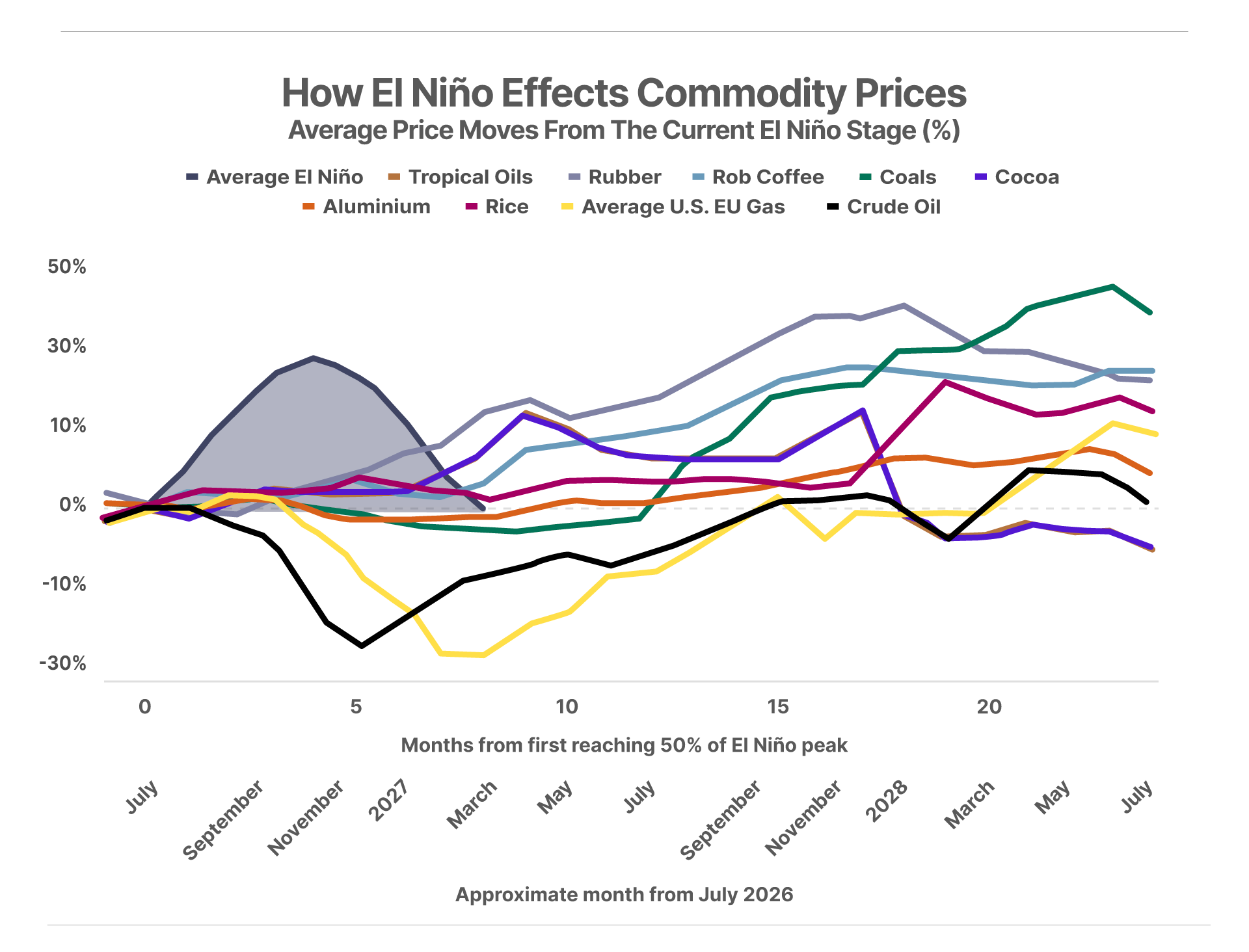
1. Barclays expects a record El Niño to push commodity prices sharply higher. The National Oceanic and Atmospheric Administration (“NOAA”), the U.S. government’s weather and ocean agency, puts the odds of the strongest El Niño ocean-warming event on record since 1950 at 69% for October through December. Analyst Craig Rye sees commodities including coal, coconut oil, copper, rice, and rubber rising up to 50% over 24 months. Prices are already moving: the S&P GSCI commodity index has gained roughly 50% this year, and copper already trades near a record.
2. The bond market has stopped listening to the Treasury. Thirteen days ago, Treasury Secretary Scott Bessent announced he would at least double the government’s bond buybacks – purchases of older long-term debt meant to push yields down – to at least $4 billion per operation. Long yields dropped for a few hours, then gave it all back. The 30-year sits at 5.25% today versus 5.26% just before the announcement. The 10-year touched 4.79%, its highest since January 2025, after Fed Chair Kevin Warsh’s hawkish Jackson Hole remarks on Friday pushed the odds of a September rate hike above 65%. The composition of that move matters more than the level: of the 76-basis-point rise in the 10-year yield since the Iran War began on February 28, 70 basis points came from real yields – the return investors demand above expected inflation – and just six from inflation expectations. A rate hike will not fix that. Investors are simply demanding more yield to hold $40 trillion of federal debt.
3. September has the weakest S&P 500 average return of any month going back 75 years. But averages hide the distribution – a handful of ugly Septembers (2001, 2008, 2022) drag the number down, while plenty were positive. More relevant for 2026 is the election cycle. In midterm years, September has historically been breakeven, and the two months after it have been among the strongest stretches of the entire four-year cycle. We’ll see if this year is any different.
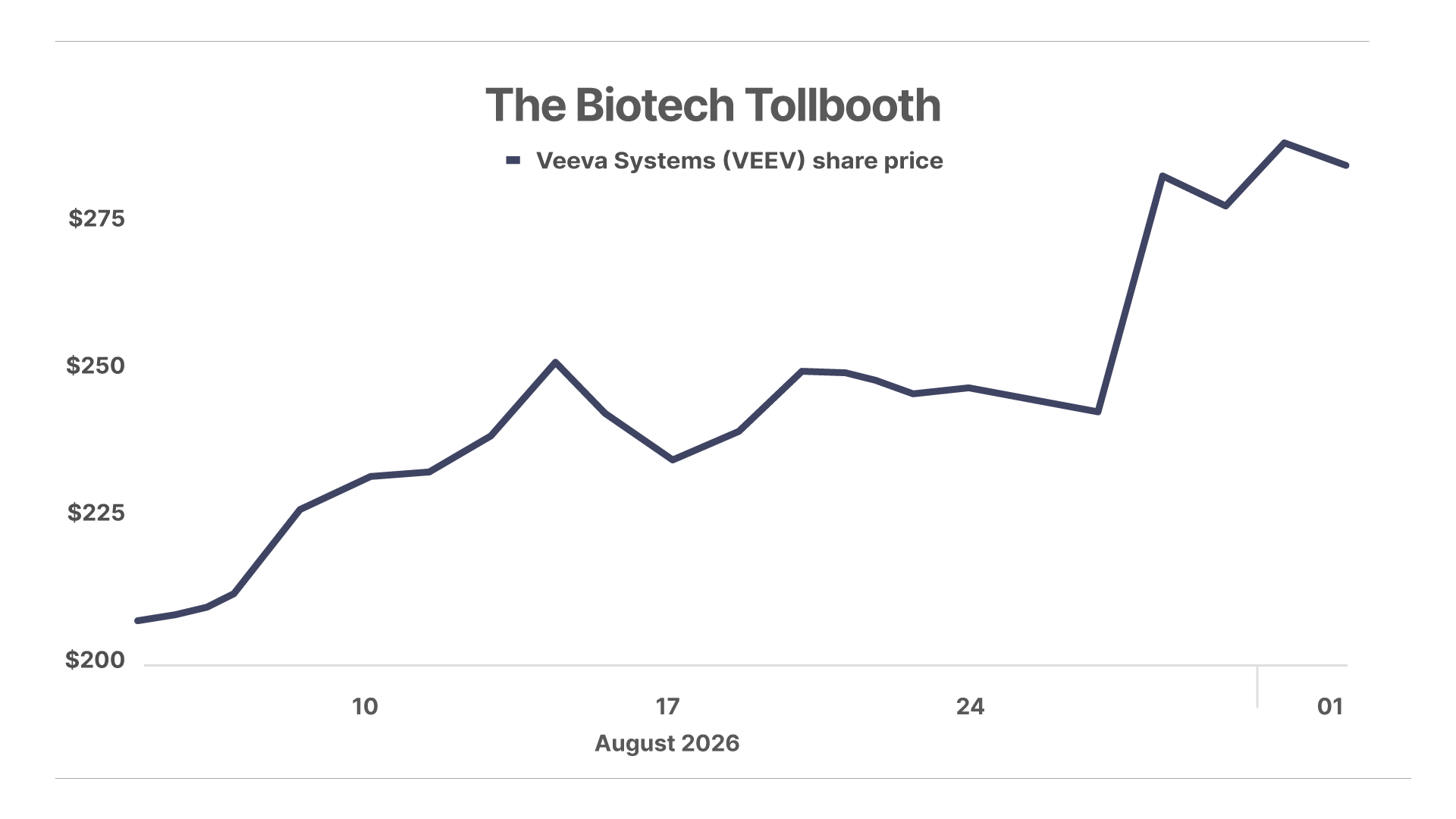
Veeva Systems (VEEV) is a software platform that supports the biotech industry – one of Porter’s tollbooth section of Biotechnology. Veeva shares are up 41% since the August 1 recommendation.
The next Porter & Co. Biotechnology issue – with new recommendations from Porter – reaches paid-up subscribers on Saturday, September 5. Click here to learn how to get on that list.
Yesterday, Porter reported that Amazon founder Jeff Bezos once described to shareholders a hypothetical future business that developed teleportation machines. And just like CoreWeave’s incredible data centers of today, Porter explains, these machines were revolutionary, consumer demand was endless – and the business was unsustainable.
“A Bezos Teleportation Machine”
Randy M writes:
Where can I get one of Jeff Bezos’ teleportation machines and teleport back in time and purchase more Amazon? ….and a Partner Pass?
“Refreshing To Read”
Guy S. writes:
Your contrast between CoreWeave and Amazon is an analysis of rare quality – far superior to the typical financial newsletter drivel. Debt-to-revenue is among the many metrics, along with debt growth-to-revenue growth, I have employed in my stock analysis (profitably) for many years.
Refreshing to read – thank you.
“Too Long”
Mario R. writes:
You had a very good point and detailed explanation on why CoreWeave will go out of business.
My only comment is that you had made the point loud and clear in the first half of your article – the rest, you went on and on, which was overkill and a waste of reader’s time.
It’s best to just go right to the point and then stop.
Porter & Co. Comment: Ok.