Issue#138, Volume#3

The Scramble For Cash In AI Is A Huge Red Flag
Inside Today's Issue
Editor’s note: Today, Porter shares the second essay in a multi-part series on the staggering amount of capital flowing into the build-out of artificial intelligence – and what might happen next.
Yesterday we described how Nvidia’s (NVDA) massive $40 billion-plus investments, vendor financing, and lease guarantees are creating much of its revenue and profits in a circular ecosystem that resembles a Ponzi scheme. I wrote:
Nvidia’s market cap is $5.25 trillion. Its most recent quarterly free cash flow was roughly $49 billion. Companies that generate $49 billion of quarterly cash do not need a $500 billion financing package – unless something is very wrong.
Something is very wrong: This is Nvidia’s second capital raise in eight weeks.
Today we continue our cautionary tale.
Vendor financing is especially dangerous when, like with GE Capital circa 2008, there’s tremendous concentration. When an entire industry is funded by only a handful of equipment vendors, there’s almost always a financial blow-up at the top of the cycle.
In the telecom bubble, McKinsey & Co. put the combined telecom-equipment vendor financing at year-end 2000 at $25.6 billion across only nine suppliers.
But AI is even more concentrated.
Nvidia’s 10-Q discloses three direct customers at 21%, 17%, and 16% of revenue. And three customers at 30%, 18%, and 16% of receivables. The filing adds:
One AI research and deployment company contributed to a meaningful amount of our revenue by purchasing cloud services from our customers.
I wonder which AI company…? You’ve got two guesses, lol.
Why two guesses? Because there are two private AI companies that anchor most of the AI-capex demand.
On September 10, 2025, OpenAI signed a five-year, $300 billion (!) compute contract with Oracle (ORCL). OpenAI’s 2025 revenue was approximately $10 billion. The contract requires OpenAI to pay Oracle an average of $60 billion a year.
On April 20, 2026, Anthropic committed more than $100 billion (!) over 10 years to Amazon (AMZN) to buy Trainium chips. Where’s the money coming from? Amazon invested $5 billion in additional equity on top of the $8 billion previously invested, with up to $20 billion more tied to milestones. More circular financing.
Two private companies with combined revenue of perhaps $50 billion this year have committed compute purchases over $500 billion! Interestingly, that’s the exact amount Nvidia is arranging to borrow. Coincidence?
The question for investors isn’t whether or not these firms will see revenue growth. The question is: at what margin? And if the answer to that question is less than zero, there’s going to be an epic financial crisis.
How’s it going so far? These two firms are expected to lose $20 billion this year alone.
What caused the telecom bust of 2001? As one recent analysis of the vendor-financing loop put it,
It was a synchronized unwind, with roughly four dozen competitive local exchange carriers entering bankruptcy across 2000 to 2003 as the same funding source dried up for all of them at once.
When funding tightens on OpenAI or Anthropic, every hyperscaler and every neocloud holding compute orders in “committed backlog” will discover what those receivables are worth: nothing.
In my next essay, I’ll show you which company is most at risk from vendor financing deals. And, it’s not Oracle.
Share your thoughts on today’s Daily Journal: porterstansberrydirect@gmail.com
Good investing,
F. Porter Stansberry
Stevenson, Maryland
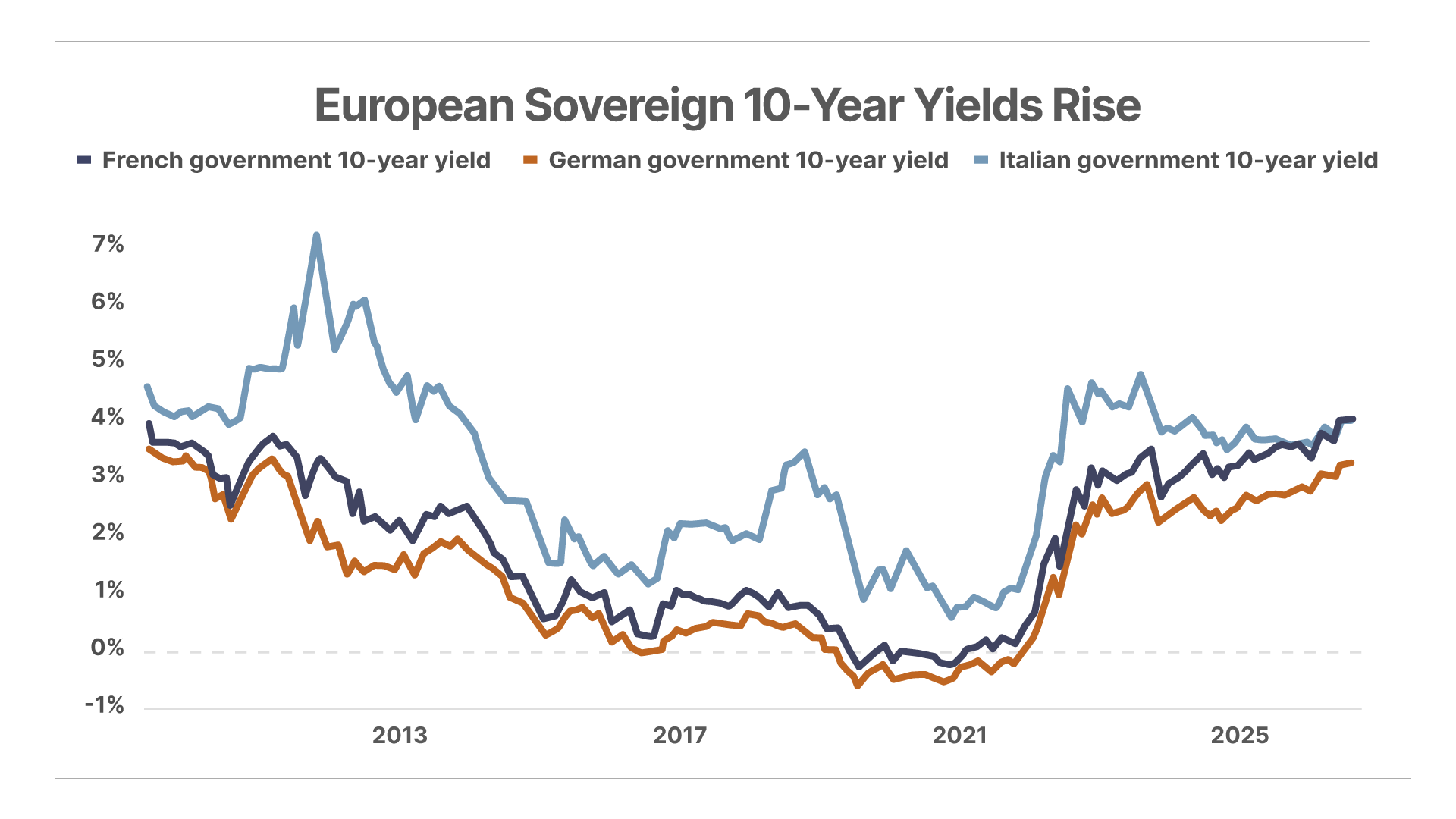
1. The European Central Bank quietly expanded its repo facility. Instead of dumping French or Italian bonds when they need euros, foreign central banks can now pledge them as collateral against freshly created liquidity. And under the new rules, the ECB will no longer disclose who's tapping the facility. The endgame across the developed world is the same: cap rates and debase currency. It's the clearest case for gold and hard assets.
2. Trump may propose a capital gains tax cut ahead of the midterms. The President is considering calling on Congress to lower capital gains taxes, Bloomberg reported Tuesday. It seems the President likes the idea of "indexing" capital gains for inflation – so the tax applies only to the real gain. The top rate on long-held assets has not been cut since 2003 and now stands at 23.8%.
3. Low-income consumers turn to BNPL lifeline. A recent Federal Reserve survey indicates that over 70% of buy now, pay later (“BNPL”) users earning less than $50,000 per year report that these borrowing plans are the only way they can afford basic consumer staples – one-quarter of BNPL users pay for groceries with the loans. Borrowing money to pay for basic living expenses is the inevitable result of persistent inflation eroding the purchasing power of low-income households, who bear the biggest brunt of higher prices.
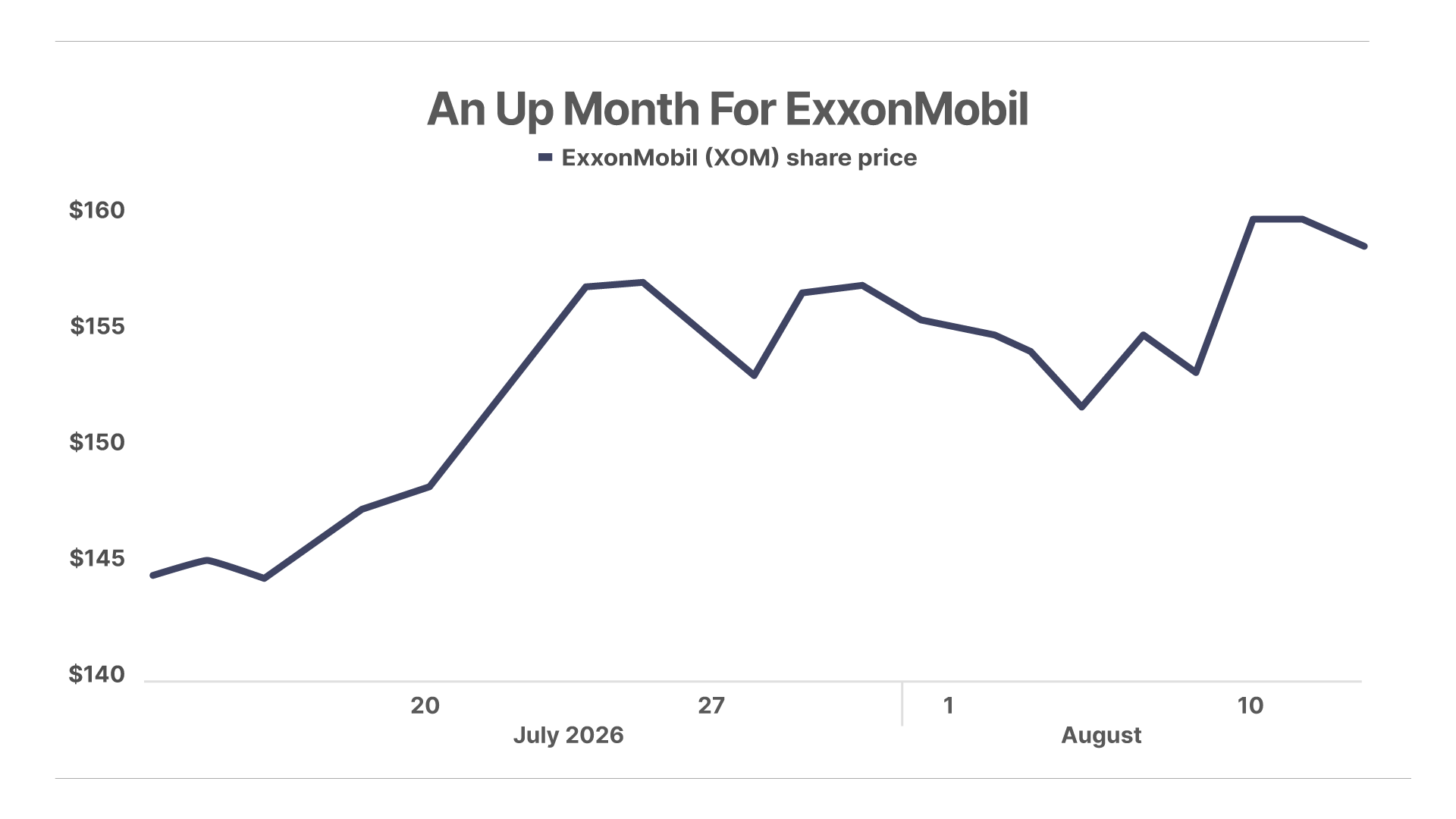
Shares of Complete Investor recommendation ExxonMobil (XOM) have risen over 14% for the month – as the leading global oil producer benefits from higher prices resulting from the war in Iran.
To get access to the full list of Complete Investor recommendations and ongoing research, click here.
“Circular Firing Squad”
James H. writes:
“This whole mess reminds me of a circular firing squad! My personal concern is what in the next year or so is going to happen to the general good dividend growth stocks if what we see actually causes serious problems in the tech stocks.”
“Heading For The Hills”
Kathy D. writes:
Yikes, after reading your take on the extreme borrowing highlighted in yesterday’s Daily Journal, I’m heeding your concern. As an Intel investor, it’s time I take my profits and head for the hills.
“You Scared Me”
Thomas D. writes:
Now you scared me with all the borrowing by NVDA.
“Newbie In The UK”
Richard R. writes:
Superb analysis and vital warnings on the capital death cycle, as you might say.
Newbie subscriber in the UK.
Porter & Co. Market Snapshot
Porter & Co. Top Positions
Please note: The investments in our “Porter & Co. Top Positions” should not be considered current recommendations. These positions are the best performers across our publications – and the securities listed may (or may not) be above the current buy-up-to price. To learn more, visit the current recommendations page of the relevant service, here| New Window. To gain access or to learn more about our current recommendations, call our Customer Care team at 888-610-8895 or internationally at +1 443-815-4447.