Most Investors Still Don’t Understand Bitcoin – Here’s What They’re Missing
Inside Today’s Issue
Editor’s note: The Porter & Co. editorial and Customer Care teams will be off on Monday because of Labor Day. We will all be back on Tuesday.
Nobody invented money.
It was not designed, chartered, decreed, or granted. It was discovered, slowly, in trade. A man takes salt in exchange for his labor because he knows he can exchange it for other goods. Cattle, hides, shells, iron bars, bricks of tea, cakes of salt, strings of beads: each of these served as money at different times in history.
Carl Menger, one of the founders of the Austrian School of economics, first theorized how money evolved through trade. Men were led, he wrote,
each by his own economic interests, without convention, without legal compulsion, nay, even without any regard to the common interest, to exchange goods destined for exchange (their ‘wares’) for other goods equally destined for exchange, but more saleable.
The most important takeaway is that money predates all government. Governments don’t create money – in fact, as you’ll see, governments constantly corrupt money.
The second most important takeaway is that the market – through the choices of millions of individuals each pursuing their own economic interests – will always trend toward the best and most reliable form of money. That’s why, over time, more people favored metals, particularly gold and silver. And it’s why more and more people are choosing Bitcoin (BTC), today.
And what did governments add to money? Fraud, of course.
The denarius, the benchmark coin of the Roman Empire, was 90% silver (3.9 grams) under Julius Caesar. By AD 200, the coin was less than 60% pure, and by AD 300, it contained 5% silver. The Empire disintegrated alongside its money – something Americans would be wise to remember.
The same thing has happened to every empire.
Between 1544 and 1551, in a program historians call the Great Debasement, England’s silver coinage went from the old sterling standard of 92.5% fine to 75%, then 50%, then 33.33%, and finally to 25% in April 1551. Measured in metal, a pound sterling fell from 153.4 grams of pure silver to 25.9. Roughly 83% of the silver content was removed in only eight years.
It happens, over and over again. As sure as the sun rises in the East, every government, if it gains enough power, will attempt to control money by creating a currency. And they will devalue that currency to steal. That’s exactly what’s been happening in America since 2010. It’s why people under the age of 40 can’t afford to buy a house, get married, or have a family. It is what’s driving the collapse of our culture and our society. It’s what’s leading more and more people into lives of desperation: gambling, prostitution, and substance abuse. It’s leading people to become politically radicalized. And, if it continues, it will lead America to socialism, a financial collapse, and even a civil war.
But this doesn’t have to happen to you. You are still free to choose what you save. And you should save money, not the government’s currency. What is money? Money is what people voluntarily save. It is discovered, in markets, over long periods, by people making their own self-interested choices. Currency is what a government issues and debases and requires you to use as legal tender for debts and taxes. Money doesn’t require any coercion. It’s chosen freely, in the market.
Unless you understand this background, Bitcoin will never make sense to you.
Beyond this basic distinction between money and currency, the other misunderstanding that’s common even among people like financial commentators Peter Schiff and Jim Grant, who have an Austrian orientation, is that because Bitcoin is inert – it’s just code – it doesn’t have any intrinsic value.
As the Austrians proved, value is relative. And, in the modern world, code can have enormous value. Look at Microsoft (MSFT). What is it, other than code?
Every technology that Bitcoin has combined into its code has tremendous real-world value. Public-key cryptography verifies bank wires, military traffic, software distribution, and every other encrypted commercial transaction. Cryptographic hash functions compress huge files into a short fingerprint, which is how password databases and software integrity have been protected for decades. Distributed consensus protocols (blockchains) keep databases organized for mission-critical infrastructure around the world.
Saying that these things have no value because they are only code is profoundly ignorant.
Bitcoin combined these technologies to create something extraordinary: a way to send a fixed amount of value (a proof of work) to anyone around the world using only the public internet. Bitcoin allows two strangers, who do not trust each other, to exchange a form of money, with final settlement, without asking a bank, a clearinghouse, a corporation, or a government for permission. It also allows individuals to save an unlimited amount of money using only their minds: a seed phrase.
Gold’s weakness is its physical presence. It requires custody. To use gold, people ultimately must hand it to someone: a bank, a treasury, a depository institution. Or else… they risk having it seized (see 1933) or stolen. Bitcoin removes this risk. And that is a revolutionary monetary characteristic. Over time, I believe this will transform the relationship between people and governments. It creates a defense against debasement and coercion.
How To Value Bitcoin
Like gold, Bitcoin is inert. It has no earnings. It pays no coupons. And, like gold, its supply only grows slowly, and the costs to mine Bitcoin continue to increase. To value Bitcoin, you must understand the other side of the scale: the currency you’re measuring it against. Bitcoin’s price, like gold’s, is driven by monetary aggregates.
The Porter & Co. Bitcoin Liquidity Model uses least squares regression analysis, which is a statistical method for understanding the historical relationship between global currencies and Bitcoin, using about 500 weekly observations beginning in January 2015.
The monetary aggregates we use include:
- Federal Reserve net liquidity, which is the Fed’s balance sheet minus the Treasury’s cash account minus money parked in the reverse repo facility. It is what the Fed is actually leaving in the banking system.
- Global M2 in dollars. M2 is broad money: currency, checking accounts, savings deposits and close equivalents. We sum the United States, the euro area, Japan, China and the United Kingdom, converted to dollars.
- Total circulating supply of the two large dollar stablecoins, USDT (Tether) and USDC (Circle Internet).
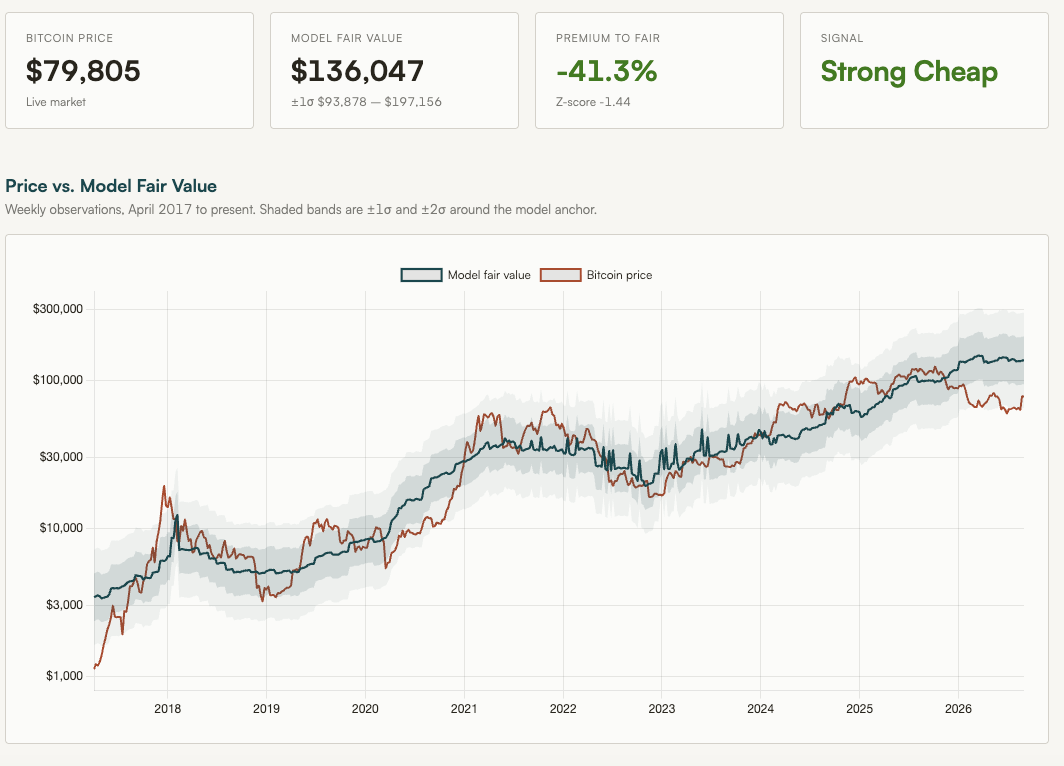
Statistics show our model explains 89% of the variation in Bitcoin’s price. Most Bitcoin enthusiasts claim Bitcoin’s price is driven by its halving cycle. But it isn’t. Once global liquidity is measured properly, the four-year halving cycle adds nothing to Bitcoin’s price. Bitcoin’s code was designed to keep the price of Bitcoin stable against the growth in compute. It’s working. What’s driving its price higher is debasement by governments.
On May 21, I posted this on X.com (@porterstansb):
I expect Bitcoin will continue to be highly correlated with liquidity in the global financial system. My model says each 1% rise in Global M2 YOY adds ~4.5% to fair-value BTC. Model fair value is $136,050.
On May 26, on Anthony Pompliano’s podcast, I said,
The mispricing today in Bitcoin is as large as I’ve ever seen before in the model.” And I explained why: “I think that’s because the tech stocks have been so strong that all of the risk capital has fled into tech stocks, and it had to come out of somewhere.
My conclusion:
I think we’re seeing a great opportunity today in Bitcoin, certainly the best opportunity I’ve seen in Bitcoin in a decade.
On June 20, we published an entire issue of my newsletter, Complete Investor, about Bitcoin:
In this issue, we’re re-recommending Bitcoin (BTC). And we believe buying it now, before the next halving, will prove to be the single best financial decision of the next decade.
By June 30, Bitcoin had fallen to $58,524. It recovered through August, and today is trading above $79,000. But… despite the rebound… Bitcoin is still trading below the lower 1-sigma band of around $94,000 of our pricing model.
Nero shaved the denarius. And every empire since then has destroyed itself and most of its people through debasement. But nobody can shave a Bitcoin.
If you use their money, you’ll be their slave. Free yourself with Bitcoin.
Tell me what you think of today’s Daily Journal: porterstansberrydirect@gmail.com
Good investing,
F. Porter Stansberry
Stevenson, Maryland

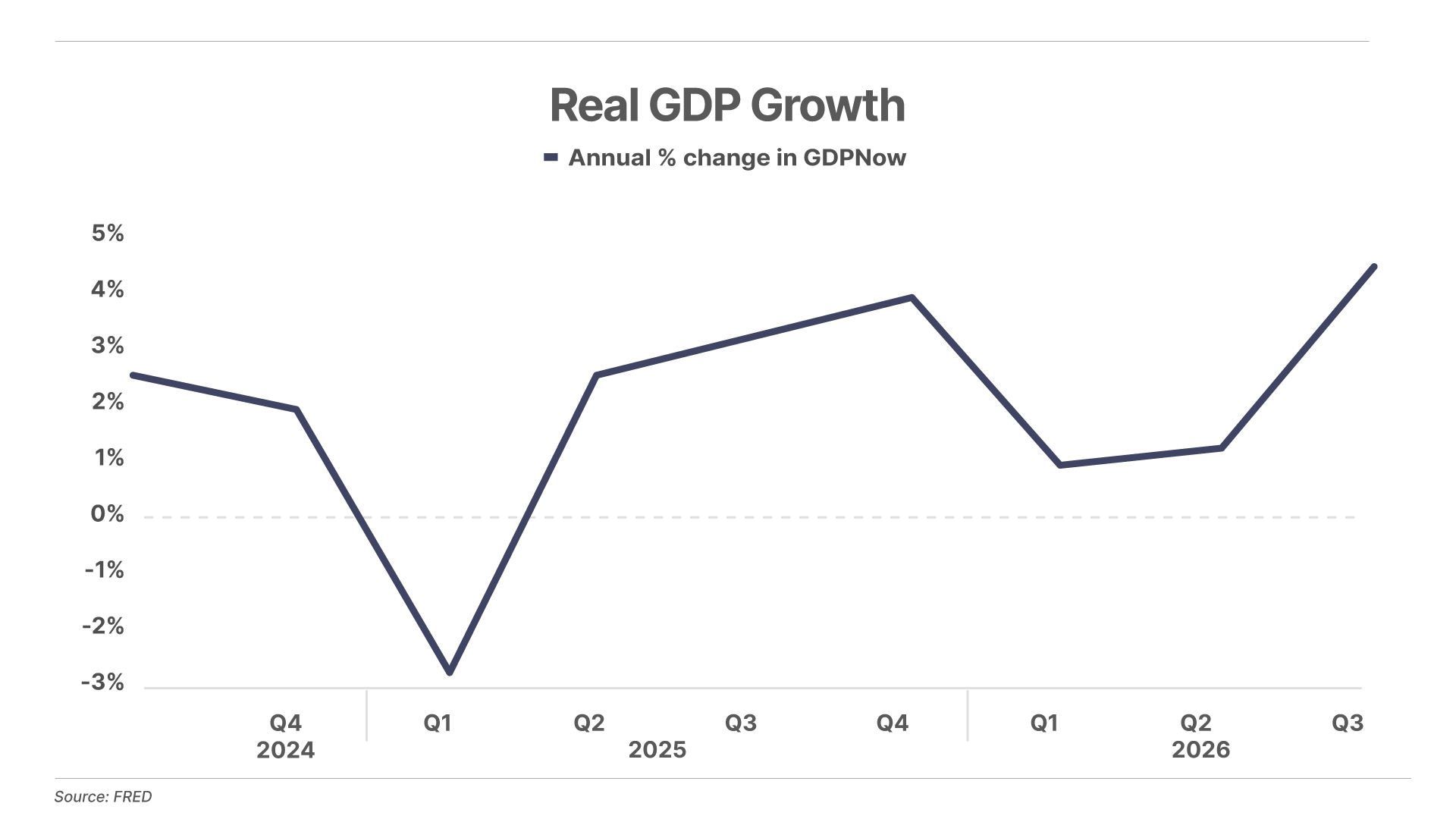
1. The Atlanta Fed says the economy is growing at a 4.7% annual rate this quarter. That September 3 reading from GDPNow is a “real” figure, meaning it has already subtracted inflation. Add prices back, and nominal growth is running near 8%. The gap with Wall Street is wide: when GDPNow touched 6.2% in early August, economists’ consensus was just 2.2%. At this pace, the October 29 GDP release could show real growth of 6.5% to 7%, five days before the midterms.
2. August hiring puts a September rate hike back in play. U.S. employers added 162,000 workers to payrolls, roughly three times the 53,000 economists had forecast, and the Labor Department revised June and July up by a combined 55,000, turning a reported July job loss into a gain. Unemployment held at 4.1%. With inflation still above the Fed’s 2% target, Chair Kevin Warsh might push to raise rates. Futures pricing for a quarter-point hike on September 16 moved to 59% from 52% before the release. The two-year Treasury yield, the maturity most sensitive to Fed policy, hit its highest level since January 2025.
3. Diesel shortage sends prices to new high. The U.S. national average price of diesel fuel has reached a record $5.62 per gallon, surpassing the prior high of June 2022. The market is grappling with an unprecedented shortage driven by the supply-chain disruptions from the war with Iran, with inventories at the lowest seasonal levels on record. Given diesel’s role as a critical transportation fuel, this will likely push prices higher throughout the economy, leading to sticky inflation in the months ahead.
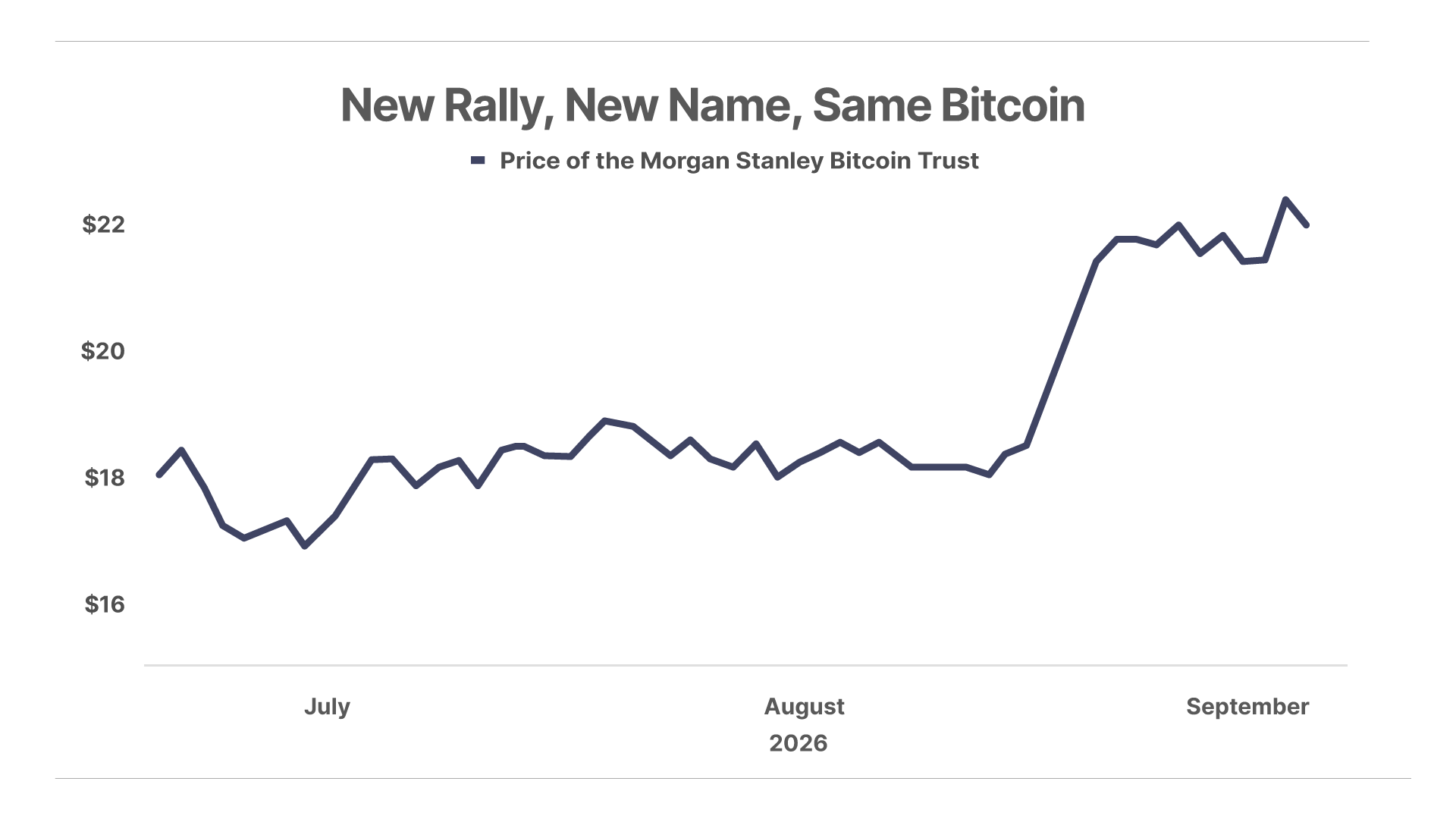
The Morgan Stanley Bitcoin Trust (MSBT) has rallied nearly 27% since we re-recommended Bitcoin in the June 20 issue of Complete Investor.
“Impossible To Lose Money”
Bill C. writes:
Reading through your original product description of Porter’s Permanent Portfolio, it states: “The portfolio is structured in a way that makes it difficult – essentially impossible – to lose money, no matter what happens to the economy, or to individual stocks.
Well, apparently I have achieved the impossible! My portfolio is DOWN 2.4% YTD. The one-year at 3.8% is positive but lower than target. When I first built the portfolio in late December 2024 I followed the recommendations exactly as well as investment % of each asset.
Earlier this year, I followed your recommendation and sold all of the P&C assets. That 25% now is a cash from 12.5% recommended to 4%. And moved most of that into FNV and GLD. Gold and Bitcoin are 22% of the portfolio.
I would appreciate any comment you have as the portfolio is clearly not meeting any of it’s performance expectations.
Porter Comment: I appreciate you reaching out.
But I’ve got bad news for you: you’re not following Porter’s Permanent Portfolio.
It did not sell property-and-casualty (P&C) stock. As I made very clear, the recommended allocation for the Permanent Portfolio would not change until the 10-year yield went to 5% or higher. It has not yet reached that level, and I have not changed any of the allocations on the recommended portfolio.
Please see the website for the actual current allocations.
Now, what you’re going to say is, yeah, but you said, x,y, and z.
And yes, I did. I said if you couldn’t tolerate a drawdown, then you could go to a bigger cash allocation and reduce your volatility.
If you did that, you’re doing fine.
But I said, repeatedly, that Porter’s Permanent Portfolio is a “permanent” allocation strategy. It only rebalances once a year. And that strategy hasn’t – and won’t – change unless there is a dramatic change to the market’s fundamentals, like the 10-year moving over 5% yield.
Here’s the good news: there’s now an ETF that invests exactly in Porter’s Permanent Portfolio – called the Porter & Company Porter Portfolio Index (PCPP).
Regards,
Porter
“Numbers R Us”
William C. writes:
Years ago, when we were on the way to do something on Saturday (Daddy day), my youngest (probably eight or nine) exclaimed, “Daddy, look, Toys R Us.”
I said, “Daddy is Numbers R Us.”
She is now 31, but her daddy still pays attention to numbers.
I bought Complete Investor a few years ago, and just watched and kept track of your recommendations for most of a year. I groan every time I see the growth of BWX Technologies (BWXT), which I thought might be good, but it was still early in my watching stage.
I’ve taken positions in monthly Best Buys.
Although many won’t put money into investments outside the U.S., when your team presents a case for investing outside our borders, I’ll give it strong consideration. Simply because you and your team provide strong cases with detailed analysis (with lots of numbers) of every recommendation.
And, they work. I took the leap to become a Partner and have made enough to pay for that in the past year.
So whether the recommendation is in Arizona, Hell, or thousands or miles outside our border, making money is always good.
Sincerely
Porter Comment: Brilliant note – thank you!